All stories · Article
0.3% to 1.5%: Shopify starts paying AI shopping agents for sales
Shopify is introducing a new way for AI shopping agents to make money from product recommendations. Instead of simply directing shoppers to online stores, participating AI agents can now earn a commission when their product referrals lead to a purchase.
Share: WhatsApp · Telegram · X · Facebook · LinkedIn · Email

Announced on October 27, 2026, Shopify's Promoted Placements program allows developers to earn a 0.3% base commission on eligible purchases made through products discovered in Shopify's Global Catalog. Merchants running Shop Campaigns can fund an additional commission, potentially increasing the total rate to 1.5%.
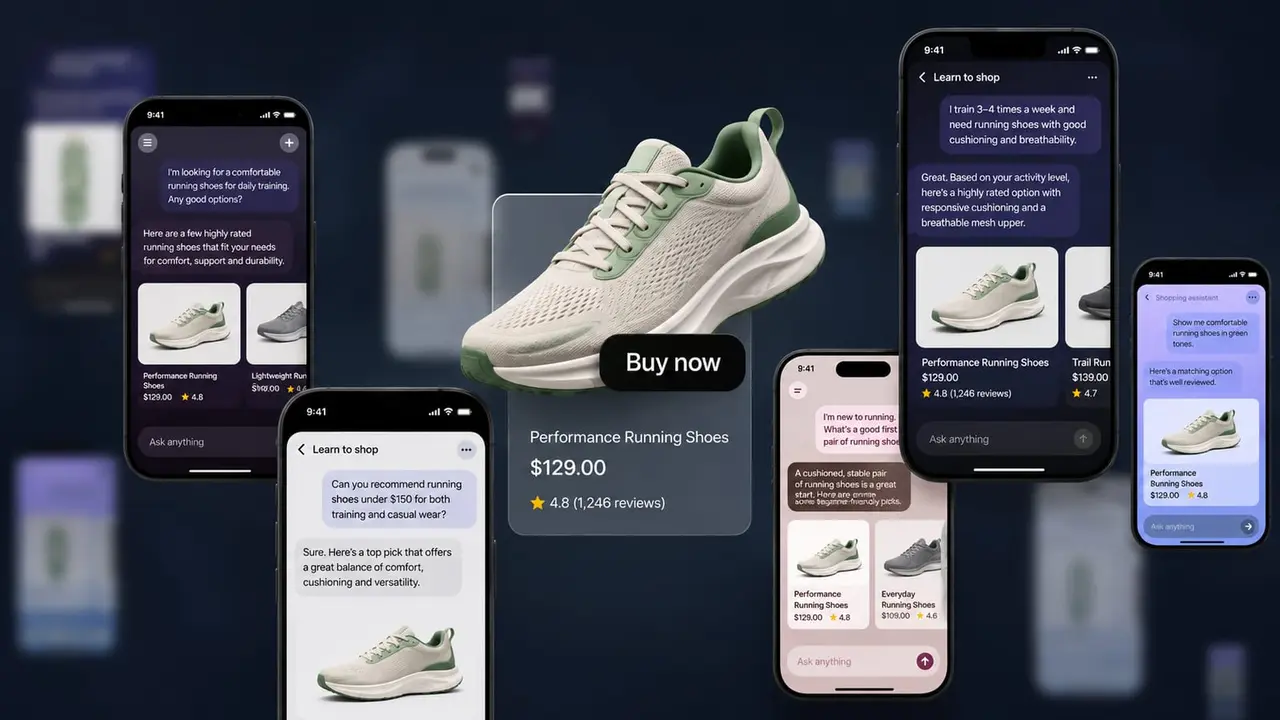
For merchants, this creates a new distribution channel for reaching shoppers through AI. But it also introduces a trade-off: paying a higher commission can direct customers to complete their purchases on Shopify's Shop app or website, rather than on the merchant's own storefront.
How does Shopify's AI commission system work?
Consider a shopper asking an AI assistant to find a pair of running shoes under $100.
The AI agent searches Shopify's product catalog, compares eligible products and returns recommendations. Under Promoted Placements, some products in those results can carry an affiliate label, meaning the company behind the AI agent may earn a commission if the shopper buys.
The process involves three parties:
- Shopify provides the product catalog and commission infrastructure.
- The AI agent developer connects the shopping experience to Shopify's catalog, presents eligible products and earns commissions on attributed purchases.
- The merchant supplies the products and can fund additional commission through Shop Campaigns.
The commission has two components:
| Commission | Who funds it? | How it works |
|---|---|---|
| 0.3% base rate | Shopify | Paid to the participating developer on eligible attributed purchases |
| Additional commission | Merchant | Added through qualifying Shop Campaigns |
| 1.5% total | Example from Shopify | A combined rate of 0.3% plus merchant-funded commission |
The 1.5% figure is an example in Shopify's documentation, not a fixed rate for every merchant or product.
The program is still an invite-only Developer Preview. Developers must join the program and enable commission on their saved catalogs before they can earn from promoted placements.
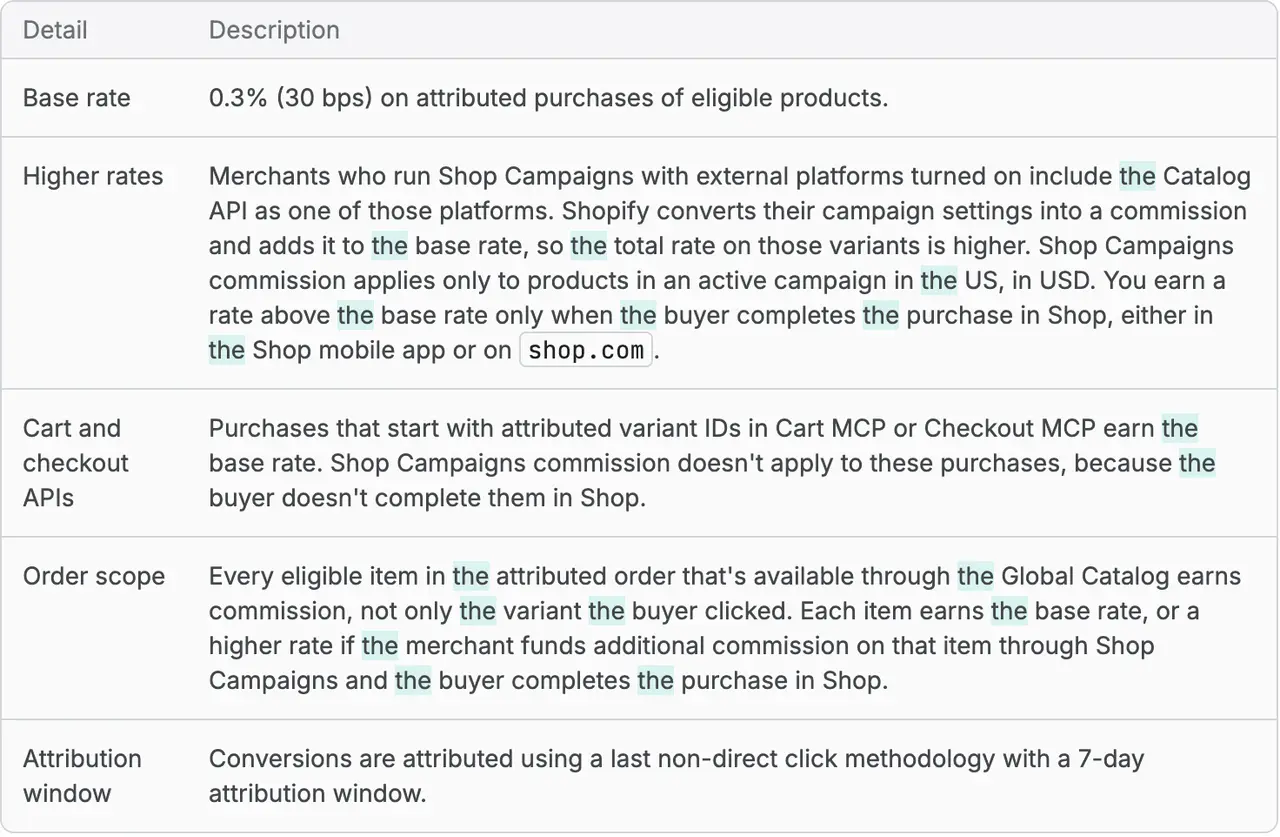
Source: Shopify, Earn with Promoted Placements.
Your existing Shop Campaigns settings may already include AI shopping channels
The change is particularly relevant to merchants running Shop Campaigns.
On October 27, Shopify confirmed that merchants with the "Advertise on other platforms" option enabled now include the Catalog API as one of their third-party advertising channels.
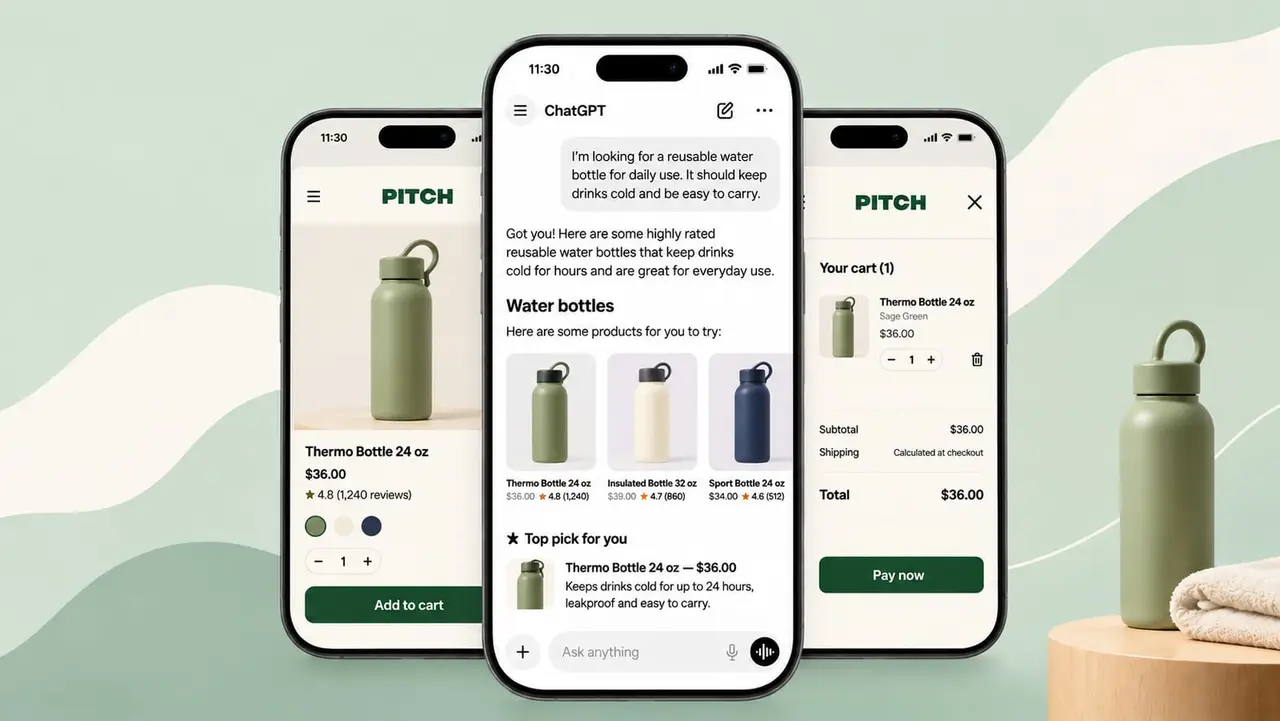
In practical terms, this means a merchant does not need to establish a separate integration with every AI shopping agent to make products available through this channel. The existing campaign setting can extend product distribution to third-party shopping experiences that use Shopify's catalog.
Shopify's Help Center lists the supported platforms:
- Catalog API: Shopping experiences built by third-party developers, including personal AI agents and shopping assistants.
- ChatGPT: OpenAI's AI assistant.
- Google and Bing: Search platforms.
- Meta, Pinterest, Snapchat and X: Social and discovery platforms.
- Microsoft Monetize: An advertising network.
Catalog API and ChatGPT are listed as separate channels, both currently available in the United States.
There is one important limitation: merchants who enable third-party advertising cannot exclude individual platforms. The setting applies across all supported third-party channels.
Shop Campaigns operates on a pay-per-conversion model. Merchants set their target customer acquisition cost and pay when a qualifying customer conversion occurs.
What this means: A merchant may already be allowing products to reach AI shopping channels through an existing campaign setting, without realizing that the same setting now connects to Shopify's promoted placement commission system.
Sources:
The extra commission comes with a different checkout destination
The financial trade-off becomes clearer when looking at where the customer completes the purchase.
Shopify's documentation sets a specific condition for merchant-funded commission: the additional amount above the 0.3% base rate applies only when the buyer completes the purchase through the Shop mobile app or shop.com.
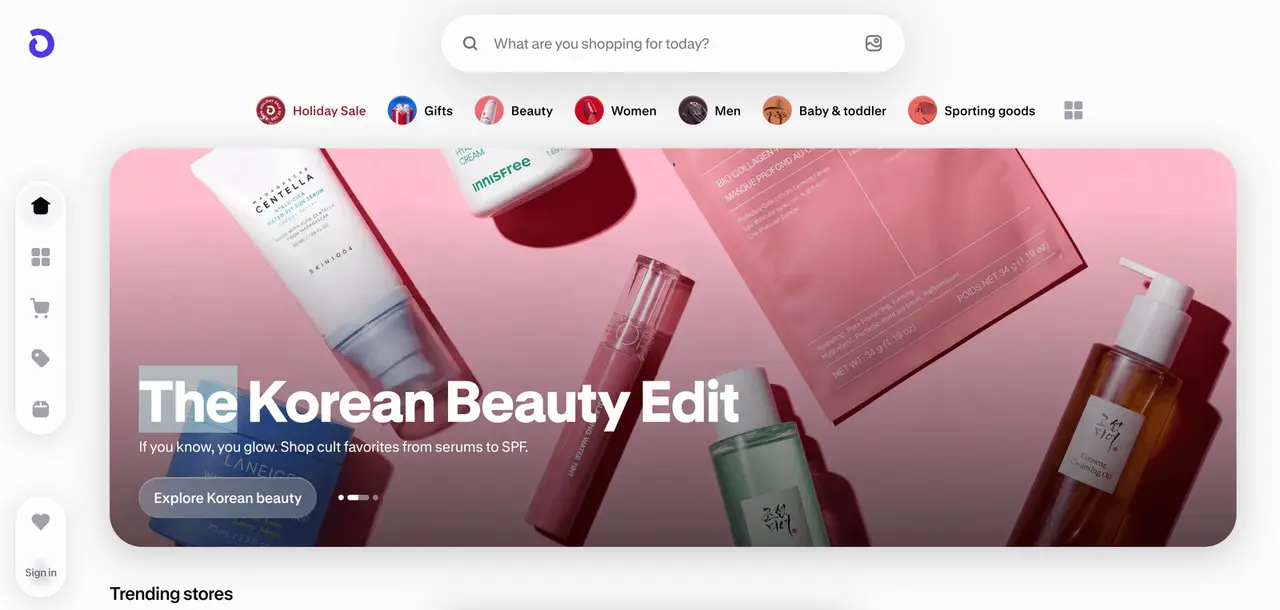
For products carrying this additional commission, the purchase link returned to the AI agent directs the shopper to Shop rather than the merchant's own website.
If the customer completes the purchase on the merchant's website, or through Cart MCP or Checkout MCP, the developer receives only the eligible 0.3% base commission.
This creates two different outcomes:
| Where the customer buys | Developer's commission |
|---|---|
| Shop app or shop.com | Base commission plus merchant-funded commission, if applicable |
| Merchant's own website | 0.3% base commission, if eligible |
| Cart MCP or Checkout MCP | 0.3% base commission, if eligible |
Shopify also uses a seven-day last non-direct click attribution window. This means an eligible purchase can be credited to the agent's referral if it occurs within seven days of the qualifying click, subject to Shopify's attribution rules.
For merchants, the decision is therefore not simply whether to pay more for exposure. It is also about where the transaction takes place.
A merchant may gain another route to reach potential customers, but the additional commission can shift the checkout experience away from the merchant's own storefront.
Source: Shopify, Earn with Promoted Placements.
Does paying more make an AI agent recommend your product first?
This is the most important question Shopify's documentation has not answered.
Promoted products can be blended into the ranked results returned by Shopify's Global Catalog. Each promoted product carries an affiliate label and a commission rate that the participating developer can read.
However, Shopify does not state that a higher commission guarantees a higher position in search results.
Independent testing by No Hacks offers another useful perspective. In 1,305 searches conducted against Shopify Catalog on October 13, 2026, products with more reviews tended to appear higher in 78 of 91 searches that returned 50 products.
This does not prove that review counts determine rankings. Nor does it establish how AI agents will weigh commission rates when selecting products. The tests were also conducted before the promoted placement integration with Shop Campaigns.
Still, the findings highlight an important distinction for merchants:
- Paying additional commission makes a product eligible for a paid placement.
- It does not guarantee that an AI agent will recommend it first.
- Product information, pricing, inventory and customer reviews remain important inputs in product discovery.
Merchants should therefore avoid treating higher commission as a substitute for improving product data and customer experience.
Source: No Hacks, Shopify Products With More Reviews Come Back Higher When AI Agents Search.
What Shopify merchants should check before BFCM
For US merchants running Shop Campaigns, the immediate task is to review the third-party advertising setting.
A practical checklist:
- Open Shopify Admin and go to Sales channels > Shop > Advertising.
- Check whether "Advertise on other platforms" is enabled.
- Review the active campaigns and the countries they target.
- Decide whether the additional AI distribution channel and its Shop checkout destination fit your sales strategy.
- If you want to opt out, plan ahead. Shopify says it can take up to three business days for an active campaign to stop appearing on third-party platforms.
This timing matters before BFCM. Turning off the setting immediately does not mean external placements disappear at once.
The broader change is that Shopify is creating a commission-based distribution model for AI shopping. Developers get a new way to monetize product discovery, merchants gain access to additional shopping channels, and Shopify extends its commerce infrastructure into AI-driven transactions.
But merchants need to understand what they are paying for.
More commission does not automatically mean better AI rankings. It can mean a different route to the customer, and a different place for that customer to complete the purchase.
Ask AI next
- What ranking factors does Shopify's Global Catalog algorithm weigh for AI agent product results?
- Is Shopify's Promoted Placements program available outside the US, and when might it expand?
- How much additional commission should merchants fund via Shop Campaigns to attract AI agent referrals?
- What tools can merchants use to track which AI agents and commissions drive sales through Promoted Placements?
- What signals indicate Shopify might change Promoted Placements' attribution rules or commission caps?