All stories · Case study
A $1M Shopify launch and the retention rebuild behind day 90
Alex Fedotoff says his Shopify store went from $0 to $1M in 31 days, and that by day 90 it was doing similar numbers on half the ad spend after a 60-day retention rebuild.
Share: WhatsApp · Telegram · X · Facebook · LinkedIn · Email
That is his own account, from a LinkedIn post by Alex Fedotoff published on November 1, 2026.
The rebuild had a cost: 60 days without chasing new customers. It fits stores with thin repeat orders and a rising cost per new customer, more than stores whose customers already reorder.
$1M in 31 days only proved the store could buy customers
Fedotoff writes that the launch ran 90% on Meta ads, built around one product that worked.
Then the reorders didn't come.
His CAC (customer acquisition cost, what each new buyer costs in ads) crept up as the ad account fatigued. His own diagnosis is blunt. He had built a machine that only ran while he kept pouring ad spend into it: revenue, with no retention engine underneath.
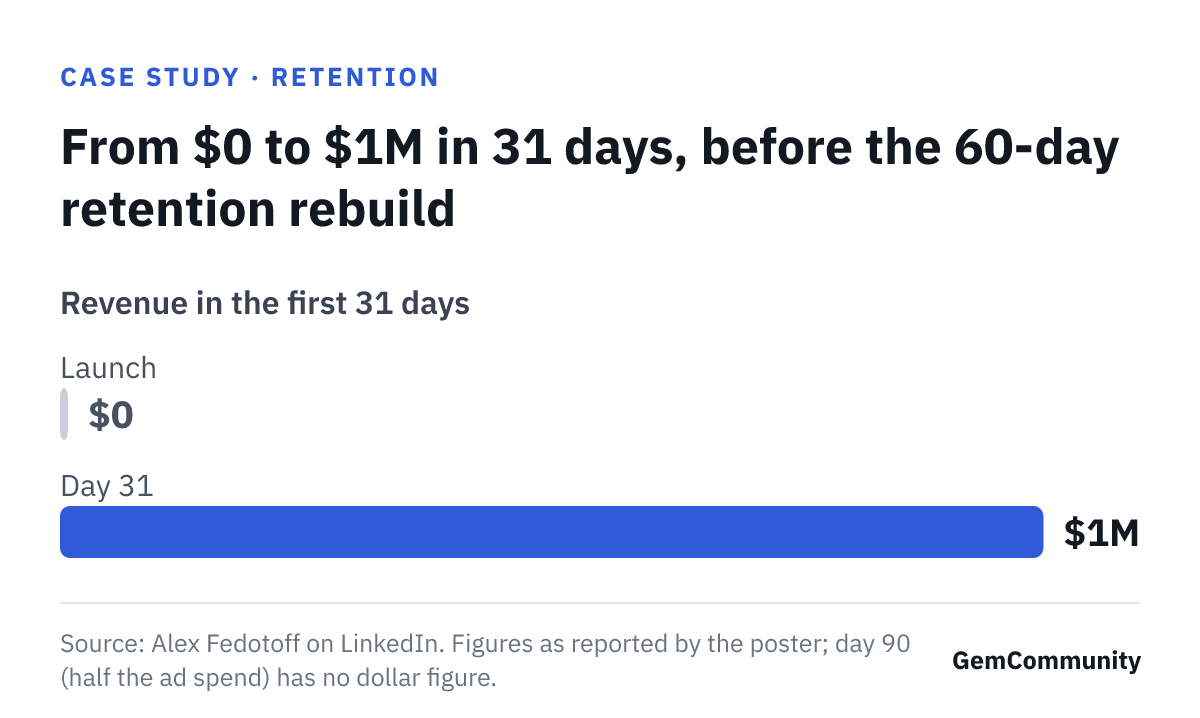
Figures as reported by Alex Fedotoff on LinkedIn. His day-90 result, half the ad spend, comes with no dollar figure.
Day 90: existing customers carried the budget he cut, by Fedotoff's account
For the next 60 days, Fedotoff stopped chasing new customers and rebuilt the back end. That work came down to three pieces, listed in the checklist below.
His explanation for the day-90 result is that existing customers were carrying the brand. Fedotoff sums up the lesson in two sentences:
"Getting to $1M is an acquisition problem. Staying there is a retention problem."
What does this case prove, and what doesn't it?
The case shows a store that could buy customers fast. By the founder's own account, it also kept similar numbers after cutting its ad spend in half. That makes it a useful direction, though nothing in it is measured.
The post leaves out the hard numbers. It gives no ad spend in dollars, no day-90 revenue, no repeat-purchase rate, and no store name or product category. Nor does it separate the three changes: they were built in the same 60 days, so there is no way to tell which one did the work.
It is one store's self-report: a hypothesis to test against your own numbers.
Three things to check before you raise the budget
The case fits stores like Fedotoff's after launch: thin repeat orders and a rising CAC. If your customers already reorder on their own and your CAC is steady, it gives you less reason to pause acquisition. If you are in the first group, check for the three pieces Fedotoff built:
- Are all four core flows live? Fedotoff built welcome, abandoned checkout, post-purchase and replenishment flows in Klaviyo. A replenishment flow likely fits only products customers use up and buy again.
- Does your hero product have a subscription offer? Fedotoff set his up through Recharge. A product people buy once is likely a poor fit, and you can skip this.
- Do one-time buyers get a win-back sequence? It covers customers who bought once and went quiet. If most of your buyers already place a second order, this one can wait.
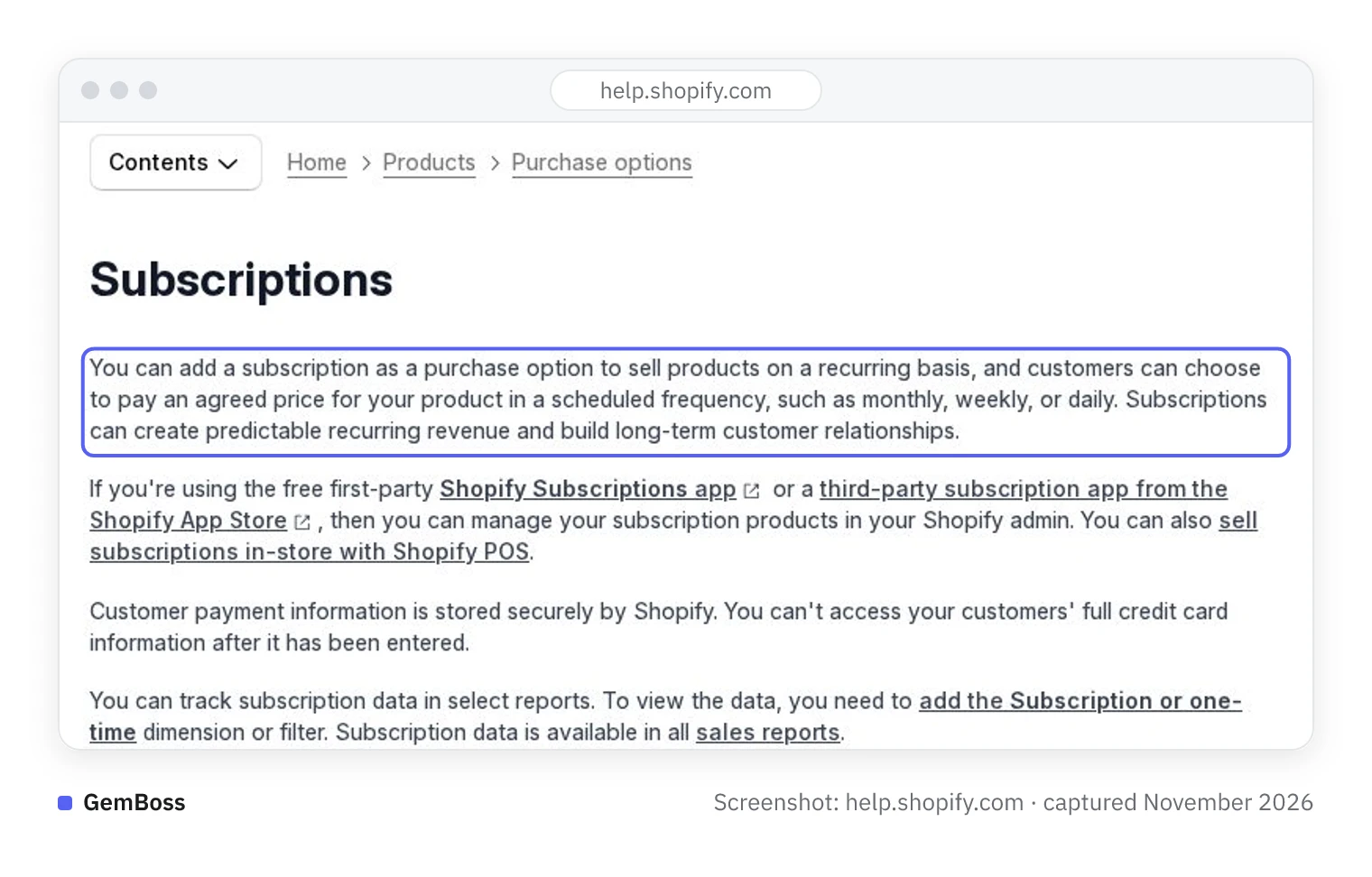
On Shopify, a subscription is a purchase option: the Shopify Help Center page on subscriptions says you can manage subscription products in your admin through the Shopify Subscriptions app or a third-party subscription app.
None of these is proven on its own by this case. Fedotoff reports what the three did together.
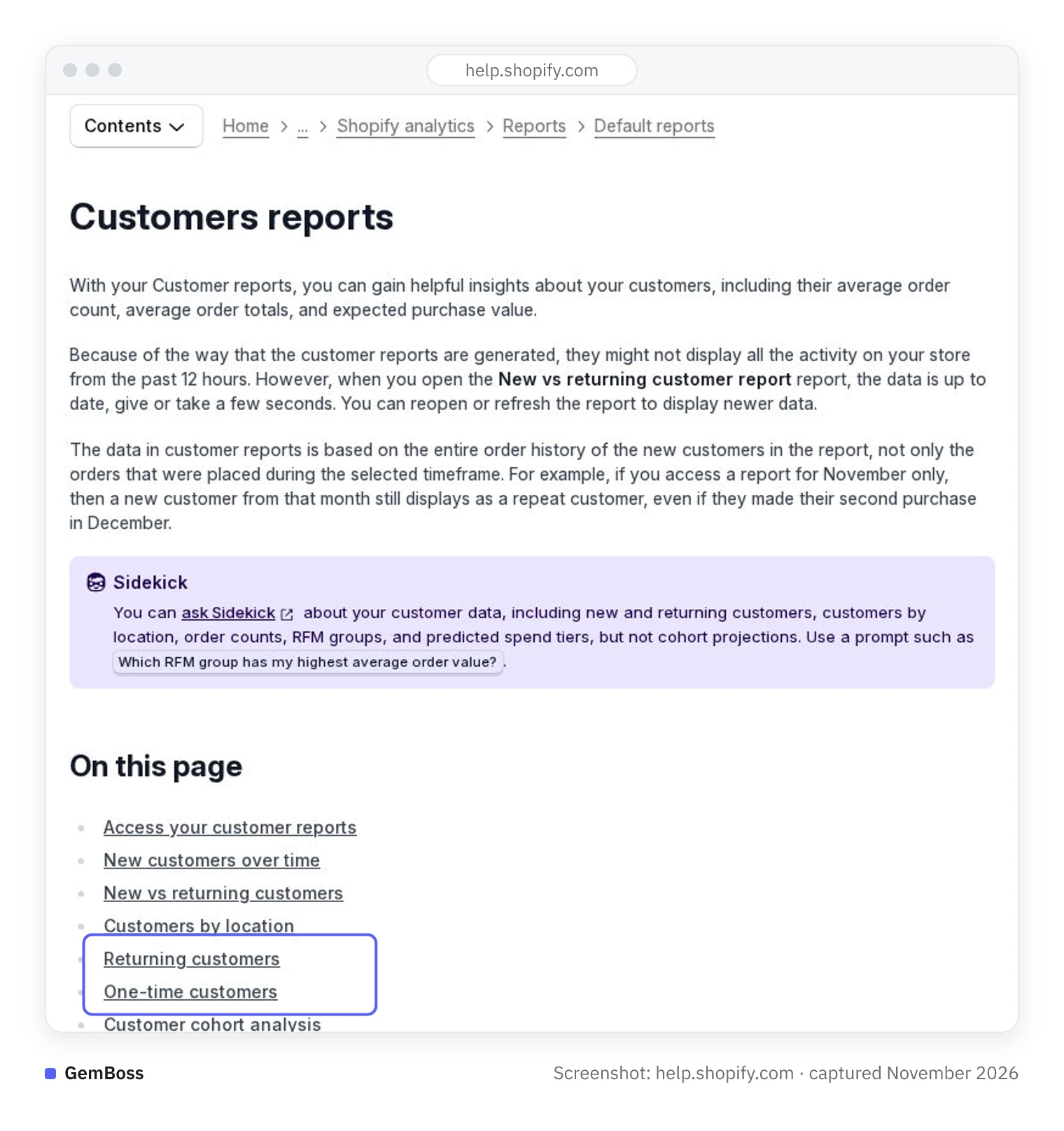
For the repeat-order side, Shopify's Customers reports include a Returning customers report and a One-time customers report.
Judging ROAS on the first order misreads it both ways
Before you raise the budget, there is one more check: how you read ROAS (return on ad spend).
Ben Zettler's LinkedIn post, published on October 16, 2026, describes two opposite mistakes he says he has watched many brands make. In the first, brands killed campaigns that were working because ROAS looked bad against a first-order target. "Nobody counted the customers who came back," he writes.
The opposite mistake is just as common in his account. Brands scale campaigns that are quietly losing money, because ROAS looks great in Ads Manager. Nobody checks it against thin margins, heavy returns, or customers who never order again.
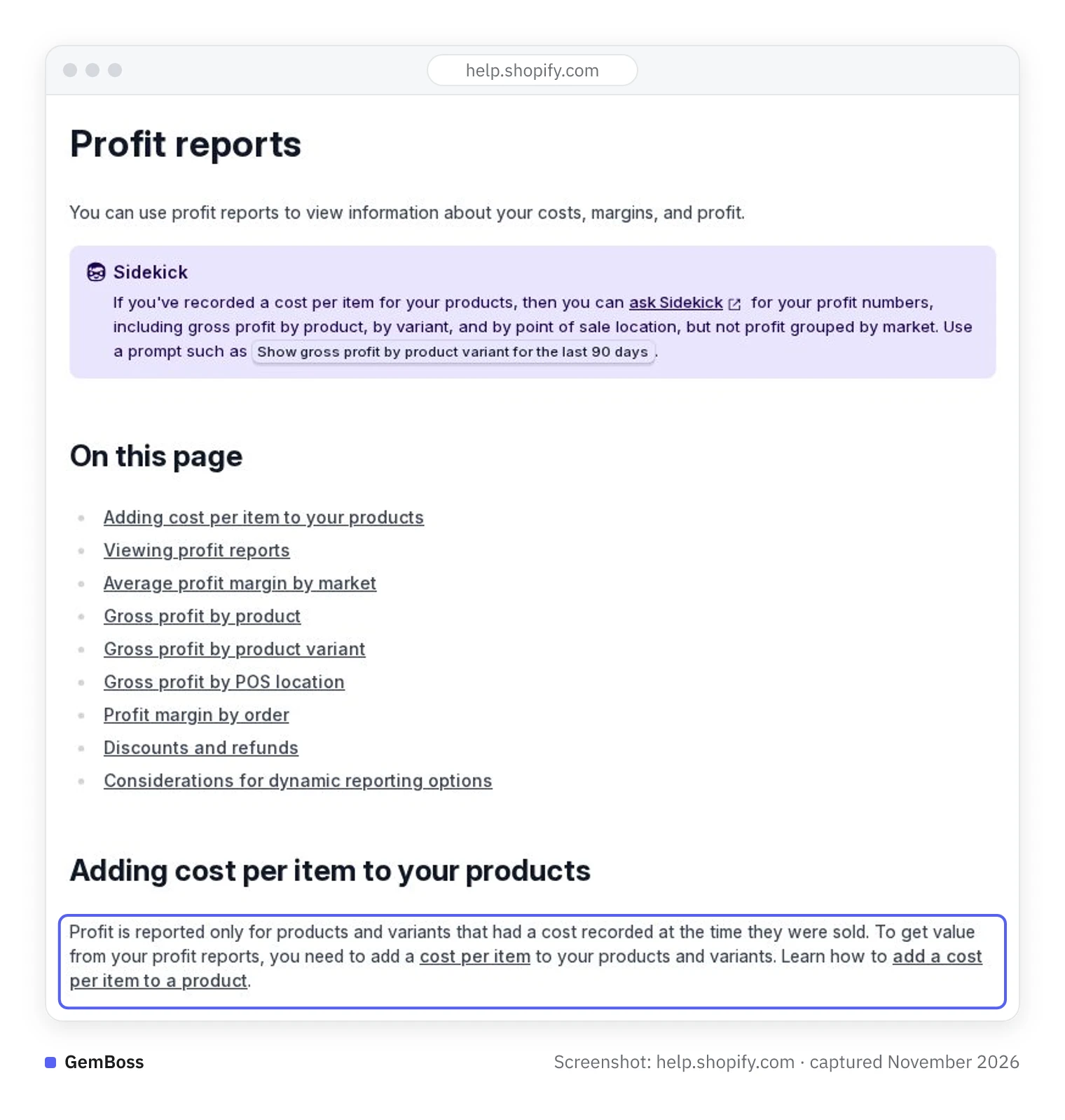
Your margin is the first of those numbers. Shopify's Profit reports show costs, margins and profit, but only for products and variants that had a cost per item recorded when they sold.
Before you add budget, build your target from your margin, return rate and repeat rate, and check where you break even on the first order and over 12 months. Returning customers are what Fedotoff credits for day 90, and a first-order ROAS doesn't count them at all.