All stories · Article
Agentic AI's Black Friday debut falls short of expectations
AI shopping assistants promise to make online shopping easier. Shoppers can describe what they want, compare products and get recommendations without browsing dozens of websites.
Share: WhatsApp · Telegram · X · Facebook · LinkedIn · Email

But finding a product is not the same as finding the right product.
A BBC test published on November 21, 2026, put four AI assistants to work finding a 55-inch TV deal ahead of Black Friday. The results were mixed: some recommendations pointed to unavailable products, some links no longer worked, and some prices did not match retailer websites.
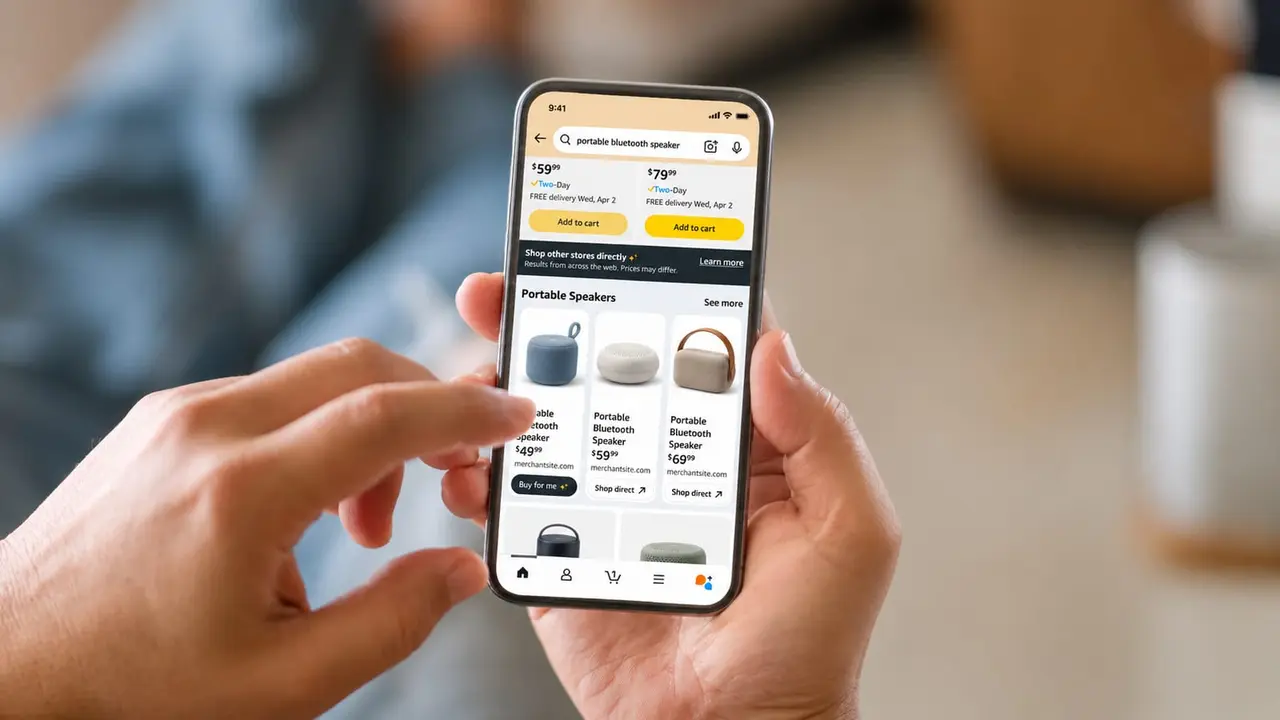
The problem goes beyond a few inaccurate answers. AI shopping tools are only as useful as the product information they can access.
For retailers, the next challenge is not simply getting products mentioned by AI. It is making sure AI can find, understand and recommend the right products using accurate, up-to-date information.
AI can find products. Can it find the right ones?
The BBC tested free versions of ChatGPT, Claude, Gemini and Alexa with the same shopping request: find a 55-inch TV in the UK within a £500 to £700 budget.
The tools returned different recommendations, but none delivered a completely reliable shopping experience.
ChatGPT suggested products that were no longer listed or exceeded the budget. Claude returned dead retailer links. Gemini quoted a price that was £60 lower than what one retailer actually charged. Alexa provided accurate prices, but limited its search to Amazon.
These are not just model-performance issues. They expose a deeper problem in online retail: product information is constantly changing, while AI recommendations can rely on information that is outdated, incomplete or inconsistent across sources.
A product may still appear in an old deal article after it has been discontinued. A price may have changed without being reflected in another source. A product page may remain indexed even after the item sells out.
AI can retrieve that information and present it confidently. But confidence does not make the information current.

Product discovery is becoming easier. Product verification is not.
Traditional search gives shoppers a list of websites to explore. AI shopping assistants try to do more: interpret what shoppers want, narrow down their options and explain why one product might be better than another.
That changes the shopping experience.
Instead of searching for "55-inch TV under £700", a shopper can ask for a TV with good picture quality, gaming performance and a particular budget. AI can turn those preferences into a shortlist.
But every recommendation depends on several pieces of information:
- Product identity: Is this the correct model, size and variant?
- Price: Is the quoted price the current selling price or an outdated promotion?
- Availability: Is the item actually in stock?
- Product attributes: Are specifications, features and compatibility details accurate?
- Purchase destination: Does the link lead to the actual product page?
If one of these elements is wrong, the recommendation becomes less useful.
This is why AI shopping introduces a new layer of competition. Retailers are no longer competing only for search rankings or ad impressions. They also need their products to be understood correctly when AI systems compare and recommend options.
The bigger gap is between product recommendations and autonomous shopping
The phrase "AI shopping" often combines two very different capabilities.
AI shopping assistants help shoppers research products, compare options and make decisions. The shopper still controls the purchase.
AI shopping agents can take actions on the shopper's behalf, potentially including checkout and payment.
The distinction matters because the technology is developing at different speeds.
In its November 22 report, Business Insider found that AI assistants accounted for less than 1% of retailer website traffic, based on Bain & Company's analysis of Similarweb data.
Uber also attributed only around 500 of approximately 320 million transactions during the final week of October to AI agents.
Yet, AI search was reportedly converting to sales at nearly twice the rate of traditional web search, according to the Bain analysis cited by Business Insider.
These figures point to an important distinction: AI may already be valuable in the discovery and consideration stages, even while fully autonomous purchasing remains limited.
Consumers can welcome AI's ability to reduce research time without being ready to let it spend their money.
For retailers, that means the immediate opportunity is not necessarily autonomous checkout. It is being included in the shortlist before a shopper makes a decision.
What retailers should fix before the next shopping season
The practical response is to improve the information AI systems use to understand products.
Google's Merchant Listing structured data documentation identifies important product information such as price, availability, shipping and return details. Its guidance also explains how structured data helps search engines interpret product pages.
For Shopify merchants, this creates a useful starting point:
Keep product information consistent.
Make sure the product page, structured data and product feeds reflect the same current price, promotional price, variant and stock status.
Make product attributes explicit.
Do not rely entirely on marketing language. Include concrete specifications, materials, dimensions, compatibility, intended use and other attributes shoppers might use to compare products.
Keep product links and variants clean.
Each recommendation should lead to the correct product and variant, not a discontinued listing or an unrelated collection page.
Check how AI interprets your catalog.
Ask several AI assistants to find and compare your best-selling products. Check whether they identify the correct product, quote the right price, recognize available variants and provide working links.
These checks do not guarantee that an AI system will recommend your store. But they help reduce the gap between the information your store publishes and the information shoppers receive.
AI visibility starts with reliable product information
The first agentic AI Black Friday may be off to a rocky start, but that does not mean AI shopping is a failed idea.
It means the experience still has a reliability problem.
Retailers should not confuse the growth of AI-powered product discovery with the maturity of autonomous purchasing. The two are not moving at the same speed.
For now, the more immediate competitive question is straightforward:
When a shopper asks AI to find the best product for their needs, does your store give it enough accurate information to recommend you?
That is a more useful question for retailers to solve than whether AI agents will take over Black Friday this year.
Ask AI next
- What tools let retailers continuously monitor how AI assistants represent their products?
- Which Shopify apps or feed integrations actually fix the structured data and price-sync issues described here?
- Why do AI assistants quote outdated prices instead of pulling live data from retailers' sites?
- Do similar AI shopping accuracy problems occur in other product categories or markets?
- What early signals show AI shopping agents starting to drive meaningful traffic or sales?