All stories · Article
AI agents are changing what it means to have a sales channel
For years, businesses have thought about sales channels as places where customers discover and buy products: websites, marketplaces, social media, and physical stores.
Share: WhatsApp · Telegram · X · Facebook · LinkedIn · Email

AI agents are beginning to change that model.
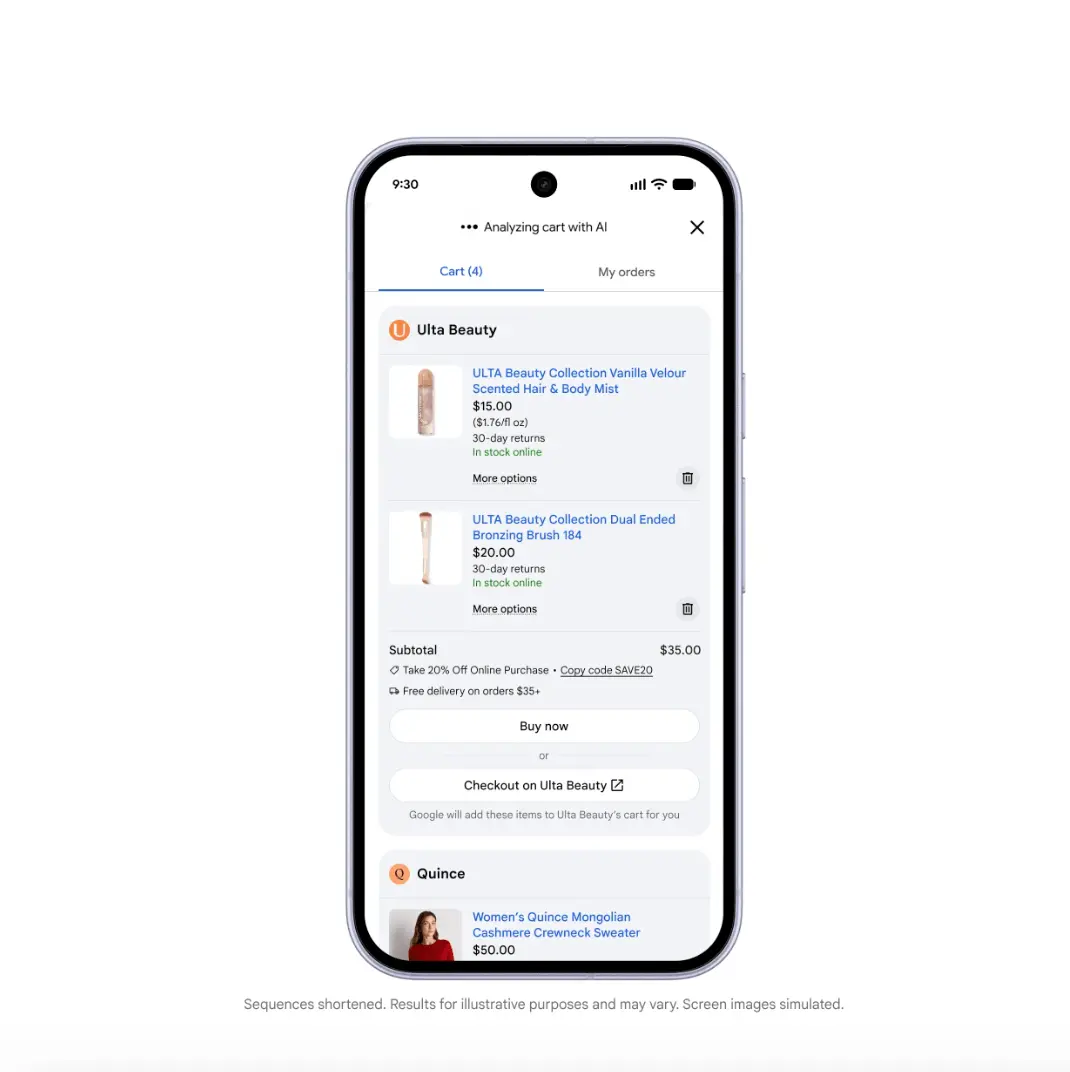
Instead of visiting a store or browsing a marketplace, shoppers can now describe what they need and let an AI agent search, compare, and recommend products. The point of discovery is shifting from a destination to a conversation.
From storefronts to AI-powered discovery
Shopify’s November 13, 2026 perspective highlights how quickly this shift is developing.
In Q3 2026, traffic from AI sources grew 2.6 times year over year, while orders grew 3.3 times. Shopify also reported that around 75% of AI-referred purchases came from outside the top 100 product categories.
These figures point to a broader change: product discovery is no longer limited to the channels shoppers actively visit. AI agents can bring products directly into conversations, matching them with specific customer needs.
A sales channel may increasingly be wherever an AI agent helps a customer make a purchasing decision.
The storefront is no longer the whole experience
This does not mean that online stores are becoming irrelevant. It means their role is evolving.
A storefront remains the place where merchants build their brand, present their products, and manage the customer experience. But it may no longer be the first place customers encounter those products.
Shopify is positioning its commerce infrastructure to support this wider distribution model. Its Agentic Commerce Platform announcement describes how merchants can connect with AI-powered shopping experiences across channels.
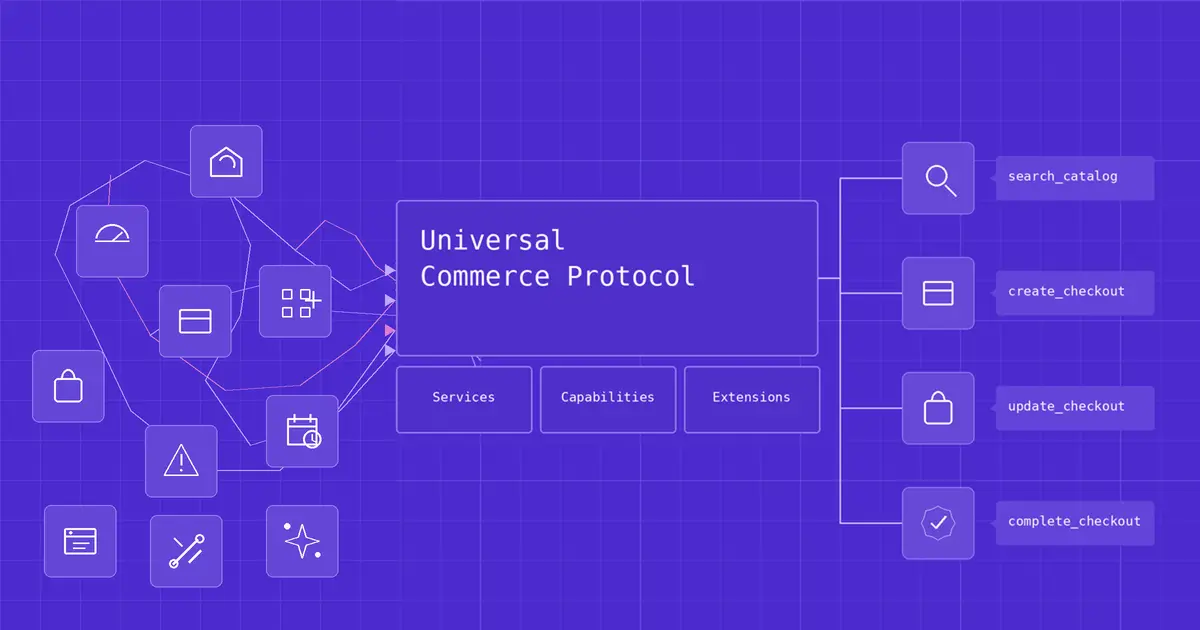
The Universal Commerce Protocol (UCP), co-developed by Google and Shopify, is another part of this shift. It aims to give AI agents, businesses, and payment providers a common way to support commerce across the shopping journey.
The strategic change is not simply about adding another sales channel. It is about making commerce infrastructure work across many different customer interfaces.
Product data is becoming a distribution capability
When an AI agent searches for products, it needs information it can understand and compare.
Product titles, descriptions, images, prices, variants, and availability all contribute to how products can be interpreted and presented.
This makes structured product data more than a technical requirement. It becomes part of a merchant’s distribution capability.
Shopify’s Catalog documentation explains how product information is organized to support discovery across AI-powered shopping channels. However, being included in the catalog does not guarantee that a product will appear in an AI recommendation. The AI platform still determines what it selects and presents.
In other words, merchants need more than a well-designed storefront. They need product information that can travel beyond it.
The next competition is for AI selection
In traditional commerce, merchants compete for visibility through search rankings, marketplace placements, advertising, and physical shelf space.
In agentic commerce, another layer of competition is emerging: being selected by AI agents.
An agent may evaluate products based on a shopper’s specific request, comparing attributes, prices, availability, and other relevant information. The products that best match the request may enter the consideration set, even if shoppers have never visited the merchant’s website.
This changes the distribution challenge for merchants.
The question is no longer only how to bring customers to a storefront. It is also how to make products discoverable, understandable, and suitable for recommendation wherever AI-mediated shopping takes place.
The next sales channel may not look like a store, a marketplace, or a social platform. It may be a conversation. And the products that appear in that conversation could be the ones that get sold.
Ask AI next
- What exact changes should I make to my product titles, descriptions, and variants to get picked by AI agents?
- How can I check in my own Shopify analytics whether AI agents are already sending me traffic or orders?
- What criteria do AI shopping agents actually use to rank competing products before recommending one?
- What tools exist today to test how my products appear to AI shopping agents like ChatGPT or Gemini?
- Which AI assistants or platforms have adopted the Universal Commerce Protocol besides Google and Shopify?