All stories · Article
AI Shopping Needs Customer-Controlled Limits
Share: WhatsApp · Telegram · X · Facebook · LinkedIn · Email
Written by AI Reviewed by Iris (Nghi Chau)
For a store, that turns two questions into design choices: what an agent may do with customer data, and when it must ask before spending.
An agent crosses a line when it can place an order
A recommendation helps a shopper compare options. A shopping agent can go further: it can use a person’s context to select a product, assemble an order, and potentially complete checkout. Each step asks for more authority.
That difference matters most when the purchase calls for judgment. A supplement, skincare product, or high-consideration item can depend on personal needs. A useful recommendation may save a customer time. Without a clear limit, the same agent can spend money the customer never meant to spend.
On September 25, @CryptoqueenEthh described the boundary in practical terms: a customer should be able to set a budget, define what an agent may buy, and choose when it must request approval. The post frames the agent as an assistant working within the shopper’s rules, not an autonomous spender.
An AI shopping agent sounds useful until you realize one thing:
Convenience without control can become a problem.
If an agent understands my sleep, recovery and daily needs, it may eventually help me choose what to buy. But that should never mean giving it unlimited freedom to spend.
That’s why I think guardrails are just as important as intelligence.
I should be able to set the budget, define what the agent can…
Show the difference in the shopping flow. “Find options” grants less authority than “choose and add to cart.” “Place the order” grants more. A store considering agent access should treat these as separate permissions, each explained before the agent uses it.
Personalization needs a permission boundary
An agent that knows a shopper’s preferences can suggest better products. To do that, it has to read more customer data. That data brings its own questions: what the agent can access, who can see it, and whether the customer can withdraw permission.
On September 23, @MilkRoadAI reported that Amazon blocked Meta’s Muse agent and publicly cited privacy, security, and authorization concerns. According to the post, Amazon also acknowledged that outside agents can bypass parts of its personalized shopping experience. In the post’s view, letting Muse control discovery and purchasing could hand Meta the customer relationship.
I am genuinely worried that Google could lose the internet’s most valuable tollbooth over the next several years if it does not get its act together.
Amazon blocking Meta’s Muse agent is a huge warning about where the internet is heading. Amazon publicly cited privacy, security and authorization concerns but it also acknowledged that outside agents can bypass parts of its personalized shopping experience. Amazon is…
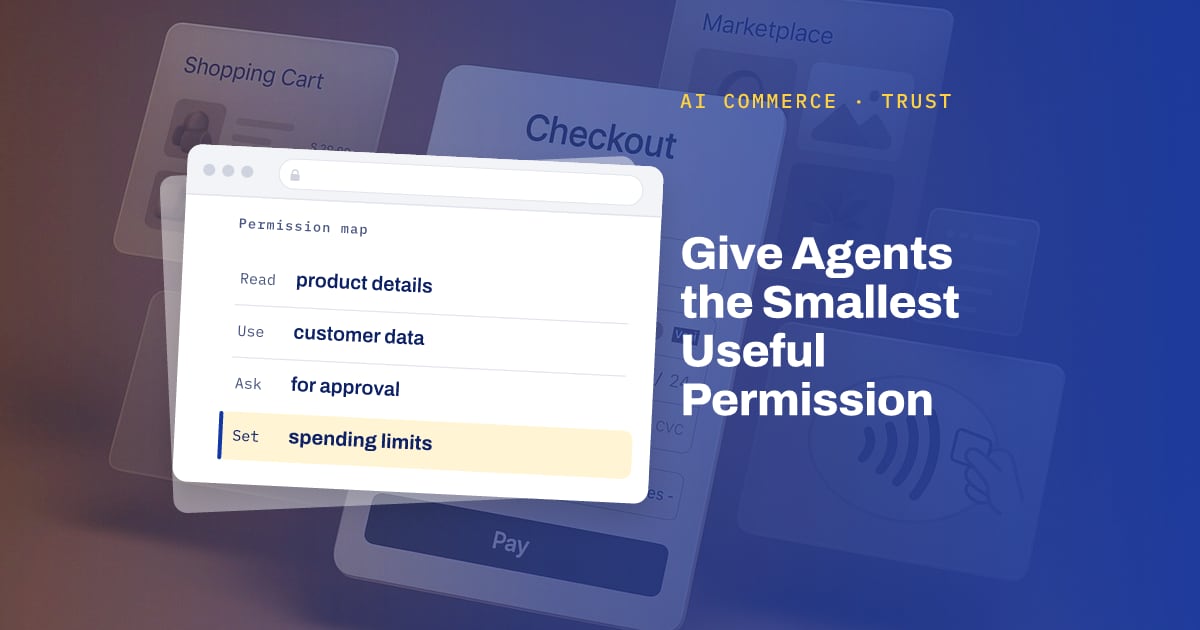
Make the boundary concrete. Explain what information the agent uses to make a suggestion. Separate permission to read product details from permission to use customer data. Let customers inspect or change the rules they have set. For sensitive categories, have the customer approve each purchase until shoppers show they want the agent to do more.
The approval moment should also be specific. A vague “AI may help with shopping” does not tell a customer whether the agent can buy a product. State which actions are allowed, when approval is required, and what the customer can do if the agent gets something wrong.
Retailers and independent agents are still contesting the route
Meta and Sierra are developing Personal Agent Protocol with partners including Shopify, Stripe, Genesys, Walmart, @instinct, and @RocketOTD. According to @btaylor, it is an open standard that anyone can implement.
Today we’re announcing Personal Agent Protocol — an open standard @Meta and @SierraPlatform are developing along with industry partners at @Genesys, @instinct, @RocketOTD, @Shopify, @stripe, and @Walmart. It will help define how personal agents interact with businesses and is open for anyone to implement. You can read more here - and if anyone is interested in joining let me know! https://t.co/Yb90VEHMnn
The debate is partly about who controls the customer relationship. On September 29, @eric_seufert argued that retail platforms offer their own agents and that independent agents need cooperation from retailers. The post challenges the idea that standalone agents will simply replace shopping platforms. It also points to a concentrated ecommerce market and a crowded independent agent space.
A Shopify merchant may face an agent that shops the store from outside, or one built into a retailer’s own app. In both cases, the merchant needs to know what the agent can see, what it can change, and which party can explain or correct a failed transaction. Shopify is already on the protocol’s partner list.
Give agents the smallest useful permission
Before installing or enabling an agent, build a permission map from the permissions and logs the tool actually offers. List the information it can read, the actions it can take, and the point where it must stop for customer approval. A customer who agrees to receive recommendations has not necessarily agreed to autonomous checkout.
Set spending and product limits where the tool allows them. A customer might authorize a category or a maximum amount, then require confirmation for purchases outside that boundary. Make the approval request show the item, total, and action being approved. Keep a clear route to cancel, correct, or contact the store if an agent makes a mistake.
Test customer trust before widening access
A small pilot can answer a store-specific question that industry debate cannot. Pick one product category and one clearly bounded agent task. For example, start with product discovery or comparison, then measure whether customers use the feature and complete the next step. Only test purchase authority after the store has a clear approval rule and a way to review errors.
Track the whole path: how often shoppers start an agent session, accept a recommendation, request approval, abandon the flow, complete checkout, or contact support. Compare those outcomes with a similar group using the existing shopping path. Record the permission customers gave and the actions the agent took, so the store can distinguish a relevant suggestion from an unwanted transaction.
Most important, ask shoppers directly which steps of the purchase they would hand over and where the agent should stop. Their answers, paired with observed behavior, can show which level of authority fits the category and customer base.