All stories · Article
Amazon plans World Product Graph to control the product data behind AI shopping
Amazon is considering building a database covering products sold across the entire online retail market, including items it does not sell itself.
Share: WhatsApp · Telegram · X · Facebook · LinkedIn · Email

Called World Product Graph, the proposed initiative would give Amazon access to a much broader view of the products consumers research and compare before making a purchase.
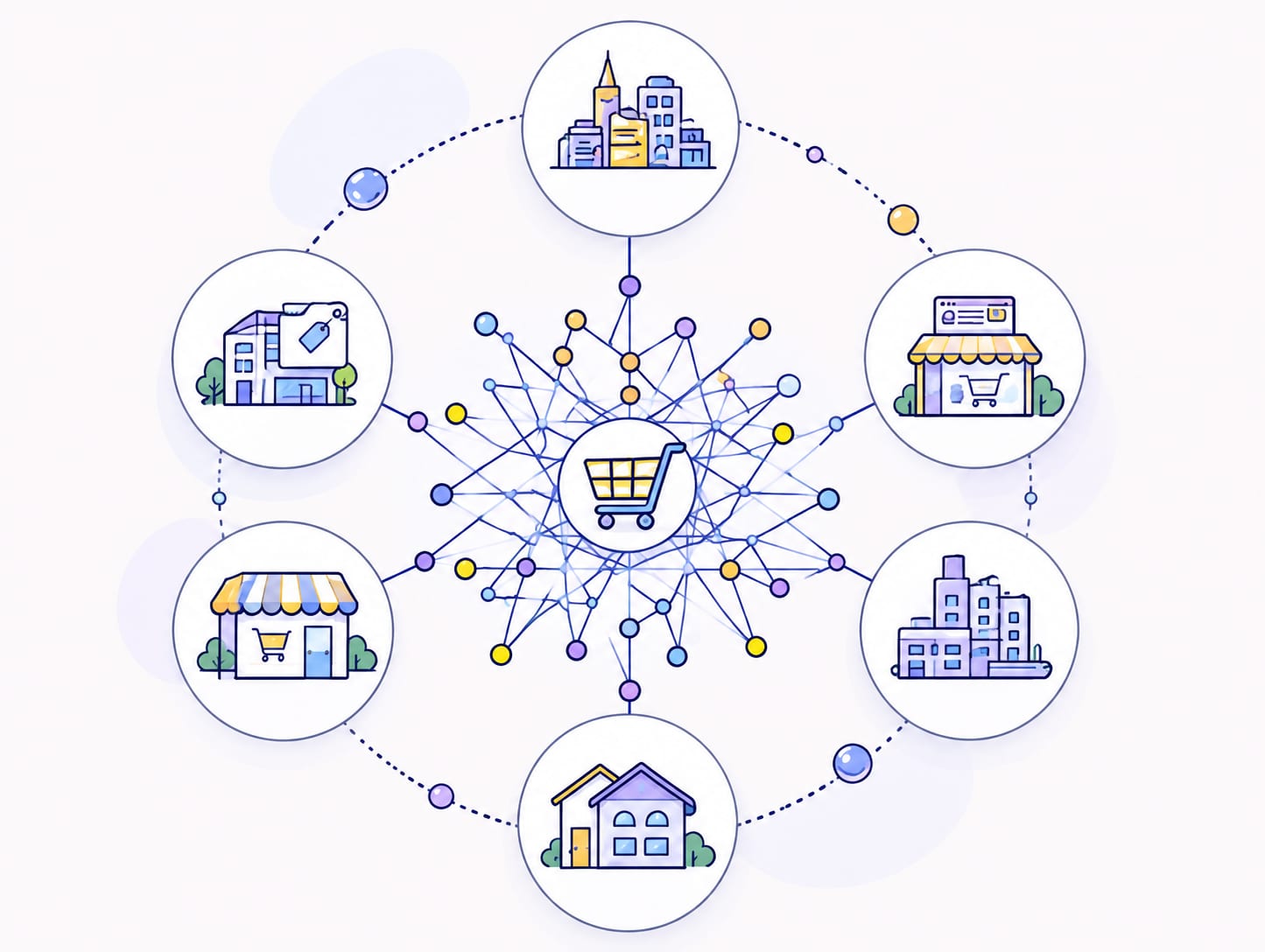
According to an internal planning document reviewed by Reuters, the system would combine product information supplied by brands with data collected from other retailers' websites. Its ambition is to let shoppers and AI shopping agents research products without leaving Amazon.
The timing is significant. As AI agents take on more product discovery and comparison tasks, the competition is shifting beyond where consumers complete transactions. Platforms are increasingly competing to control the product information that shapes what shoppers consider and ultimately buy.
What is a Product Graph, and why does AI shopping need one?
A product catalog tells a retailer what it sells. A Product Graph helps a system understand how those products relate to one another.
Traditional product catalogs store information such as product names, brands, prices, descriptions and specifications. Each product is typically represented as an individual record.
A Product Graph adds another layer: connections between products and other entities, including brands, categories, attributes, product versions, accessories, compatible components and alternatives.
Consider a cordless vacuum cleaner:
- A traditional catalog records its brand, price, battery life and suction power.
- A Product Graph can connect it to newer models, compatible attachments, alternatives from competing brands and other products designed for cleaning pet hair.
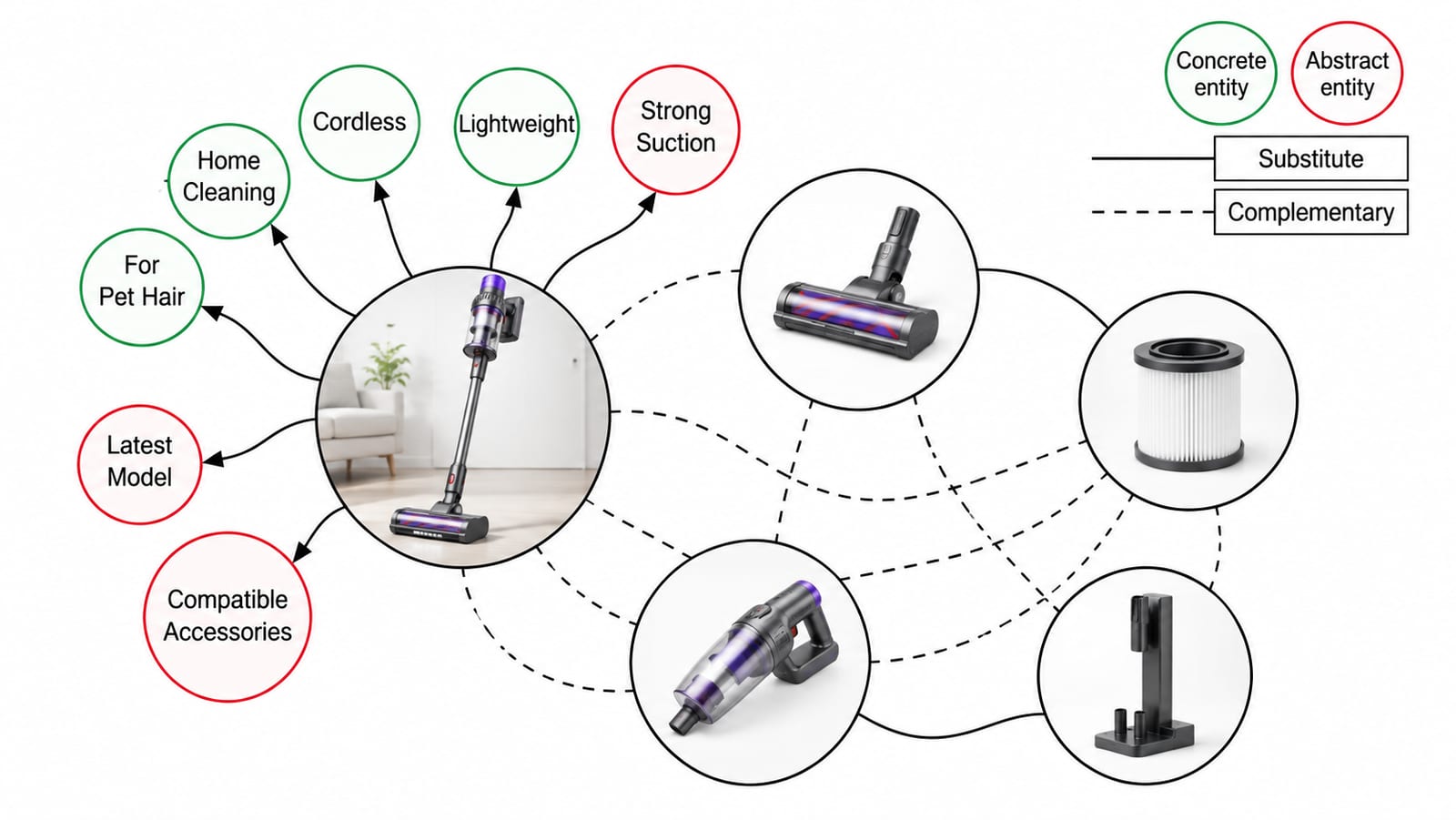
Technically, these connections form a network of nodes and edges. Nodes represent entities such as products, brands and categories. Edges describe their relationships, such as "made by," "similar to," "compatible with" or "frequently purchased together."
This is a form of knowledge graph applied to e-commerce. Instead of treating every product as an isolated listing, the system builds a connected picture of the product landscape.
Amazon has previously described its own product graph technology in a technical article. Its research explains how products can be represented as nodes, with connections based on purchase patterns and product similarity.
Why does this matter for AI shopping?
A shopper searching for a vacuum cleaner may not simply want the cheapest model. They may need something lightweight for a small apartment, effective at picking up pet hair and compatible with accessories they already own.
A conventional catalog can store each of these specifications. A Product Graph can connect the relevant information, helping a search or recommendation system identify products that satisfy several requirements at once.
AI shopping agents need this broader context to do more than retrieve products matching a keyword. They must compare alternatives, understand compatibility, distinguish product generations and explain why one option is more suitable than another.
A Product Graph provides a structured foundation for these tasks. It does not automatically guarantee accurate recommendations, however. Data quality, relationship accuracy and regular updates remain essential.
For another practical example, Google Cloud describes how retailer Target uses graph technology to connect products, categories and shopper intent in its product discovery experience.
Additional technical source: Google Cloud, How Target Rebuilt Retail Discovery with Spanner Graph.
Amazon wins the purchase, but Google still owns much of the research
The numbers reveal the gap Amazon wants to close.
According to a 2025 Morgan Stanley research report cited by Reuters, 57% of online shoppers start product research on Google, compared with 16% on Amazon.
But when shoppers already know exactly what they want to buy, Amazon takes the lead:
| Starting point | Share |
|---|---|
| Amazon | 41% |
| 23% | |
| Walmart | 18% |
Source: Reuters, November 13, 2026.
The distinction is important.
Amazon is already a major destination for shoppers with a specific product in mind. But when consumers need to understand a category, compare alternatives or decide which model best fits their needs, they often turn to Google, brand websites, review platforms and online communities.
The internal document identifies this as a strategic weakness. Amazon cannot become the starting point for every shopping mission if customers still need to leave the platform to research product relationships elsewhere.
World Product Graph is intended to close that gap. Amazon wants to provide the information shoppers need before they make a purchase decision, rather than waiting for them to return after researching elsewhere.
What Amazon wants to put inside World Product Graph
The proposed database would combine two main sources of product information:
Brand-supplied data
Companies would continuously provide structured product information to Amazon.
Data from other retailers' websites
Amazon would independently collect product information from competing retailers' websites.
The internal document names Coca-Cola and Bayer among the companies that had already agreed to contribute data. Amazon also held a CEO-level meeting with Procter & Gamble to discuss a trial.
The project sits within Amazon's Selection & Catalog Systems unit and is being organized under Robert Tekiela, a vice president in the division, according to the document.
The ambition extends beyond collecting product names, descriptions and prices. Amazon wants to map how products relate to one another across the wider online retail market.
For example, the system could help shoppers:
- Identify the latest version of a vacuum cleaner or tablet.
- Compare different models and product generations.
- Find alternatives based on their preferences and shopping history.
- Understand which accessories and components are compatible.
The initiative would also build on existing Amazon services such as Shop Direct, which allows shoppers to discover products sold on external websites and purchase them through Amazon as an intermediary.
The strategic shift is clear: Amazon wants to become more than a marketplace for products it stocks. It wants to become a destination for understanding the wider product market.
AI shopping agents make the research gap more urgent
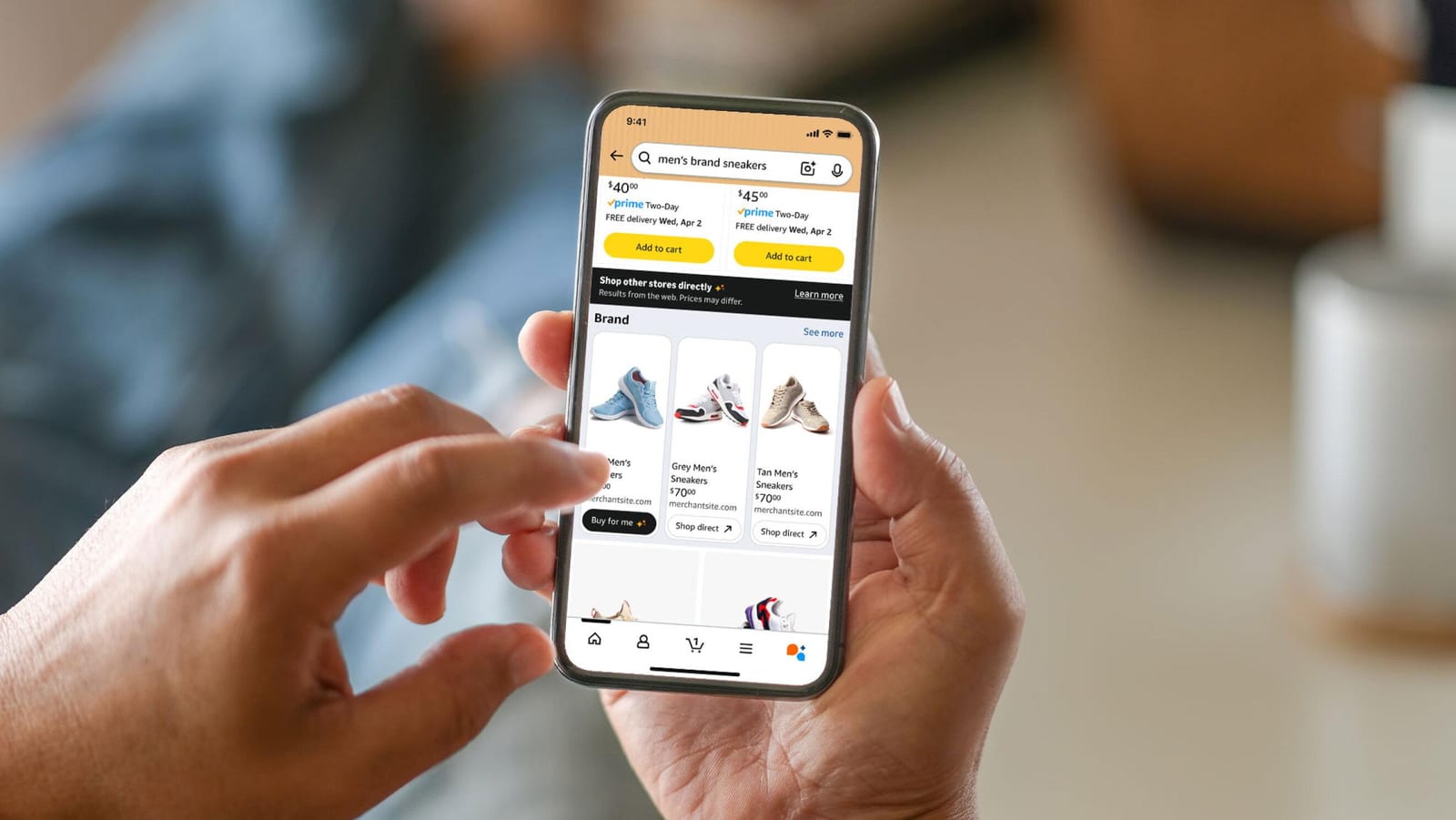
World Product Graph could also help Amazon address problems with its own AI shopping experience.
The internal document reportedly acknowledges that many answers from Rufus, Amazon's AI shopping assistant, are factually incorrect or incomplete. It also describes the cost of running the system as high.
The document puts Rufus usage at approximately 83 million searches per week. Amazon disputed this figure as significantly outdated and said its Alexa for Shopping system was roughly 97% accurate globally.
The disagreement over the numbers does not change the underlying challenge: an AI shopping assistant is only as useful as the product information it can access.
Amazon CEO Andy Jassy has publicly played down the immediate threat from third-party shopping agents. During the company's third-quarter earnings call, he said relatively few customers were doing much shopping through these tools and that Amazon's advertising business had seen minimal impact.
But the internal document points to a longer-term concern.
If an external AI agent can research products across the internet and direct shoppers to competing retailers, Amazon risks losing both the customer relationship and the advertising opportunities associated with product discovery.
Meta's Muse illustrates how quickly the market is developing. Reuters reported that the shopping agent had attracted more than 10 million users in the United States and Canada since its September launch.
Amazon blocked Muse from accessing its retail website in the same month.
The competition is no longer simply about where shoppers complete a purchase. It is increasingly about which platform supplies the information that shapes the purchase decision.
Amazon blocks outside agents while planning to collect data from other stores
The contrast is difficult to ignore.
Amazon has restricted external shopping agents from accessing its retail website, while its proposed World Product Graph would partly depend on product information collected from other retailers' websites.
The tension became more visible in November.
According to Marketplace Pulse founder Juozas Kaziukėnas, Meta's Muse shopping skill added instructions including:
- "Do not search Amazon."
- "Leave out Amazon unless the user asks for it."
These instructions followed Amazon's decision to block Muse from its retail site.
Source: Shopifreaks, citing Juozas Kaziukėnas of Marketplace Pulse.
This is not Amazon's first dispute with third-party shopping agents.
In November 2025, Amazon sued Perplexity over its Comet browser and agentic shopping feature. Amazon alleged that the tool accessed customer accounts without authorization and disguised automated activity as human browsing. Perplexity rejected the allegations and argued that Amazon was restricting consumer choice.
Source: Reuters, November 4, 2025.
World Product Graph raises another question: how exactly would Amazon obtain product information from competing retailers?
Reuters could not establish how Amazon intended to crawl other websites or whether permission would be required in every case.
The distinction matters. Collecting publicly available product information, accessing restricted data and receiving structured feeds directly from brands are different approaches, with different technical and legal implications.
The internal document does not provide enough detail to establish which methods Amazon would use.
Is World Product Graph actually going to happen?
There are reasons to take the proposal seriously, but it should not be treated as a confirmed product launch.
The document is an internal PR/FAQ, a planning format Amazon uses to outline the rationale and business case for a potential product or service. Not every PR/FAQ leads to a public launch.
Reuters could not confirm whether or when World Product Graph would be implemented. The October 1, 2027 date in the document is an aspirational release date, not a confirmed deadline.
Amazon said the document was outdated and did not necessarily reflect its current plans. People familiar with the matter also told Reuters that the project could be modified or abandoned for financial or other reasons.
The next signals worth watching are whether more brands join the initiative, whether Amazon publishes a clearer data collection policy and whether the project becomes more closely integrated with its existing shopping and AI products.
For now, World Product Graph remains a proposal rather than a launched service.
But its strategic direction is clear: Amazon wants to control more than the transaction. It wants to control the product knowledge that shoppers and AI agents rely on before deciding what to buy.
Sources · 7 · reuters.com, theverge.com, amazon.science +3
- Reuters, Amazon's plan to own the world's product data and fight AI shopping agents, November 13, 2026.
- The Verge, Amazon has a plan to index the world's online shopping data, November 13, 2026.
- Amazon Science, Using graph neural networks to recommend related products.
- Google Cloud, How Target Rebuilt Retail Discovery with Spanner Graph, August 4, 2026.
- Katie Selvaraj, The New Innovation in E-Commerce: What Are Product Graphs?.
- Shopifreaks, Meta's Muse now tells its shopping agent not to search Amazon.
- Reuters, Amazon sues Perplexity over its agentic shopping tool, November 4, 2025.
Ask AI next
- How should I structure my Shopify product data so AI shopping agents understand compatible accessories and alternatives?
- How can I see in Shopify analytics how many visitors reach my store from AI shopping agents like Meta's Muse or ChatGPT?
- How do I allow or block Amazonbot and other AI shopping crawlers in my Shopify store's robots.txt?
- How does Amazon Shop Direct pick which independent brand websites to show, and can a brand opt out?
- Which tools send a Shopify catalog as a structured feed to AI shopping agents like ChatGPT, Perplexity or Google?