All stories · Article
Beauty ecommerce UX: What stops shoppers from finding, trusting and buying products
A polished storefront does not necessarily deliver a good shopping experience.
Share: WhatsApp · Telegram · X · Facebook · LinkedIn · Email

On November 17, 2026, Baymard Institute published a large-scale Health & Beauty ecommerce UX benchmark covering 10 major retailers, including Sephora, Ulta Beauty, Glossier, CHANEL, and Walgreens.
Researchers manually assessed more than 500 UX parameters, producing over 6,000 weighted performance scores and 4,500 best-practice examples.
The finding: the average site scored “Mediocre”, and none achieved an overall “Good” rating.
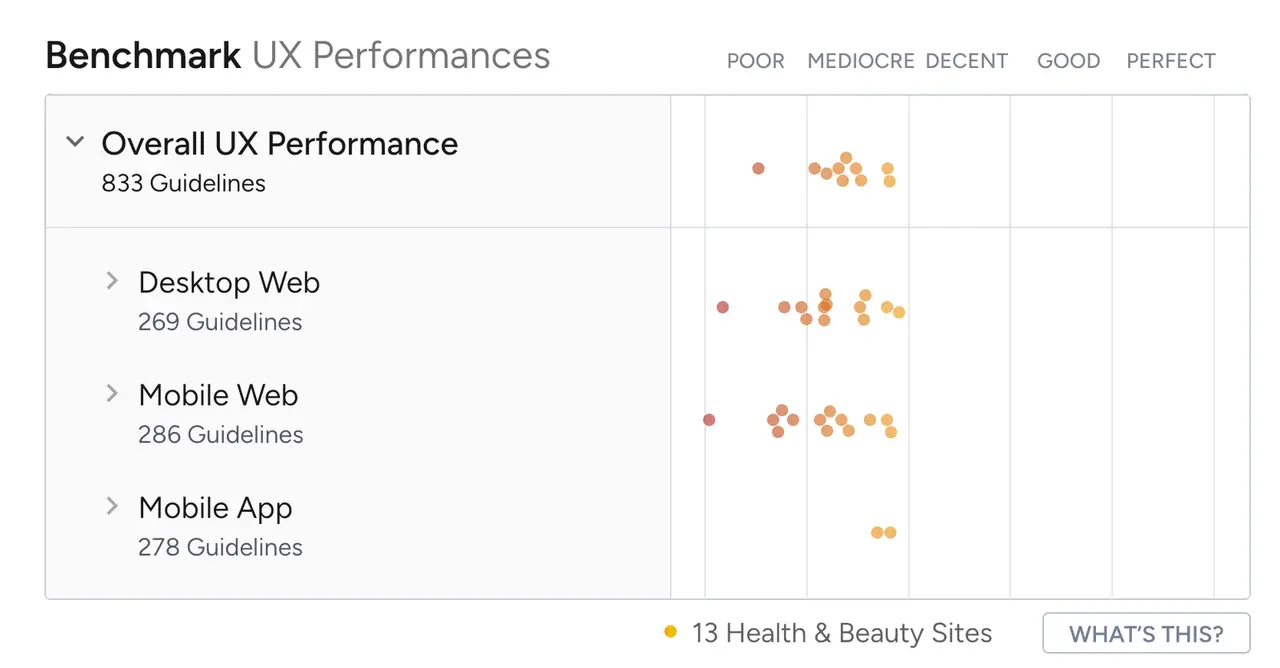
A well-designed storefront is only one part of the UX equation. Product pages need to do more than look polished: they must help customers understand products, find relevant information, and make confident purchasing decisions. Search, filters, and checkout must also work effectively to keep the shopping journey moving.
For Shopify beauty sellers considering a redesign, the priority should be evaluating the entire customer experience, not just the most visible parts of the storefront.
Source: Baymard Institute, Health & Beauty UX Benchmark, November 17, 2026
A beautiful storefront can still make shopping difficult
Most benchmarked websites already had polished interfaces and curated product discovery experiences. Their weaknesses appeared in the underlying functionality.
Baymard identified three recurring problem areas:
- Search: Many sites struggled with misspelled queries, feature-based searches, and providing useful alternatives when no results were found.
- Filters: Essential options such as “New Arrivals” and “Symptom” were missing on many sites. Others had overlapping filters or inconsistent product counts.
- Checkout: Delivery timelines, order summaries, and error prevention were often missing or implemented inconsistently.
These are not necessarily visual design problems. They are problems with how a store helps customers move through the buying process.
This distinction matters when evaluating redesign proposals. Discussions about product page redesigns, often focus on how the product page communicates trust, clarity, offers, and reassurance.
That work matters. But improving the product page alone will not fix a search function that cannot understand a customer's query or a checkout that leaves delivery expectations unclear.
An effective redesign should improve the entire shopping journey, from product discovery to evaluation and checkout.
Beauty shoppers need more than five-star reviews
A separate Baymard study, published on February 25, 2026, provides another important piece of the picture.
The research covered 18 US websites and more than 275 moderated usability testing sessions.
One finding stands out: for beauty shoppers, the reviewer's profile can be more useful than the star rating.
During testing, a participant looking at a hair serum wanted to know the reviewer's hair type. Despite the positive reviews, she could not determine whether the feedback applied to someone like her.
Her next step was to search for the product on YouTube.
Baymard explains that information such as a reviewer's age, skin type, and eye color helps shoppers identify people with similar characteristics and judge whether a product might work for them.
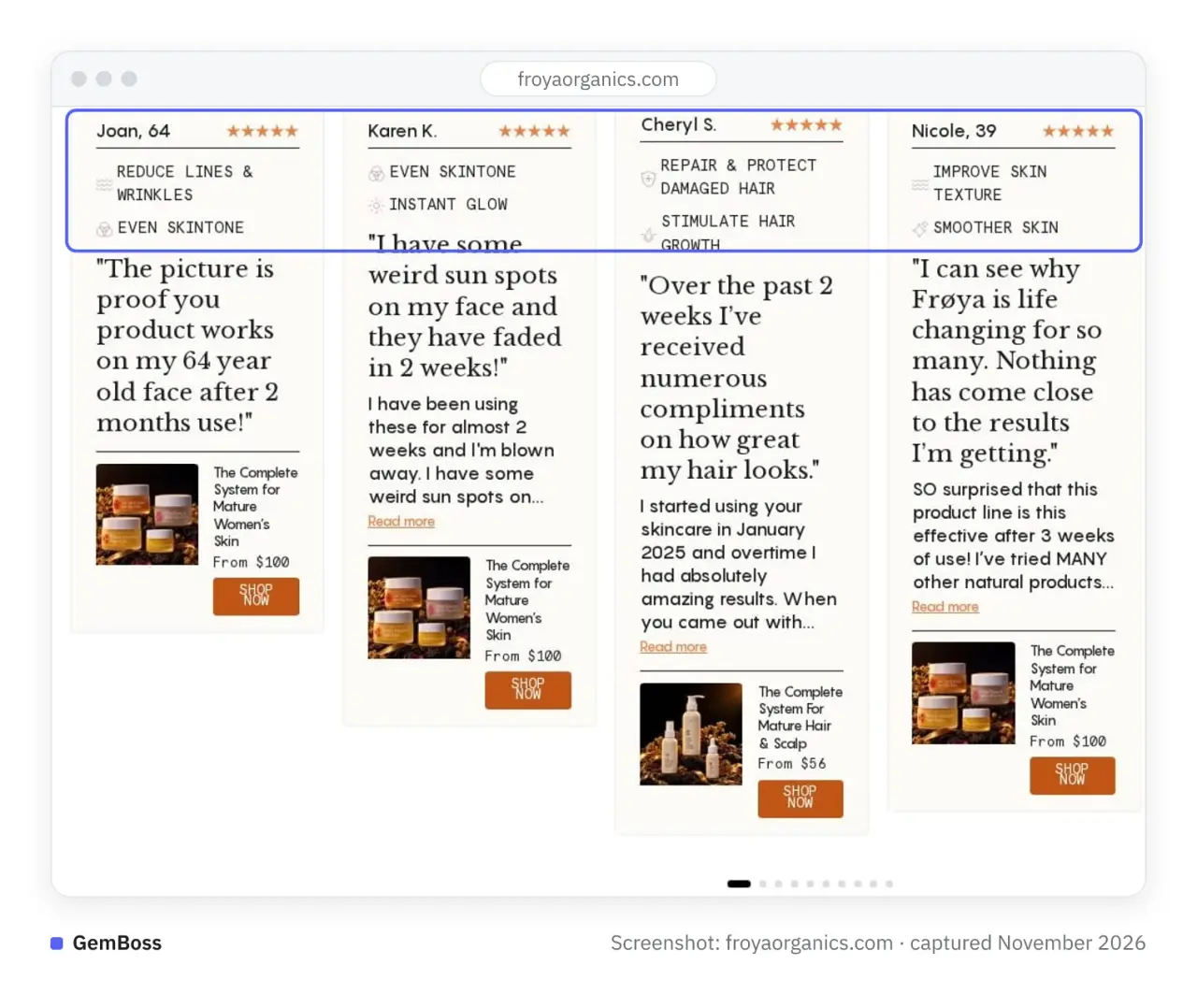
Frøya Organics puts the reviewer's first name, age where given and short tags such as "Even skintone" on every review card. Screenshot of the Frøya Organics product page, captured in November 2026.
In other words, five stars tell customers that someone liked the product. A relevant reviewer profile helps them understand whether they might like it too.
Source: Baymard Institute, Health & Beauty UX Research, February 25, 2026
Four mobile checks to run before hiring a redesign agency
You do not need access to Baymard's paid benchmark to start identifying these problems. Run four simple tests on your own Shopify store.
1. Search using a misspelled product name
Choose one of your best-selling products and deliberately misspell its name in the search bar.
Does the store still show the intended product or suggest a useful correction?
A search function that only works when customers type the exact product name creates unnecessary friction.
2. Search for something your store does not sell
Look at the “No Results” page.
Does it suggest alternative products, related categories, or another way to continue shopping? Or does it leave customers at a dead end?
Baymard's broader ecommerce search research explains why useful recovery options matter when a search returns no results.
Source: Baymard, 5 Proven UX Strategies for “No Results” Pages
3. Check delivery information at checkout
Add a product to your cart and proceed to checkout.
Can customers see when their order is expected to arrive, rather than just a generic shipping option or delivery method?
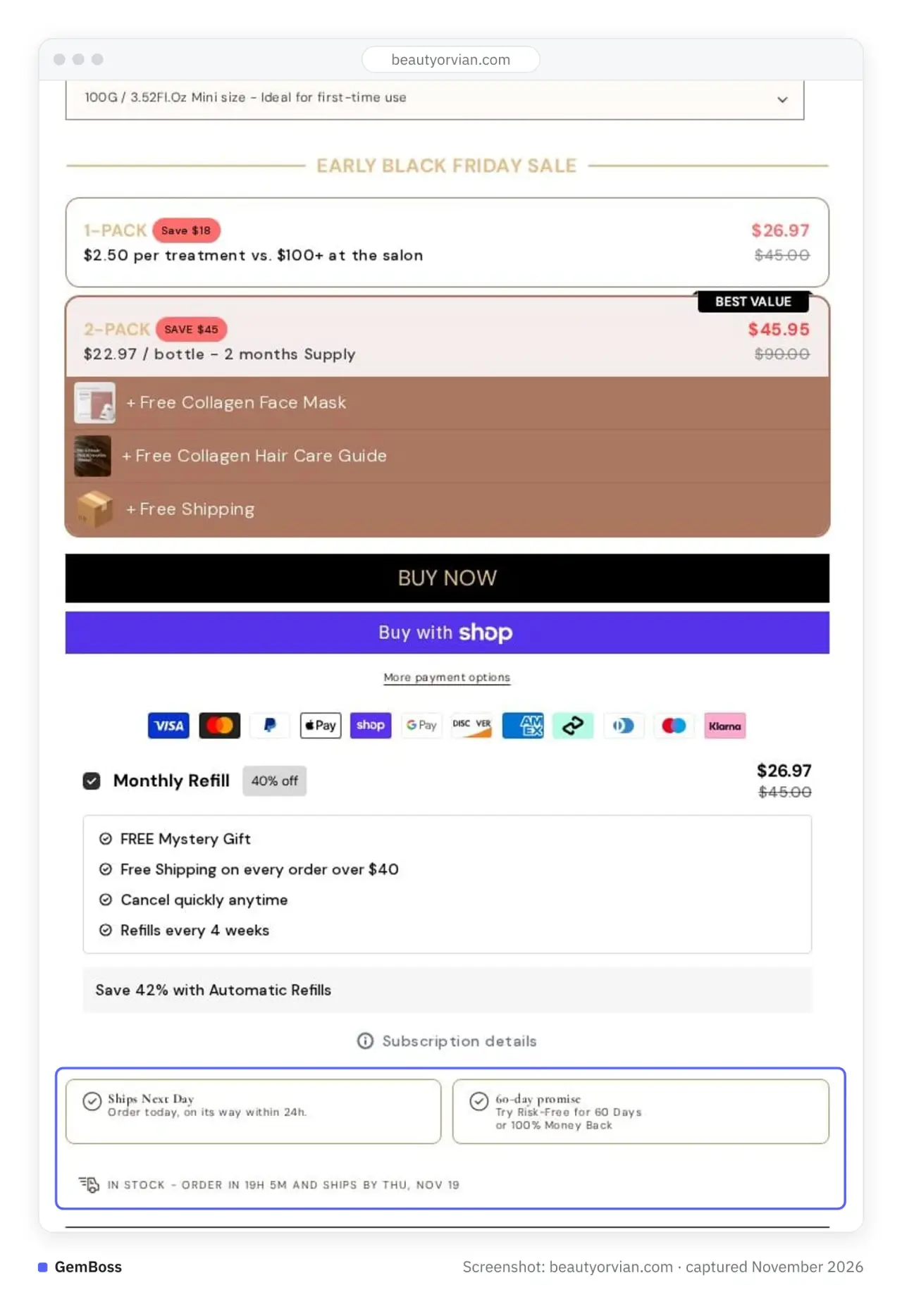
Orvian states when an order ships on the product page itself, before checkout: "Ships Next Day" plus a ships-by date. Screenshot of the Orvian product page, captured in November 2026.
Clear delivery expectations help customers make an informed purchase decision.
4. Open the reviews and inspect reviewer information
Can customers identify the reviewer's skin type, hair type, or other relevant characteristics?
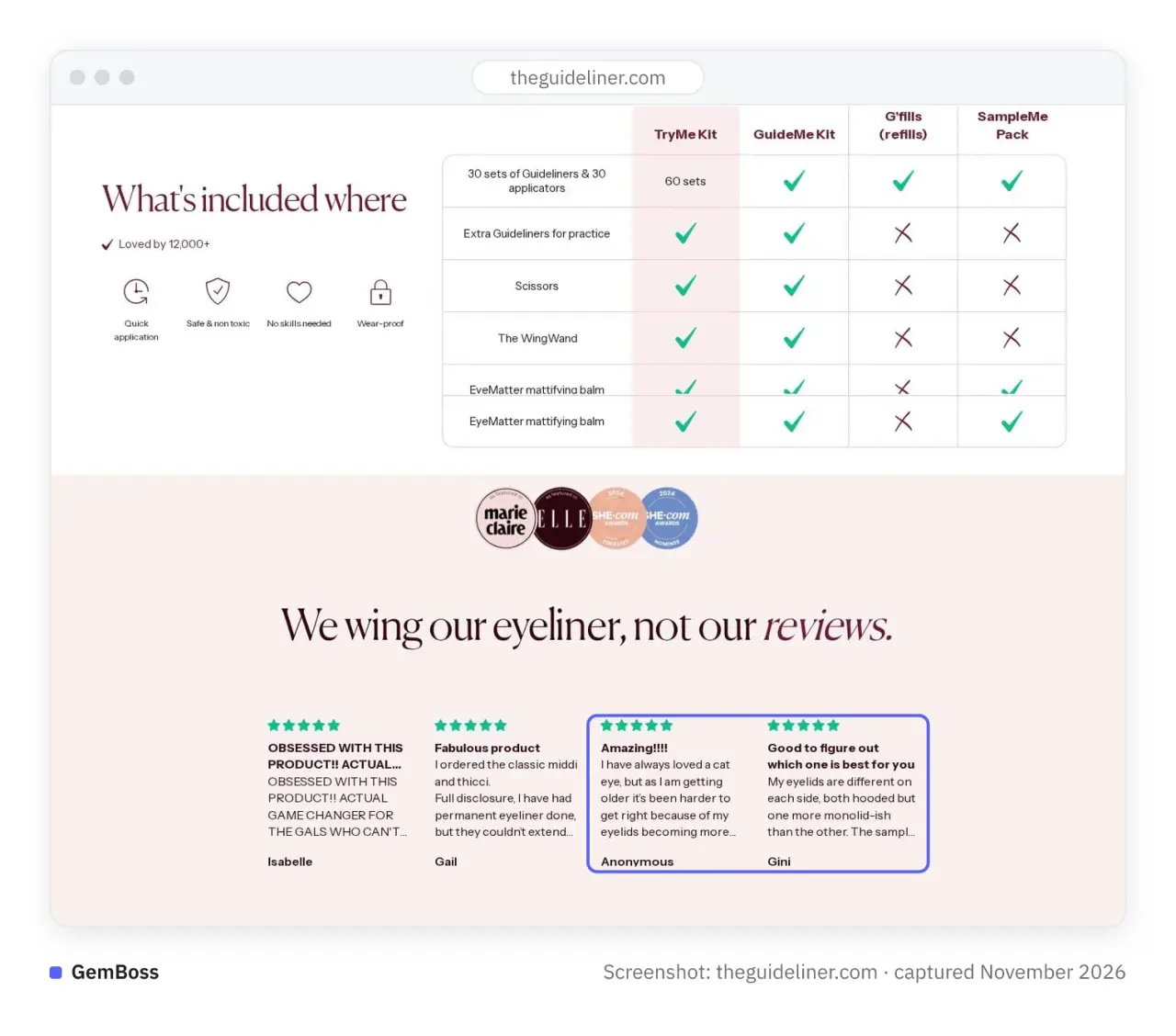
On TheGuideliner's TryMe Kit page, two of these four reviewers describe their eyelids as hooded, the kind of detail that helps shoppers with similar eyes judge the fit. Screenshot of the TheGuideliner product page, captured in November 2026.
For beauty products, these details can make reviews significantly more useful than star ratings alone.
Which test does your store fail?
Before investing in a new storefront design, check whether customers can find the right product, recover from a failed search, understand delivery expectations, and evaluate reviews from people like themselves.
These are four practical starting points, not a complete UX audit. A store with a small catalog may rely less on search and filtering than a large beauty retailer, so the priority should reflect how customers actually shop.
If you run a Shopify beauty store, which of these four tests does your store fail?
And if you are an agency working on beauty ecommerce redesigns, what do you audit beyond the first screen of a product page?
Sources · 6 · baymard.com, froyaorganics.com, beautyorvian.com +1
- Source: Baymard Institute, Health & Beauty UX Benchmark, November 17, 2026 · baymard.com
- Frøya Organics product page · froyaorganics.com
- Source: Baymard Institute, Health & Beauty UX Research, February 25, 2026 · baymard.com
- Source: Baymard, 5 Proven UX Strategies for “No Results” Pages · baymard.com
- Orvian product page · beautyorvian.com
- TheGuideliner product page · theguideliner.com
Ask AI next
- What checkout error-prevention details should I test beyond delivery dates, like form validation or address errors?
- Which Shopify review apps let me add reviewer attributes like skin type or hair type to product review cards?
- Has anyone benchmarked beauty ecommerce UX outside the US retailers Baymard studied?
- Will Baymard re-run this benchmark later to see if retailers improve from 'Mediocre' to 'Good'?