All stories · Article
BFCM final stretch: optimize your bestselling product pages, avoid A/B testing during sale week
As BFCM approaches, Shopify merchants are entering the final stretch of preparation. The priority now is to finalize the product pages that matter most, complete risky storefront changes before a defined freeze date, and avoid testing unproven versions during the sale.
Share: WhatsApp · Telegram · X · Facebook · LinkedIn · Email

The goal is simple: enter BFCM with a storefront that has already been tested, not one that is still being experimented on.
Fix your bestselling product pages before the freeze
When shoppers arrive directly on a product page, that page has to do the selling. They may never visit the homepage, browse a collection or learn about the brand elsewhere on the store.
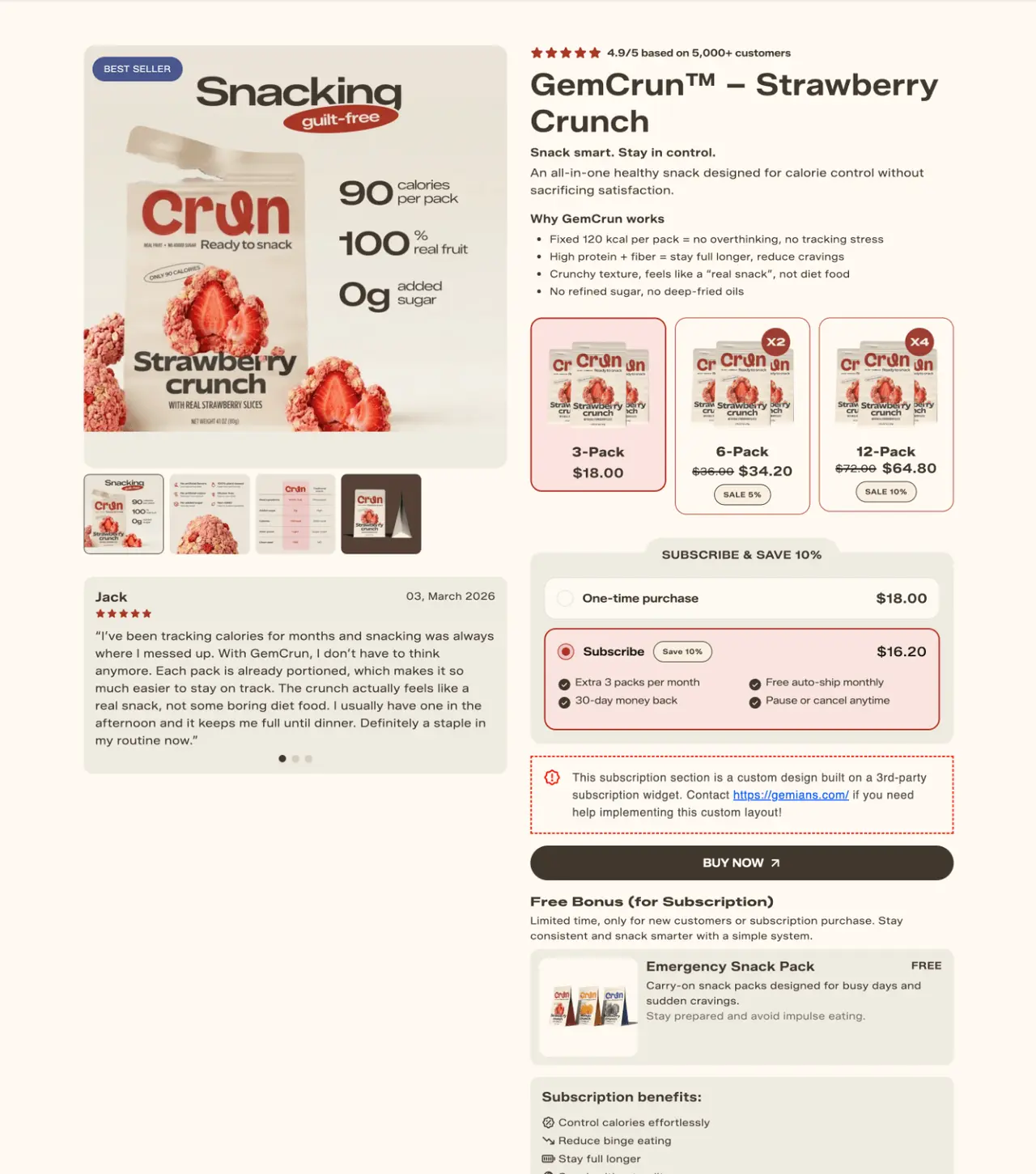
This is not just a theoretical concern. Ethercycle's analysis of 10 established US Shopify stores found that 67% of ChatGPT-referred visitors landed directly on a product page, bypassing the homepage. Shopify's own Q1 2026 analysis found a similar pattern: 55% of AI-referred sessions started on product pages, compared with around 20% of organic search sessions.
Ethercycle also found that 85% of revenue attributed to AI referrals came from first-time customers, based on its 24-month dataset. AI referrals accounted for just 0.11% of sessions in its 2026 year-to-date data through November 9, so this is not yet a major traffic channel. The more relevant takeaway is that product pages increasingly need to convert visitors who have no prior relationship with the store.
Sources: Ethercycle's State of Ecommerce 2026 | Shopify's Q1 2026 AI search analysis
For BFCM, start with the one to three products that generate the most revenue or receive the most paid traffic. Review what a first-time visitor can understand without scrolling:
- Price and offer: Is the actual selling price clear? Are discounts, bundles and promotional conditions easy to understand?
- Product images and information: Can shoppers understand what they are buying, including key features, variants and sizing?
- Reviews and trust signals: Are customer reviews and relevant product credentials easy to find?
- Delivery and returns: Are shipping costs, estimated delivery dates and return policies visible?
- Add-to-cart: Is the purchase action prominent and working properly on mobile?
Prioritize changes supported by store data, customer feedback or observed usability problems. Do not redesign a page simply because it looks outdated.
In his BFCM CRO recommendations, Shopify CRO practitioner Goldi Kambale argues that merchants should implement evidence-backed changes before the sale rather than introduce unproven changes during peak traffic.
Set a change freeze before Black Friday
Black Friday is November 27. Several operators recommend completing major storefront changes by November 20, while other recommendations suggest an earlier cutoff.
November 20 is a practitioner recommendation, not an official Shopify deadline. Each store should set its freeze date based on its own development capacity, testing process and operational risk. If your store needs more time to verify changes, freeze earlier.
The main priority is to stop introducing changes that could disrupt the shopping or checkout experience.
| Change category | Examples | Recommended approach after the freeze |
|---|---|---|
| Store infrastructure | New apps, theme code, checkout configuration | Freeze. Only address critical issues |
| Discount and catalog logic | Discount rules, product availability, pricing configuration | Avoid untested changes |
| Product-page content | Copy, images, product information | Allow only reviewed, low-risk corrections |
| Campaign operations | Email schedules, ad creative, campaign messaging | Continue within the approved campaign plan |
Price changes deserve particular care. Even when they do not require code, they can affect discount stacking, product feeds, ad messaging and customer expectations. Any necessary adjustment should be checked across the entire purchase journey.
The distinction is between keeping the store stable and continuing to operate campaigns that have already been prepared. A change freeze should not prevent merchants from managing their marketing activity.
Should you A/B test during Black Friday?
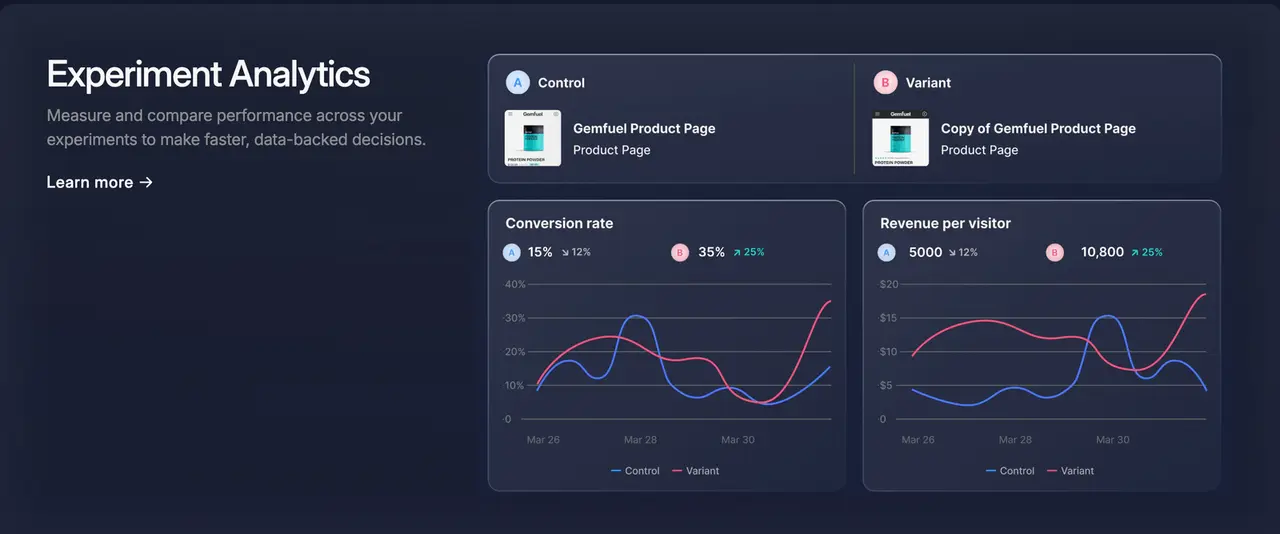
For most small and mid-sized Shopify stores, the answer is no.
There are three reasons to avoid introducing new experiments during the BFCM peak.
1. Sale traffic behaves differently.
Customers during BFCM are influenced by discounts, urgency, gift-buying needs and limited-time offers. A product page variation that wins during a promotional event may not perform as well under normal shopping conditions.
As Luca Valori, a store operator, explains in his BFCM post, his team had already tested offers, bundles and product pages in October. Waiting until the most expensive traffic period to decide which offer or page works best means paying more to learn something that could have been learned earlier.
2. A short testing window does not guarantee reliable results.
High traffic can help an experiment reach its required sample size faster, but it does not eliminate the need for statistical validity. Merchants still need enough observations, a clear primary metric and a testing period that accounts for changes in customer behavior.
A few days of BFCM data may show a difference between two versions without establishing that the difference is reliable or applicable beyond the sale.
3. A losing variation costs more during peak days.
Paid traffic is expensive, and every visit matters more when conversion opportunities are concentrated around a short promotional window. A weaker variation can reduce revenue precisely when the store has the greatest chance to sell.
There are exceptions. Large stores with substantial traffic, experienced experimentation teams and a narrowly defined sale-specific hypothesis may be able to run controlled tests. But that is very different from improvising a new page design during the busiest shopping period.
Shopify's Rollouts feature supports scheduled launches, gradual releases and A/B testing across themes and checkout configurations. It also allows merchants to schedule temporary changes and automatically revert them. These capabilities provide useful control, but the availability of testing tools does not make every testing window strategically appropriate.
Sources: Shopify Changelog: Rollouts and A/B testing | Shopify Rollouts documentation
Measure the impact after BFCM
Avoiding experiments during the sale does not mean giving up on optimization. It means separating the period for generating revenue from the period for measuring whether a change actually works.
Goldi Kambale proposes starting a 50/50 holdback test on January 5, 2027. Half of visitors would continue seeing the original experience, while the other half would see the updated version.
His proposed decision rule is to keep a change if:
- Add-to-cart rate improves by at least 5%.
- The improvement reaches 95% statistical confidence.
- The return rate does not deteriorate.
This is one CRO practitioner's proposed testing framework, not a universal benchmark. Each store should establish its own sample-size requirements, primary metric and guardrails before running the experiment.
Your final-stretch BFCM checklist
- Choose: Identify one to three high-impact improvements on your bestselling product pages, backed by store data.
- Complete: Finish changes involving apps, themes, checkout and discount logic before your store's freeze date.
- Protect: Run the approved storefront version throughout BFCM. Avoid splitting traffic across unproven alternatives.
- Measure: Set your decision criteria in advance and schedule a controlled holdback test after the sale.
Black Friday is not the time to find out whether a new storefront idea works. It is the time to put your best-performing experience in front of as many qualified shoppers as possible.
Ask AI next
- How do I quickly roll back a storefront change using Shopify's Rollouts feature if something breaks during BFCM?
- How can I check what share of my store's traffic and revenue comes from AI assistants like ChatGPT?
- What tools can calculate the sample size and significance needed for a post-BFCM holdback A/B test?
- Does the AI-referral direct-to-product-page pattern hold across store sizes and categories beyond those studied?
- What early signals show AI referral traffic is growing enough to justify prioritizing AI-optimized product pages sooner?