All stories · Article
ChatGPT brings in only 0.1% of traffic, but AI visitors might be worth more than you think
In August 2024, 10 Shopify stores tracked by Kurt Elster, host of The Unofficial Shopify Podcast, received a total of 59 visits from ChatGPT.
Share: WhatsApp · Telegram · X · Facebook · LinkedIn · Email
In August 2026, that number jumped to 6,868—a 116-fold increase. Even so, he noted that ChatGPT traffic still only accounts for roughly 0.1% of total store visits. According to him, the more significant shift is happening on the revenue side.
Kurt Elster@kurtincRe-pulled our State of Ecommerce data through August. Same 10 Shopify stores, now 26 months.
ChatGPT sent these stores 59 visits in August 2024. This August it sent 6,868. That's 116x, and a new high.
It's still a tenth of a percent of traffic. The revenue side is what moved. https://t.co/LW0JT2i536Sep 23, 2026 · View on X
Looking at that 0.1% figure, many store owners might feel ChatGPT isn't worth worrying about just yet. In reality, session volume is only half the story—each visitor coming from AI is generating more revenue. That's why Shopify merchants should start preparing for this channel right now, using steps they can take directly inside the admin and on product pages. When evaluating this channel, focus on the value per visit rather than total traffic volume.
AI visitors deliver higher value
Adobe's August 2026 report analyzed over one trillion visits to US retail websites. In July 2026, AI-driven traffic converted 60% higher than traffic from other channels. Revenue per visit for this group was also 53% higher. Just a year prior, the reverse was true.
Shopify's Q2 2026 data reveals a similar trend:
- AI-driven visits to stores grew 197% year-over-year.
- Half of these visits went straight to product detail pages.
- Once on the product page, AI visitors converted roughly 80% higher than visitors coming from organic search.
- In verticals where shoppers need to compare specs before buying, AI conversion rates were nearly double.
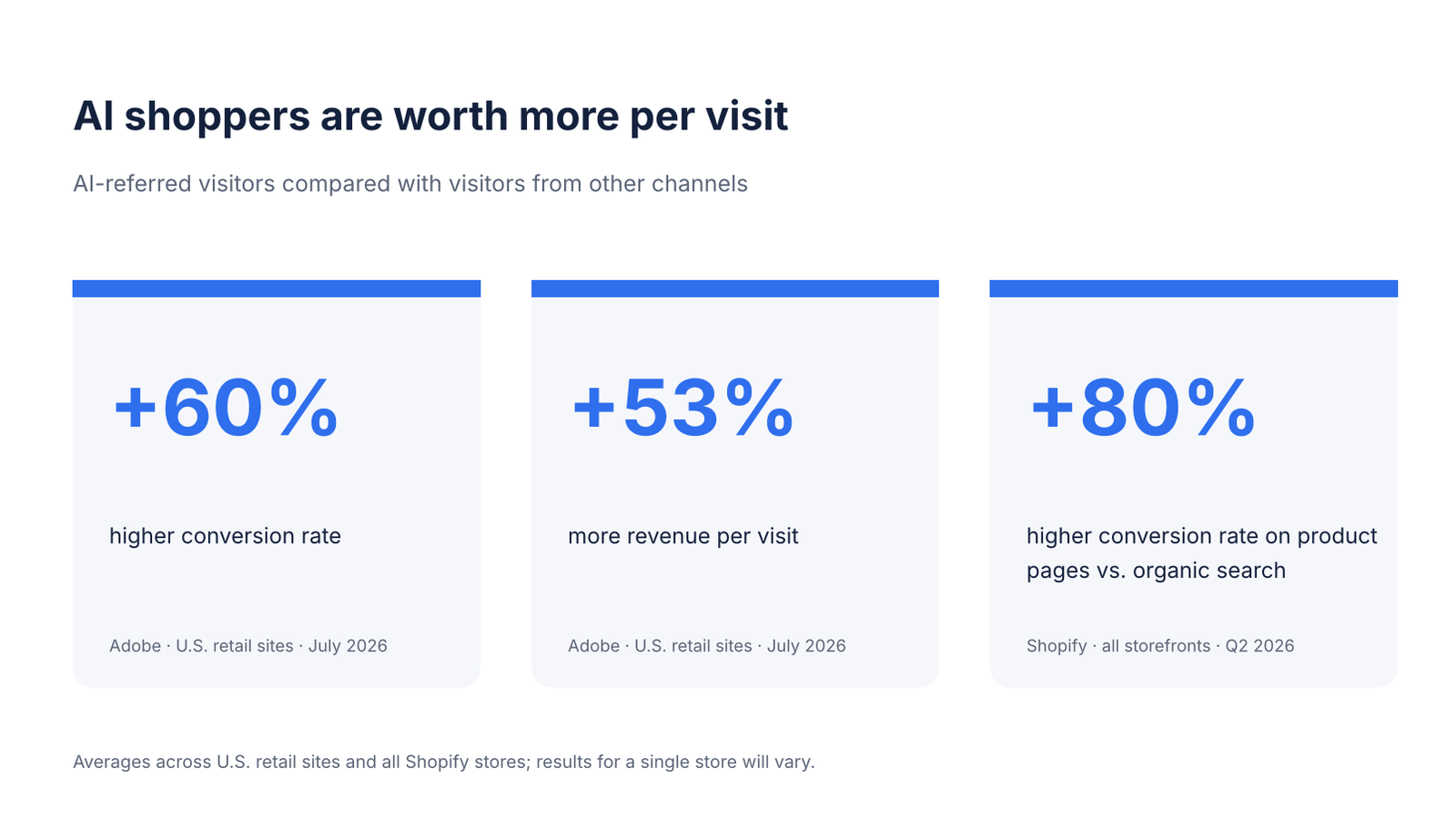
Shopify explains that shoppers do their research and evaluate products directly within their chat with the AI. By the time they land on a product page, their intent to purchase is much higher. Keep in mind, however, that these are averages across US retail sites and Shopify as a whole. The gap for your specific store could be higher or lower, so it's best to compare using your own data.
Additionally, Shopify noted that organic search traffic still grew by 12%. It continues to drive far more total traffic than all AI platforms combined. Therefore, AI should be viewed as a complementary channel to SEO.
Traffic numbers might be underreported
Your analytics may be undercounting AI traffic for at least three reasons.
The first reason is a tracking bug that surfaced in October. According to a recap by Search Engine Journal, following the launch of GPT-6, many links embedded in ChatGPT responses stopped carrying the utm_source=chatgpt.com tag or referral header details. Missing these parameters caused GA4 (Google Analytics 4) to classify those sessions as Direct traffic.
Cedric Huesler, Senior Director of Product Management at Adobe, compared roughly 500 pages between October 9–13 against the previous week. ChatGPT traffic dropped by about 31,000 daily visits, while Direct traffic on those exact same pages rose by roughly 26,000. He mentioned that OpenAI confirmed the bug and began rolling out a fix on October 15. However, Profound, an AI search tracking firm, noted that visits already misattributed as Direct won't be retroactively fixed.
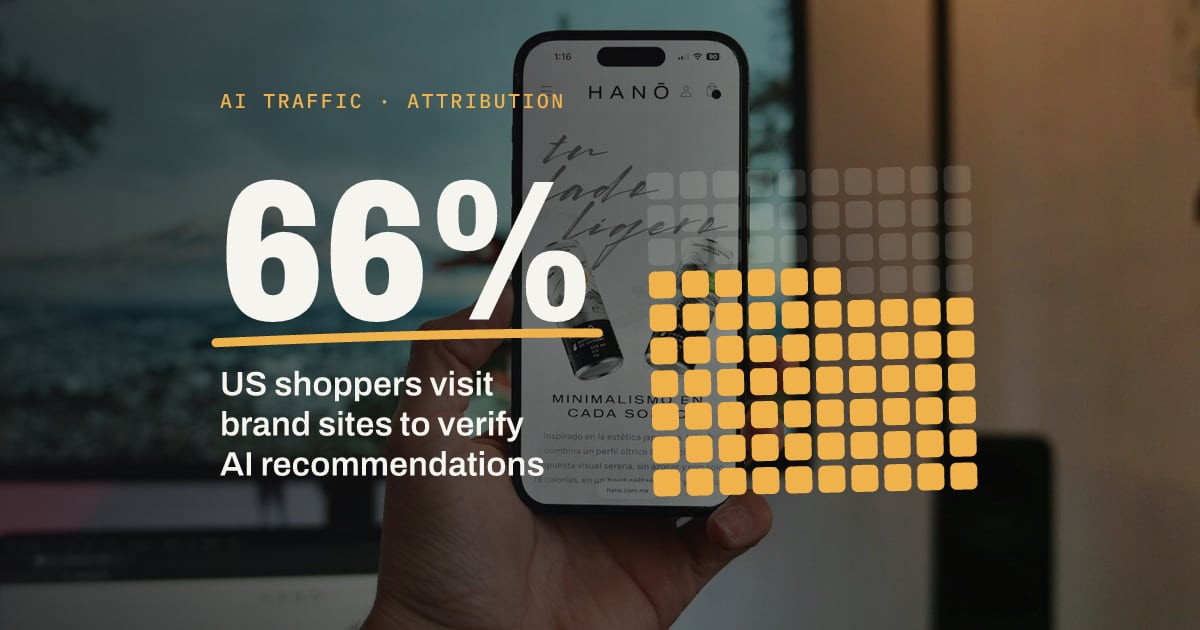
The other two reasons have actually been around for a while. According to Shopify, traffic coming from Google AI Overviews is frequently categorized as organic search. Meanwhile, Adobe's survey shows that 66% of US consumers navigate directly to a brand's website to double-check recommendations made by AI. Those visits end up showing in reports as direct traffic or branded search.
Because of this, reported AI traffic should be viewed as a baseline minimum.
In your analytics reports, make sure to note that ChatGPT figures between October 8–15, 2026 may be abnormally low due to this tracking issue, with a chunk of traffic misallocated to Direct.
How Shopify stores can prepare
Starting around August 14, the sources ChatGPT relied on for citations shifted dramatically in just a matter of days. Petra Labs, a New York-based AI search intelligence firm, told Mi3 that ChatGPT citations for YouTube dropped 88%, Reddit dropped 81%, and TikTok fell 72%. Despite this, the actual brands recommended by ChatGPT remained virtually unchanged.
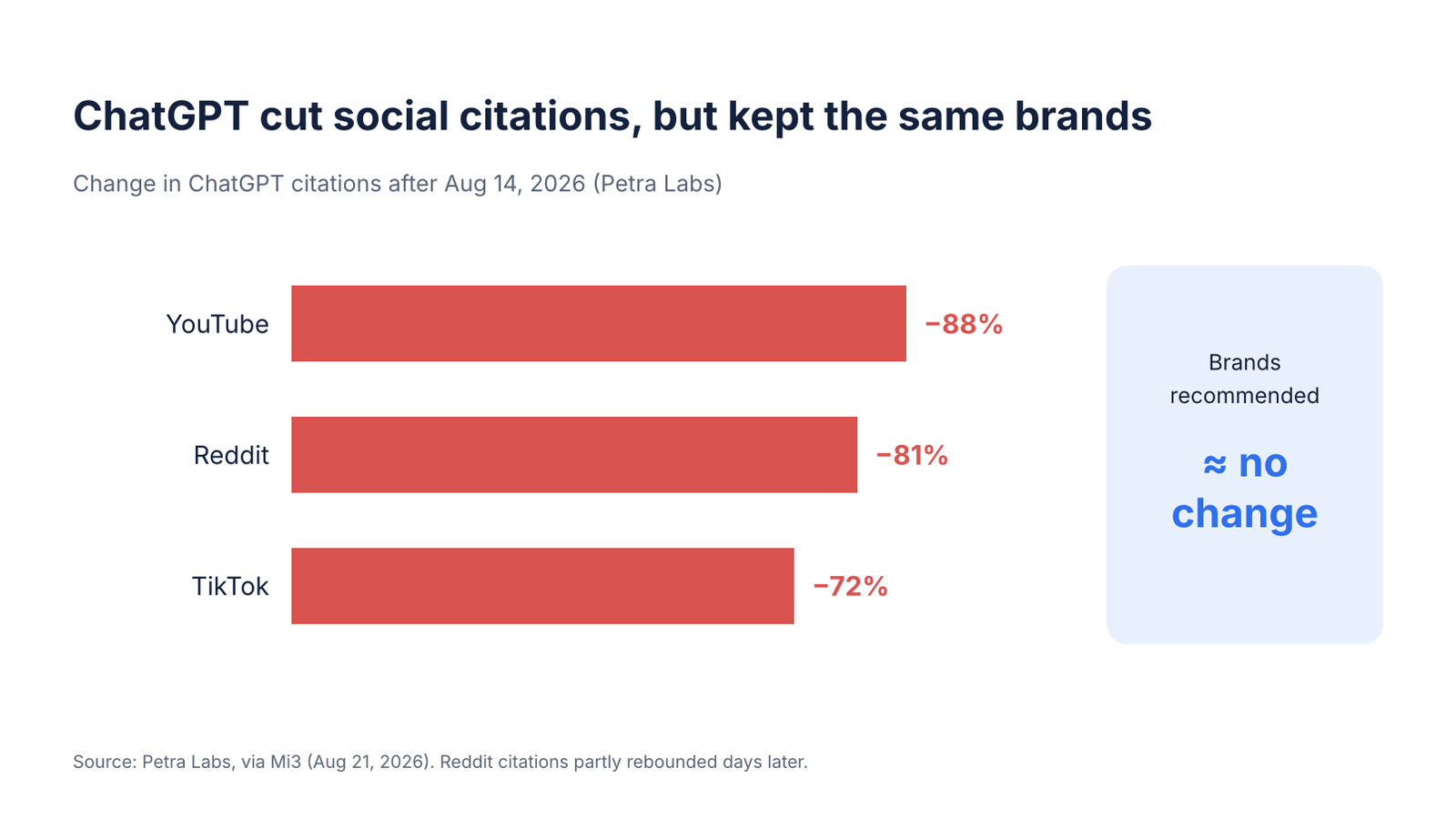
Sami Akkawi, co-founder of Petra Labs, observed that users asking questions were still "seeing the exact same set of brands suggested," with the primary difference being that the accompanying links pointed to different sources. A few days later, Reddit citations bounced back slightly but stayed below previous levels, and Petra Labs generally advised clients against making drastic strategy shifts.
This shows that the specific sources ChatGPT chooses to cite can change at any moment. What you can control is the information about your own products.
Shopify noted that when AI relies on structured product data pulled directly from the Shopify Catalog, referred visitors convert at twice the rate compared to when AI scrapes data from raw web pages or third-party sources. Google also confirmed that AI Overviews and AI Mode share the same core ranking systems as Google Search.
Shopify's guide on agentic commerce outlines several straightforward steps you can handle yourself:
- Write titles and descriptions that explicitly list specs like materials, dimensions, target audience, and compatibility.
- Group colors and sizes of the same item into product variants rather than listing them as separate standalone products.
- Create dedicated, indexable pages for your return policy, shipping details, and FAQs—avoid burying them inside accordions or JavaScript snippets that AI crawlers struggle to parse.
- Display customer reviews directly on the product detail page.
For merchants selling internationally, check Sales channels > Agentic inside your admin. Agentic Storefronts are enabled by default for eligible stores. Requirements include: being on a paid plan, an unpassworded storefront, and published terms of service, privacy policy, and refund policy pages. To qualify for inclusion in the Shopify Catalog, each product needs a title, at least one image, a price, and shipping availability to the US or Canada.
AI Mode and Gemini are currently open to US-based stores selling to US customers, with Shopify actively expanding access.
Finally, try querying ChatGPT as if you were a shopper—for example, "What's a good [product category] under $[X]?" Then, see if your store gets mentioned and whether the details the AI provides are accurate. It's the fastest way to figure out which product pages need cleaning up first.
Sources
- https://x.com/kurtinc/status/2102761173846282304
- https://business.adobe.com/assets/pdfs/resources/sdk/ai-traffic-trends-report-august-2026/ai-traffic-trends-report-2026-08-19.pdf
- https://www.shopify.com/enterprise/blog/ai-search-category-behavior
- https://www.searchenginejournal.com/chatgpt-traffic-drop-appears-to-be-a-tracking-problem/593157/
- http://chatgpt.com
- https://www.mi-3.com.au/21-08-2026/very-rare-and-very-curious-chatgpt-guts-reddit-youtube-and-tiktok-citations-keeps
- https://www.shopify.com/blog/agentic-commerce