All stories · Article
Don't abandon a winning Meta ad angle just because the ads are losing steam
Keep an angle that already brings in orders.
Share: WhatsApp · Telegram · X · Facebook · LinkedIn · Email
Rebuild it in new formats and send most traffic to the landing page that already wins: on November 2, 2026, @ArijanJanes counted 2,316 Meta ads running for Koriderm, with 72% pointing to one listicle.
The poster counted those from outside the account. The upside is that you skip the slow hunt for a new reason to buy, but it only works for an angle that has already proven itself.
If nothing sells yet, this is not your next move.

A tired ad doesn't mean the reason to buy is gone
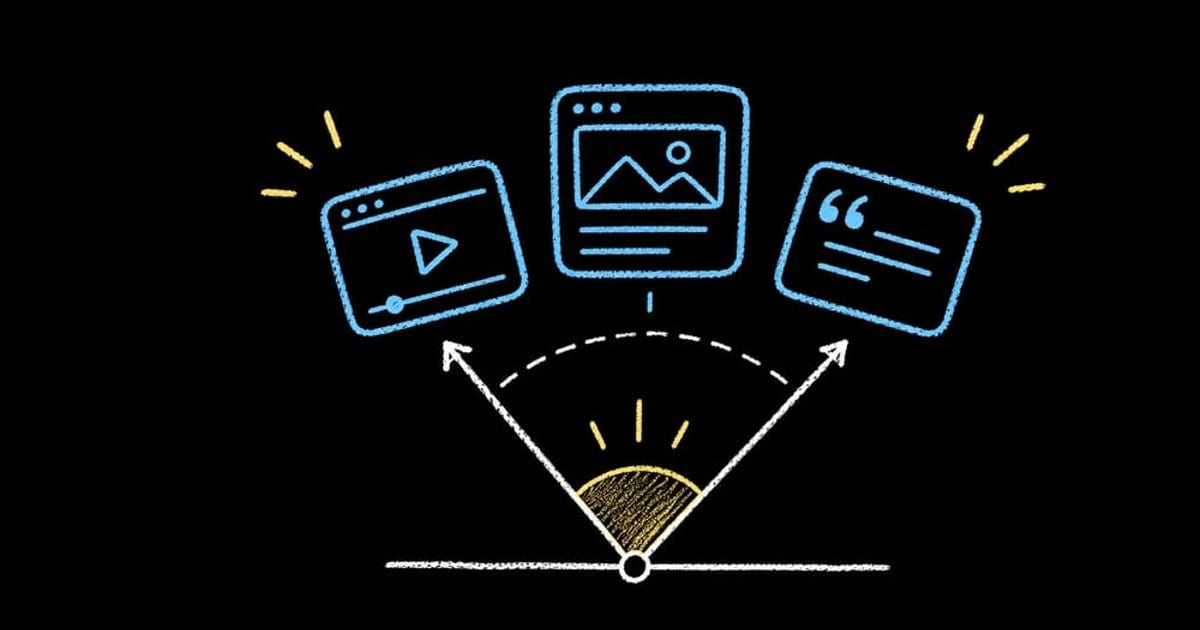
The angle is the reason someone buys: the promise, the pain it names, the belief it moves. The ad is one way of saying it. Glenn Nieuwenhuis (@GlennNieuwenh) argues that dropping a winning angle when its ad fatigues is usually the most expensive mistake in the account, because "When an ad fatigues, the angle behind it almost always still works."
A New Engen article by Shayla Crowder on when to iterate and when to diversify names the two moves. Iteration keeps the core idea and changes the execution, such as the hook, length, creator or format. Diversification changes the reason people respond: the motive, the problem or the kind of proof.
When an ad gets tired, start with iteration.
Glenn Nieuwenhuis@GlennNieuwenhA lot of people throw away a winning angle the moment the ad running it fatigues.
That's usually the most expensive mistake in the whole account.
When an ad fatigues, the angle behind it almost always still works.
The angle is the reason to buy. The promise, the pain it names, the belief it moves.
The ad is just one way of saying it.
People got tired of that specific video, while the problem it solved matters…Sep 30, 2026 · View on X
One angle, five ways to say it, and each must look different
@GlennNieuwenh lists five rebuilds of the same angle, to run across the funnel:
- Founder to camera, talking about the same problem.
- A one-line static that states the promise.
- A product demo that proves it.
- A native-style image with a long first-person story.
- A before and after that shows the result.
Glenn adds that Meta groups creatives that look alike, so 10 edits of one video count as roughly one test: change the format, the hook or who is on camera, and keep the promise. Dennis Willeboordse (@thedennis), who posts about ecommerce growth, reads fatigue from frequency, the average number of times each person has seen an ad. In a plan for running Meta on $100 a day, under 2 is runway and over 3 is tired, time for a new hook and a new first frame.
At $100 a day, that plan uses one campaign and launches different angles instead of 10 colors of the same ad.
Most traffic goes to the page that won, a small share tests
Per @ArijanJanes, 80% of Koriderm's ads go to a listicle and only 7 go to a regular product page. The rest are tests: 2 quizzes, an advertorial, a flip-to-win game and 8 numbered pages the poster reads as split tests. The poster's summary of the playbook: test a lot of pages, find the one that wins, pour more spend and traffic into it.
Arijan@ArijanJanesKoriderm is running 2,316 Meta ads right now.
80% of them go to a listicle.
72% go to ONE listicle.
Only 7 go to a regular product page.
The rest are tests: 2 quizzes, an advertorial, a flip-to-win game and 8 numbered pages they're clearly split testing.
That's the whole playbook:
-> Test a lot of pages
-> Find the one that wins
-> Pour more spend and traffic into it
The listicle getting 72%:…Nov 2, 2026 · View on X
The post gives no revenue, spend or conversion rate, and says nothing about the angles or formats in those ads. Still, if you rebuild one angle in five formats, all five could point at one page, and Glenn suggests a landing page that opens on the same message so the path to checkout stays consistent. Many ad versions can share one page, as long as the page opens on what the ads say.
Murat Bock at adlibrary ties the page type to how aware the shopper is: listicles suit people who already know the problem or the solution, while a product page fits once the ad has done the persuading.
A listicle is not automatically the right page for your store.
When do you actually need a new angle?
Skip this approach when no angle has proven itself yet. Glenn warns that one winning ad can be luck, while an angle that keeps winning across different executions is something the market has asked for. One good ad is a lead, so keep testing angles.
Skip it too when several versions of the same idea drop at once. In New Engen's example, 30 ads that all say one product benefit are one concept with 30 executions, and when many fall together the concept itself may be tired. That is the time to diversify.
One version slips: change the format. Every version slips together: find a new angle.
What to do this week
- Write your winning angle in one sentence, then brief 3 to 5 versions from the formats above, each with a different format, hook or person on camera. Skip this if the angle has won in only one ad.
- Check the first screen of your busiest landing page. adlibrary's test is whether the ad's angle shows up right there. If it doesn't, fix that screen before you add budget.
- Scale the way @thedennis describes it: raise the winner's budget 20–30%, wait 48 hours, raise it again. That is one practitioner's routine, so treat it as a starting point. Keep most traffic on the winning page and give one test page a small share; if the test page pulls ahead, feed it instead.
Keep the reason to buy, change how you say it, and send the traffic to the page that has already won.
Sources · 5 · x.com, newengen.com, adlibrary.com
- @ArijanJanes counted 2,316 Meta ads running for Koriderm · x.com
- @GlennNieuwenh · x.com
- New Engen article by Shayla Crowder on when to iterate and when to diversify · newengen.com
- @thedennis · x.com
- Murat Bock at adlibrary · adlibrary.com