All stories · Article
Don't go silent after the first order: customers may return sooner than you think
Share: WhatsApp · Telegram · X · Facebook · LinkedIn · Email
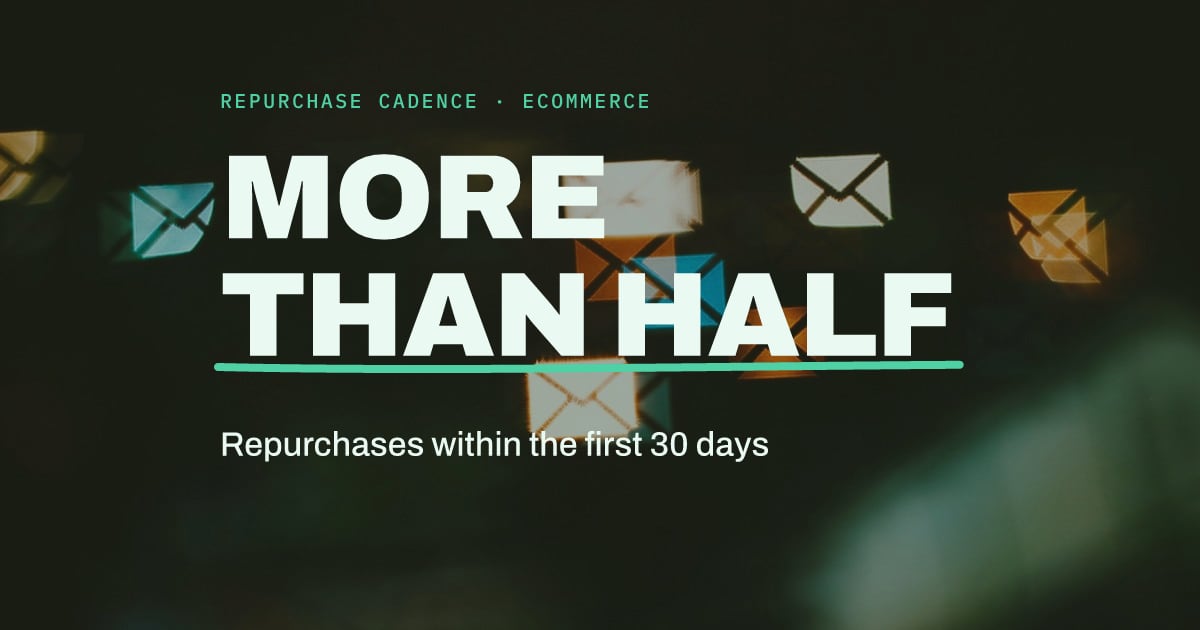
At one ecommerce brand account, the average repeat order lag is 54.6 days, but more than half of reorders land within the first 30 days after the initial purchase. Mark Mei, who handles email and SMS retention for direct-to-consumer brands, shared this data on LinkedIn in late October from one of his client accounts.
Meanwhile, many stores have virtually zero emails dedicated to recent buyers. Across three days from October 21–23, Ben Zettler, founder of an ecommerce email agency, Opeyemi Olawumi, a retention email marketing specialist, and Chloe Thomas, a customer journey advisor for wineries, all shared similar stories from stores they work with.
To see if this applies to you, check two things: your store's actual repeat purchasing cadence, and what your customers are currently receiving during that window.
Why averages can deceive you
Hearing "an average of 54.6 days," many assume they have nearly two months before needing to nudge the customer. But on this account, over half of the reorders came within the first 30 days after the initial order. This means if you schedule repeat purchase emails based on average lag, those emails will arrive after more than half of the reorders have already taken place.
Mark Mei's takeaway from this data:
"That is exactly why post-purchase flow timing matters way more than most brands think."
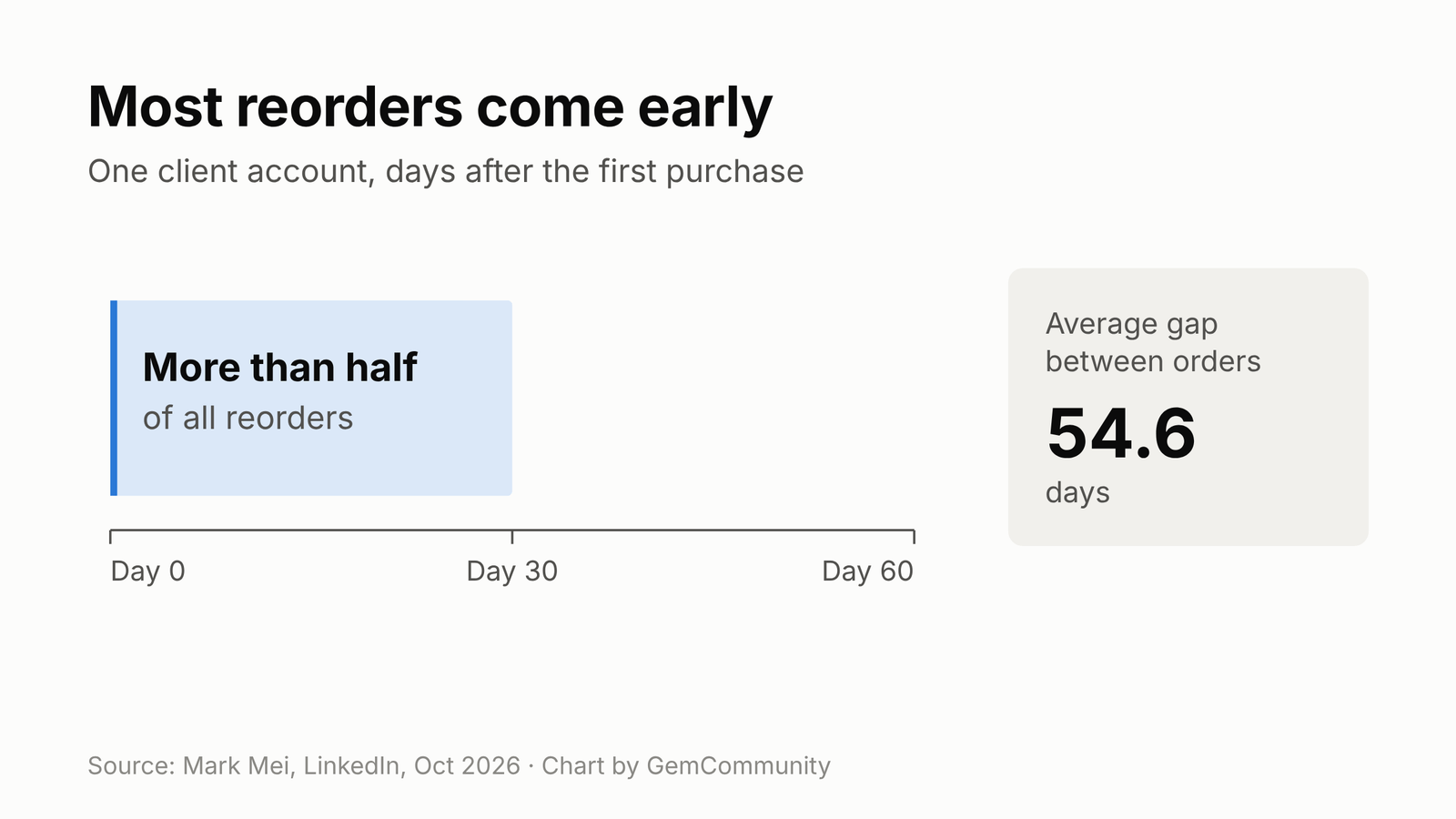
This is data shared from a single client account, so your store's cadence might look slightly different.
Many stores have almost no emails for recent buyers
The table below summarizes what the three experts observed. Take a look at the last column:
| Where | Existing automated flows | For recent buyers |
|---|---|---|
| Most Klaviyo accounts Ben Zettler audits | Welcome, abandoned cart, abandoned browse | Almost nothing |
| A skincare brand with 100k+ subscribers | 7 automated flows | Zero post-purchase flows |
| A winery that drove $6,000 in sales from a PR feature | Order confirmation emails only | No onboarding emails, no reason to return |
*Source: *Ben Zettler*, *Opeyemi Olawumi*, *Chloe Thomas*.*
The three primary flows Ben typically sees are all aimed at securing that first order. Across all three scenarios, post-purchase touchpoints are practically non-existent.
According to Ben, many brands stop building flows after the first order because their reporting stops there too. As a result, this gap can linger unnoticed for a very long time.
Audit your own store
Ben advises timing your second-order push based on your own brand's repeat purchase data, rather than relying on a default 30-day delay. If you can export an order history file with customer emails and order dates from your Shopify admin, you can analyze it in a spreadsheet:
Since this method only measures second orders, it provides an approximation, but it gives you a clear enough picture of how quickly your customers return.
The final step is critical because each product category has its own usage and reorder cadence. When discussing BFCM buyers, Ben suggests that for consumable goods like coffee, skincare, or supplements, the next email should hit right when the customer is about to run out. For high-ticket items like furniture or tech, customers won't buy another unit anytime soon, so post-purchase messaging should focus on assembly, care guides, and cross-selling relevant accessories.
Open the automated flows section in your ESP, list every sequence triggered after a purchase, and map them alongside standard transactional emails sent by Shopify. If there is radio silence outside of shipping updates, you have a gap to fill.
Bridge the initial weeks with product usage emails
Once you know the timeframe you need to cover, the next question is what to send. Chigozie Abawulem, who builds Klaviyo flows for Shopify brands, notes that standard transactional emails are usually covered by Shopify, and recommends a post-purchase sequence that accomplishes four main goals:
- Reassure the buyer with shipping updates and clear delivery timelines
- Onboard the customer with pro tips, care instructions, and quick-start guides
- Collect reviews after they have received and tried the product
- Offer a compelling reason to return with complementary cross-sells, not just a random bestseller
Ben advocates for a similar approach: sequences designed to help customers get value out of what they just bought, rather than firing off a 10% discount code two days after their first purchase.
Start with two data points
Before drafting your next campaign, get two things in order: the exact timeframe of when your customers actually repeat purchase, and a complete map of the emails they receive during that period. In Mark Mei's client account, a 54.6-day average sounded like plenty of runway, yet over half of all reorders occurred in month one.
Compare these two elements side by side, and you'll immediately see whether your store is staying silent right when customers are ready to buy again.