All stories · Article
Google Ads Are Expanding Into AI Search. Your Landing Pages Need to Catch Up
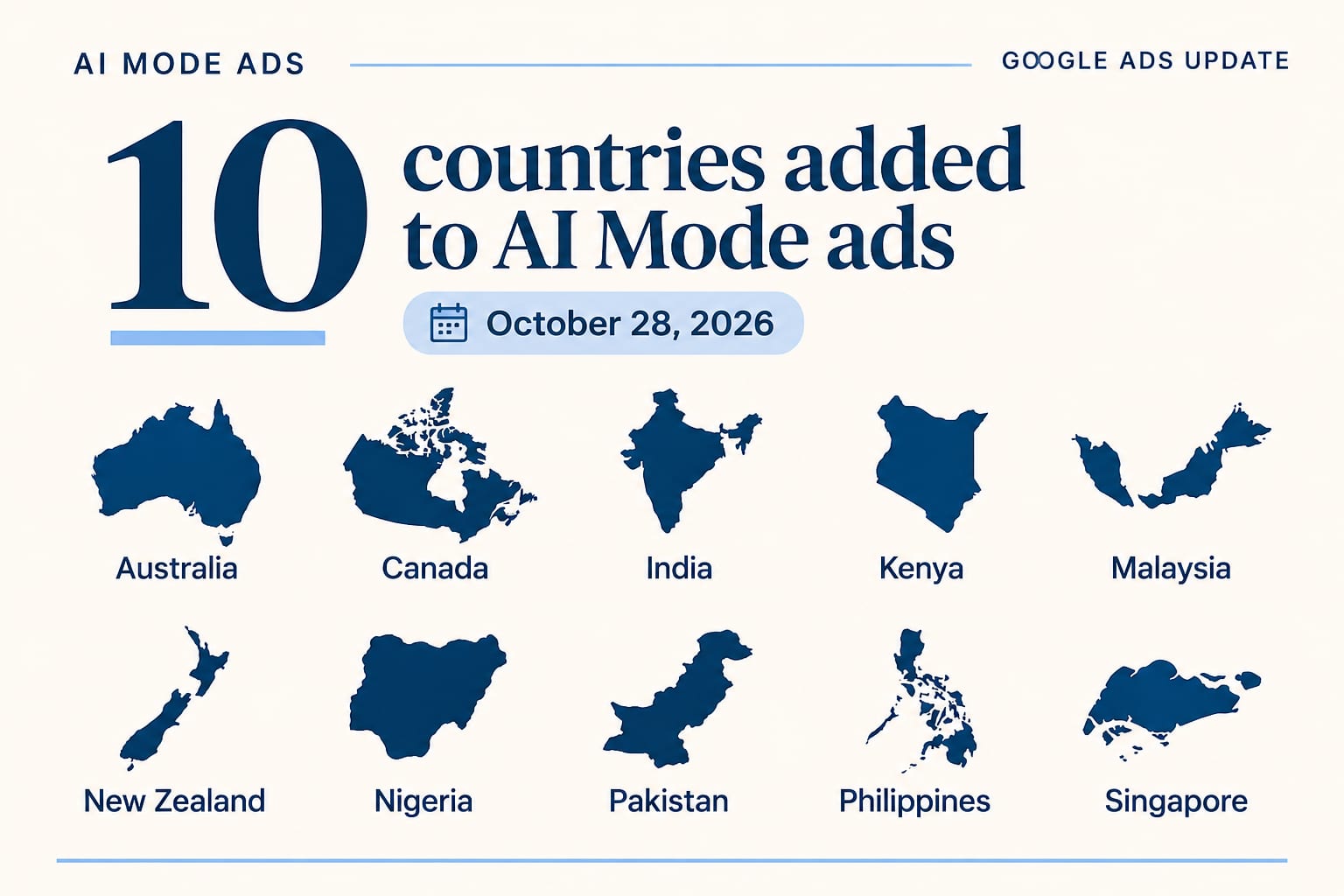
Google expanded ads in AI Mode to 10 more countries on October 28, 2026. Existing Search, Shopping and Performance Max campaigns in those markets are automatically eligible. Advertisers don't need new campaigns, extra budgets or a separate switch.
Share: WhatsApp · Telegram · X · Facebook · LinkedIn · Email
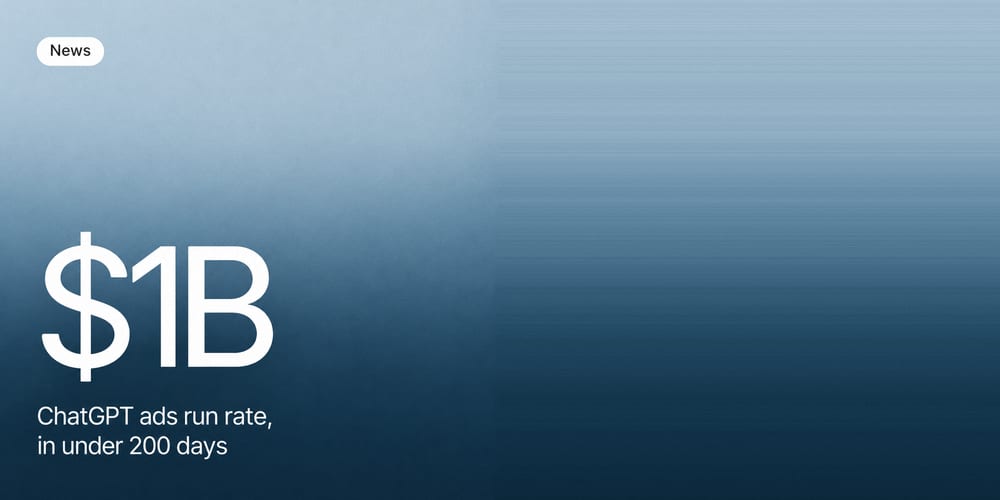
The timing matters. OpenAI says ChatGPT Ads reached a $1 billion annualized revenue run rate in less than 200 days. AI is becoming another major advertising surface, not simply a replacement for search.
For Shopify sellers preparing for Black Friday and Cyber Monday (BFCM), the more immediate question is whether your landing pages can convert the traffic coming from these longer, more specific AI searches.
Your existing Google campaigns are already eligible
Google's October 28 announcement brought AI Mode ads to Australia, Canada, India, Kenya, Malaysia, New Zealand, Nigeria, Pakistan, the Philippines and Singapore, following the US rollout.
Google's official announcement
As PPC Land reported, existing Search, Shopping and Performance Max campaigns automatically participate in the regular Google Ads auction for AI Mode placements.
There is no separate campaign or budget to set up. You also cannot target AI Mode exclusively or opt out of it independently of Search.
Billing follows the standard Search model, with no additional placement fee.
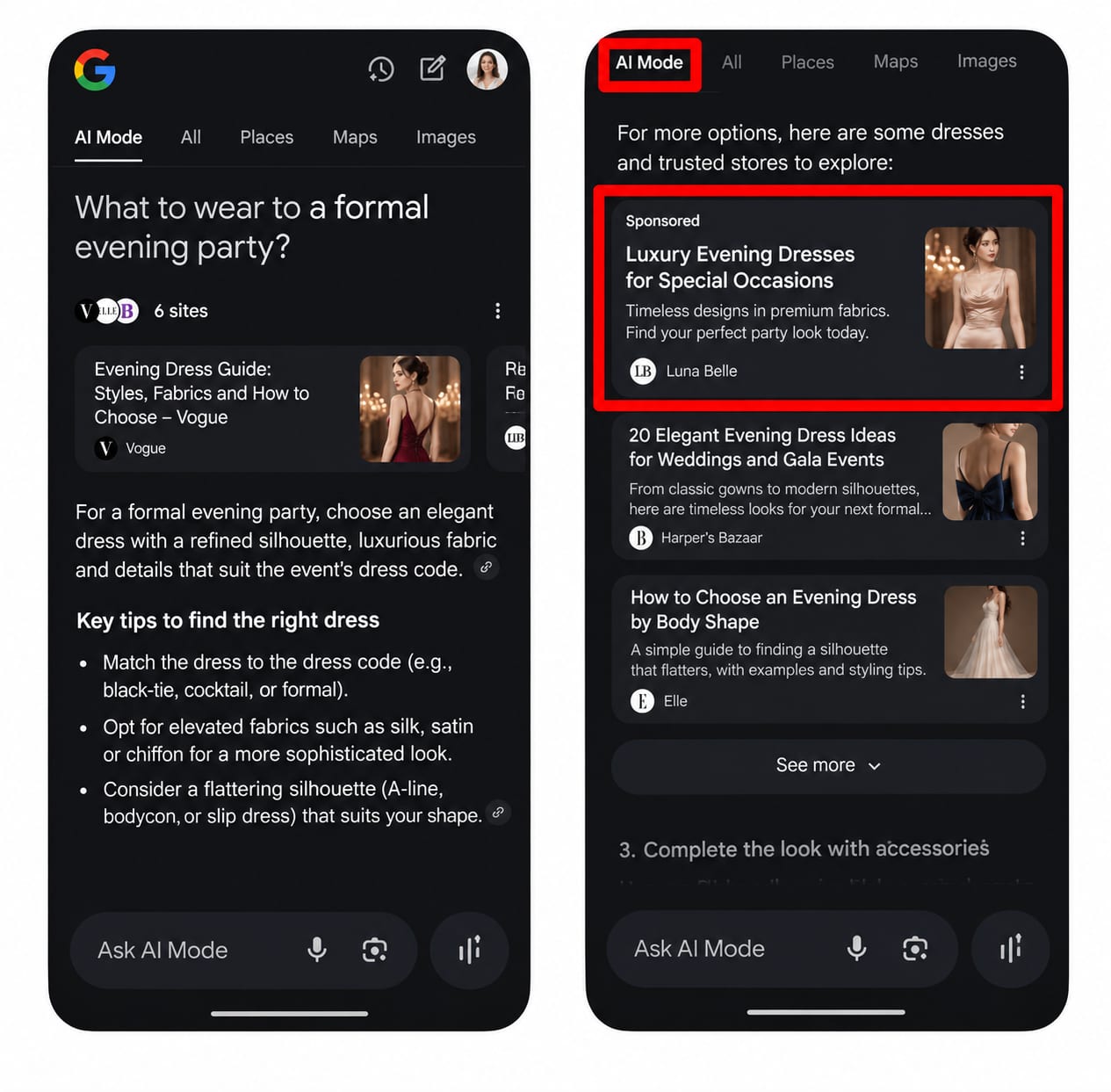
Not every keyword reaches every AI conversation.
AI Max for Search, broad match, Shopping and Performance Max are eligible for both. Exact and phrase match keywords are eligible for direct commercial queries, but not broader contextual matching.
This means some of your existing ad spend may already be reaching shoppers through AI-generated answers.
Is your store in the affected markets?
The distinction between AI Mode and AI Overviews matters.
Google's current eligibility list for ads within these AI experiences includes:
- United States
- Australia, Canada, India, Kenya, Malaysia, New Zealand, Nigeria, Pakistan, the Philippines and Singapore.
English is currently the only listed language.
There are two important qualifications: Indonesia is listed for AI Overviews only, while Pakistan is limited to text ads. Brazil, Mexico and the UK were announced as planned Q4 2026 expansions, not markets already included in the October rollout.
No EU country appears on the current list for ads within AI Mode and AI Overviews.
Google Ads Help: Ads in AI-powered Search experiences
If you don't run Search, Shopping or Performance Max, or only target EU customers, this particular AI Mode expansion does not currently affect your campaigns.
US Shopify sellers face another change: checkout inside AI
On September 22, Google began notifying Shopify merchants matched to Merchant Center that their products were eligible for native checkout in AI Mode and Gemini.
PPC Land's report on Google's rollout
Eligible products can be purchased directly within Google's AI environment, without sending shoppers to the merchant's website.
This is no longer just a question of where an ad appears. It changes where the transaction can happen.
Shopify's current documentation says direct checkout for Google AI Mode and Gemini is active by default for eligible stores, with customer eligibility covering the US, Canada and Australia. Merchants can manage the setting under Sales channels > Agentic.
Shopify: Selling on Google AI Mode and Gemini
One distinction is worth keeping clear: buying ads does not make Google AI recommend your store organically. Google explicitly says paid ads do not influence its organic AI responses.
Longer questions create a new landing-page problem
Google's May 2026 AI Mode research
That changes what a shopper expects to find after clicking an ad.
Consider someone searching for a moisturizer that works under makeup, contains no fragrance and doesn't pill under sunscreen. A product page that only says "lightweight, hydrating moisturizer" has not answered the actual buying question.
See the example shared by Kimberly Anderson on LinkedIn.
The ad may match the shopper's question. The landing page still has to prove that the product meets it.
And there's a measurement problem.
You can see the traffic and the queries, but you cannot reliably isolate which clicks came from AI Mode.
Three checks before BFCM
1. Find your longest converting-intent queries.
Open the Search terms report for Shopping, Performance Max and broad-match Search campaigns. Identify three long queries that generated clicks. These are useful clues to the detailed questions shoppers are asking, even though the report doesn't identify AI Mode traffic separately.
2. Audit the first screen of each landing page.
Open the destination page for each query. Check whether the first screen answers every important condition in the search:
- Product specifications and compatibility
- Price and relevant offers
- Ingredients, materials or features
- How the product is used
Move missing answers higher on the page. Don't make shoppers search for information they already told Google they needed.
3. Review your AI checkout settings.
If you sell in the US, Canada or Australia and want customers to complete purchases on your own website, review direct checkout under Shopify Admin > Sales channels > Agentic > Google AI Mode and Gemini.
If you're comfortable with purchases happening inside Google's AI environment, you can keep the feature active.
AI advertising introduces another discovery surface, but the fundamentals of conversion haven't changed.
A paid click is only an opportunity. Your landing page still has to answer the question that earned it.
Sources · 7 · blog.google, ppc.land, support.google.com +2
- Google's official announcement · blog.google
- PPC Land reported · ppc.land
- Google Ads Help: Ads in AI-powered Search experiences · support.google.com
- PPC Land's report on Google's rollout · ppc.land
- Shopify: Selling on Google AI Mode and Gemini · help.shopify.com
- Google's May 2026 AI Mode research · blog.google
- See the example shared by Kimberly Anderson on LinkedIn · linkedin.com