All stories · Article
Google opens Genie 4 to developers through Gemini API
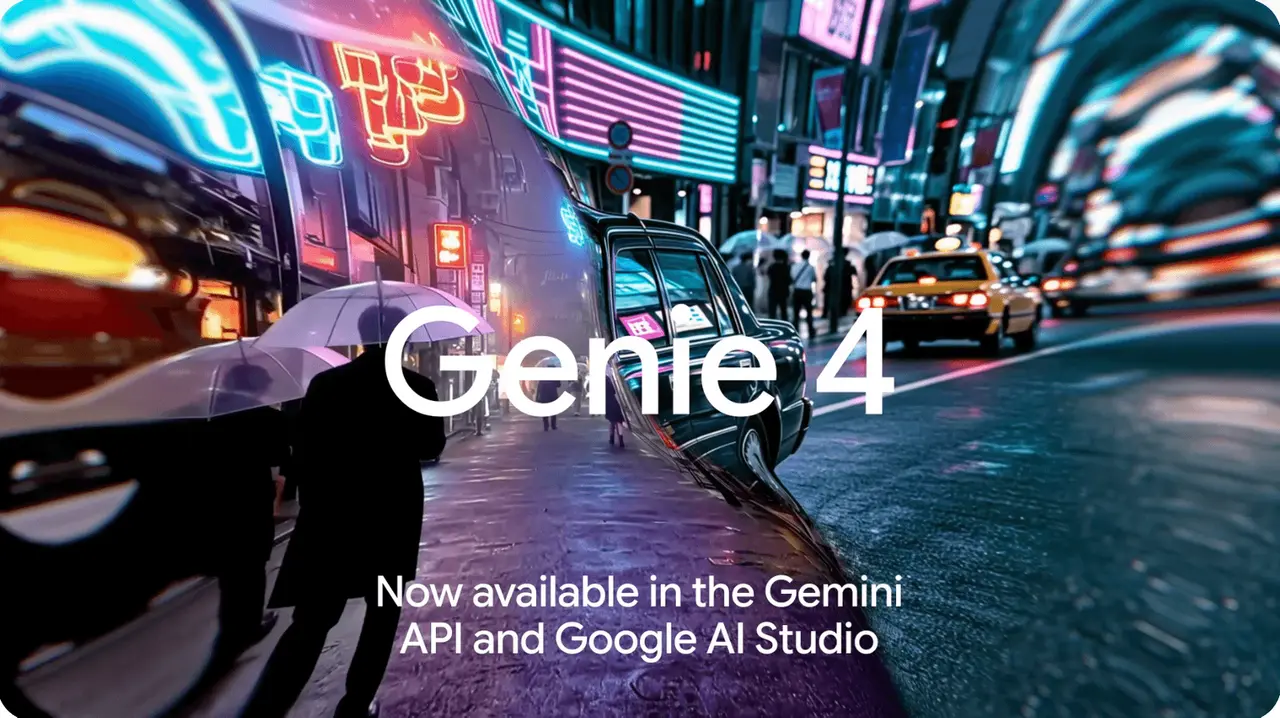
Google opened Genie 4 to developers through the Gemini API and Google AI Studio on November 19, making its interactive world-generation technology more accessible beyond its initial research audience.
Share: WhatsApp · Telegram · X · Facebook · LinkedIn · Email

For direct-to-consumer (DTC) brands, the possibilities are easy to imagine: shoppers could enter a virtual environment, walk around a product and explore it from different angles instead of relying solely on static product images.
But there is a fundamental difference between generating an interactive world and accurately reproducing a commercial product inside it.
Based on the limits Google lists, Genie 4 looks better suited to prototyping brand experiences than to showing real products to shoppers. Its limitations around object permanence, visual consistency and readable text create challenges for brands that need every product detail to remain accurate.
From research preview to developer access
Google first introduced Genie 4 on October 27 as a research preview, initially available to a limited group of trusted testers.
On November 18, the company began rolling out Genie 4 through Project Genie to eligible Google AI Ultra subscribers. The following day, November 19, it expanded access to developers through the Gemini API and Google AI Studio.
Developers can start with a text prompt, a reference image or both to generate interactive 720p environments at up to 24 frames per second, with synchronized native audio, and Google says one session currently lasts around a minute.
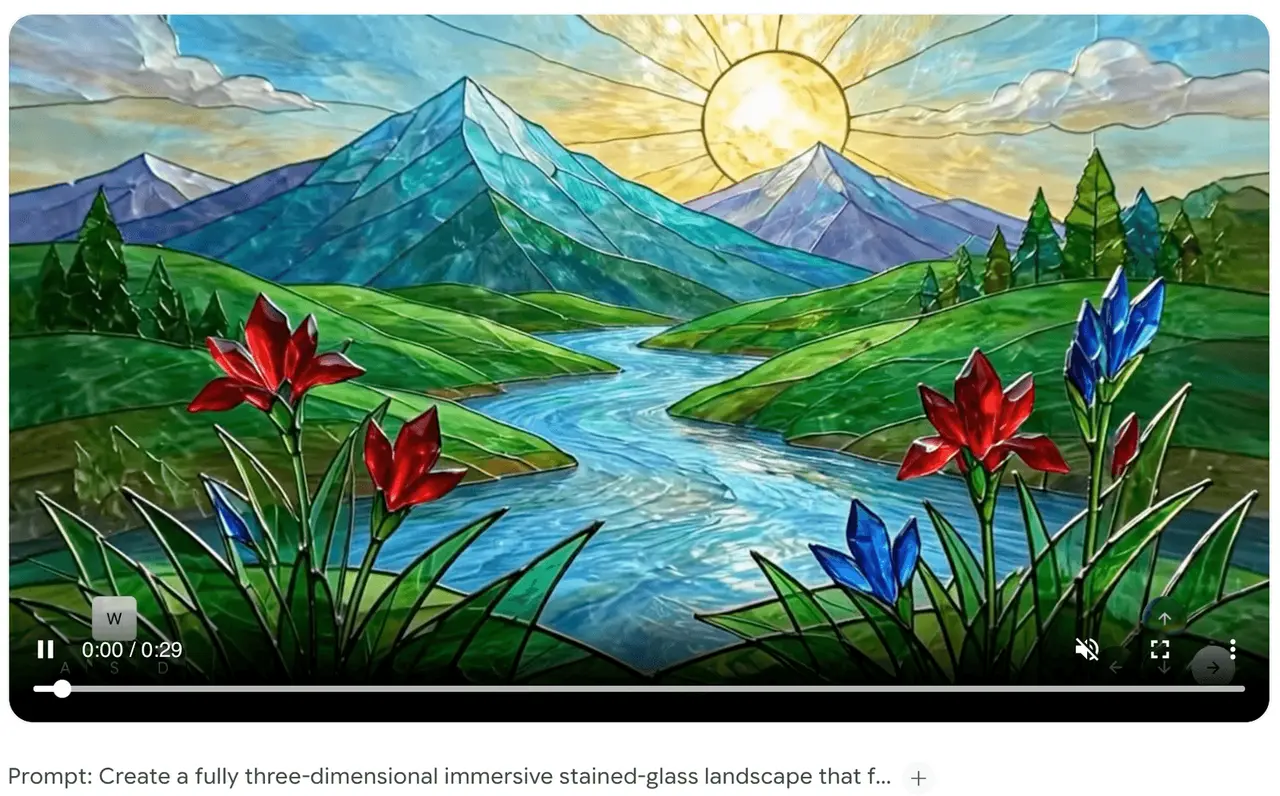
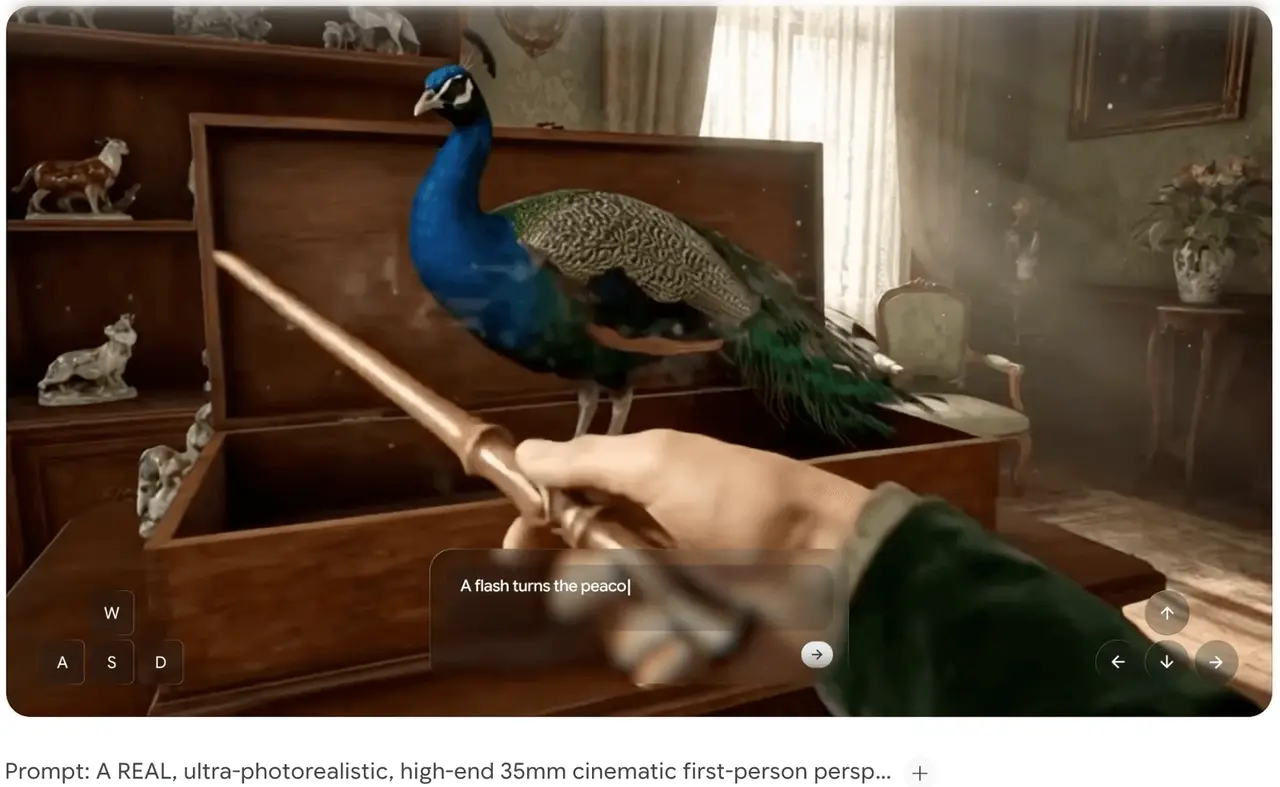
Users can navigate these environments through keyboard controls and modify elements such as weather, lighting, objects and events using real-time text prompts.
Google identifies several potential applications, including:
- Prototyping interactive experiences.
- Visualizing spatial design concepts.
- Training robotics and AI agents.
For DTC brands, this opens up an interesting possibility. Instead of viewing a product through a conventional product page, shoppers could explore a virtual environment built around it.
However, the quality of that experience depends on more than how realistic the environment looks. The product itself must remain consistent throughout the interaction.
Sources: Google's developer announcement, November 19 | Google's Project Genie announcement, November 18
Can Genie 4 keep a product looking the same?
This is where Genie 4's current limitations become particularly relevant to e-commerce.
Google acknowledges that visual details and object permanence can shift or drift over time. The problem becomes more noticeable as a simulation runs longer, after multiple complex prompt edits or when users navigate through a scene.
In practical terms, an object may not retain exactly the same appearance throughout an interactive session.
Google also identifies text rendering as an ongoing challenge. Clear, legible text is often generated only when it is included in the initial world description.
These limitations matter because product presentation requires a level of consistency that general-purpose world generation does not necessarily guarantee.
Consider a shopper exploring a virtual version of a product:
- The product's shape and proportions need to remain unchanged.
- Its color and packaging must accurately reflect the actual item.
- Brand names, labels and specifications need to remain readable.
- Different viewing angles should not introduce visual inconsistencies.
A virtual environment can look realistic while still misrepresenting the product inside it.
For a brand, that is a meaningful distinction. A compelling visual experience may attract attention, but an inaccurate product representation can undermine customer trust.
Sources: Google DeepMind's Genie 4 research overview | Genie 4 Model Card
Real-time interaction does not guarantee accurate simulation
Genie 4 combines real-time world generation with reasoning capabilities from Google's Gemini models.
According to Google, Gemini reasoning helps maintain a simulation's coherence and continuity while the environment evolves. Users can introduce new events, change objects or modify the surroundings without restarting the entire experience.
This is an important improvement over static, pre-rendered environments.
However, Google also acknowledges that long-term scene consistency remains an active research challenge. Complex physical interactions, spatial accuracy and the accurate representation of real-world locations are still areas requiring further development.
The distinction matters for commercial applications.
A model that can respond to user input and generate a convincing environment is not necessarily capable of reproducing a real product with the precision required for online shopping.
For example, a virtual furniture showroom might look convincing, but a brand still needs confidence that the furniture's dimensions, materials and details remain accurate when shoppers move around it.
The same applies to fashion, beauty, electronics and other categories where product appearance directly influences purchasing decisions.
Source: Google DeepMind, Genie 4 research overview
Where DTC brands can use Genie 4 today
Google continues to describe Genie 4 as frontier research and an evolving technology. Its stated applications focus on interactive experiences, spatial design, robotics and AI agent training rather than production-ready e-commerce product visualization.
That does not mean DTC brands should ignore it.
Instead, Genie 4 is better suited to the exploratory stage of experience development.
Brands and agencies could use it to:
- Explore virtual store concepts: Generate interactive environments to test different spatial layouts and creative directions.
- Prototype immersive brand experiences: Experiment with how shoppers might navigate and interact with a digital environment.
- Visualize campaign concepts: Turn early creative ideas into explorable scenes before committing to more expensive production workflows.
These applications allow teams to investigate the creative potential of interactive world models without depending on them to reproduce exact product specifications.
Before using Genie 4 in a product-facing experience, brands should test three things:
- Visual consistency: Does the product retain its shape, color and proportions as the camera moves?
- Information accuracy: Are labels, packaging and product details still readable and correct?
- Interaction reliability: Does the environment remain coherent as users navigate and modify the scene?
Until these requirements can be met consistently, Genie 4 is better treated as a prototyping tool than a replacement for controlled product visualization.
The opportunity is not simply to let shoppers walk around a product. It is to build an interactive shopping experience without losing control over what the product actually looks like.
Genie 4 brings that possibility closer, but the gap between generating a world and accurately representing a product remains an important challenge for DTC brands.
Ask AI next
- Why does Genie 4's visual consistency degrade over longer sessions or after many prompt edits?
- What tools can developers use to monitor object or text drift during a live Genie 4 session?
- Are any Shopify or DTC brands already piloting Genie 4 for product visualization experiences?
- What are the costs and usage limits for running Genie 4 sessions through the Gemini API?
- What would signal that Genie 4 is ready for production-level e-commerce product visualization?