All stories · Hot News
Google’s pre-Black Friday updates: What Shopify merchants actually need to know
On November 16, 2026, Google highlighted new ways to help consumers prepare for Black Friday and Cyber Monday. The updates bring together tools for product discovery, price comparison, and shopping management, while expanding Search's role in holiday planning.
Share: WhatsApp · Telegram · X · Facebook · LinkedIn · Email

The key shopping features include Universal Cart, AI-powered gift recommendations, Price Insights, and Google Lens. Beyond shopping, Search can also help users with cooking, home decoration, travel planning, restaurant reservations, and event tickets.
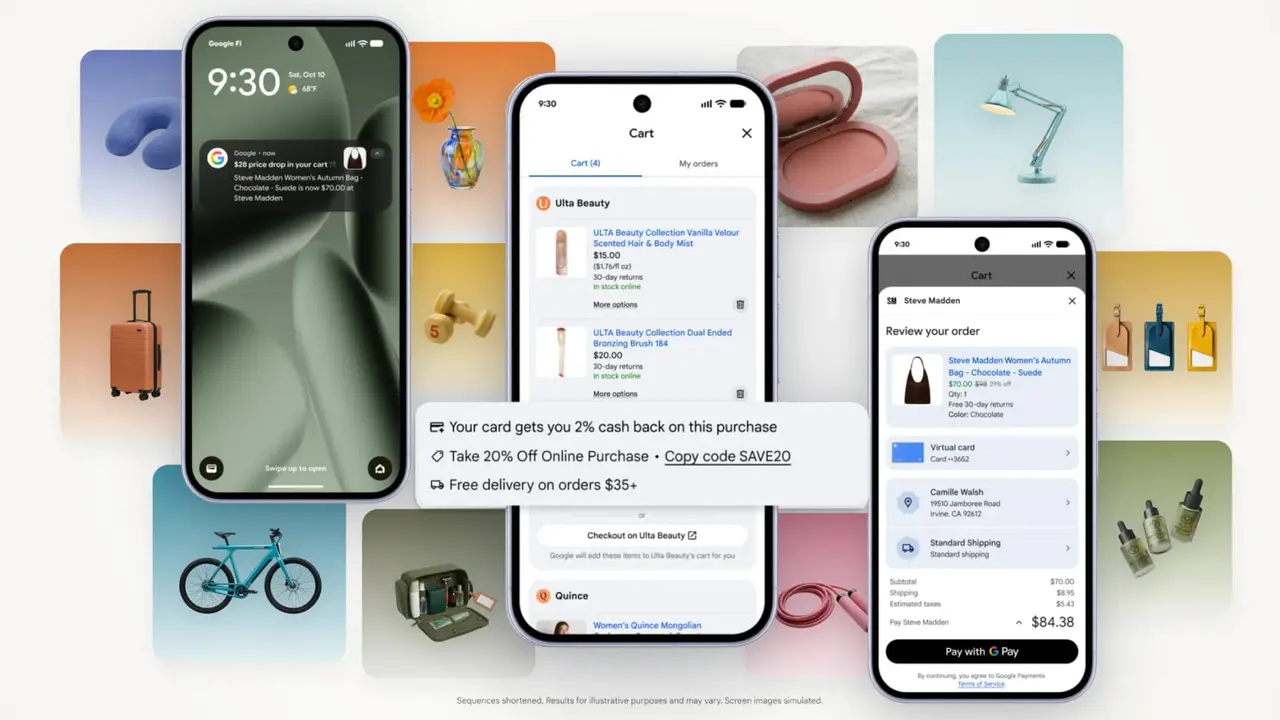
Together, these developments show Google moving beyond product discovery to support more of the shopping journey, from researching products and comparing options to making purchase decisions.
What is changing in Google's shopping experience?
Universal Cart: One cart across multiple retailers
Universal Cart lets shoppers save products from different retailers in one place while browsing Google Search and Gemini. They can track prices, receive sale and restock notifications, and use eligible promotional codes and payment offers. Purchases can be completed through Google Pay or on the retailer's website.
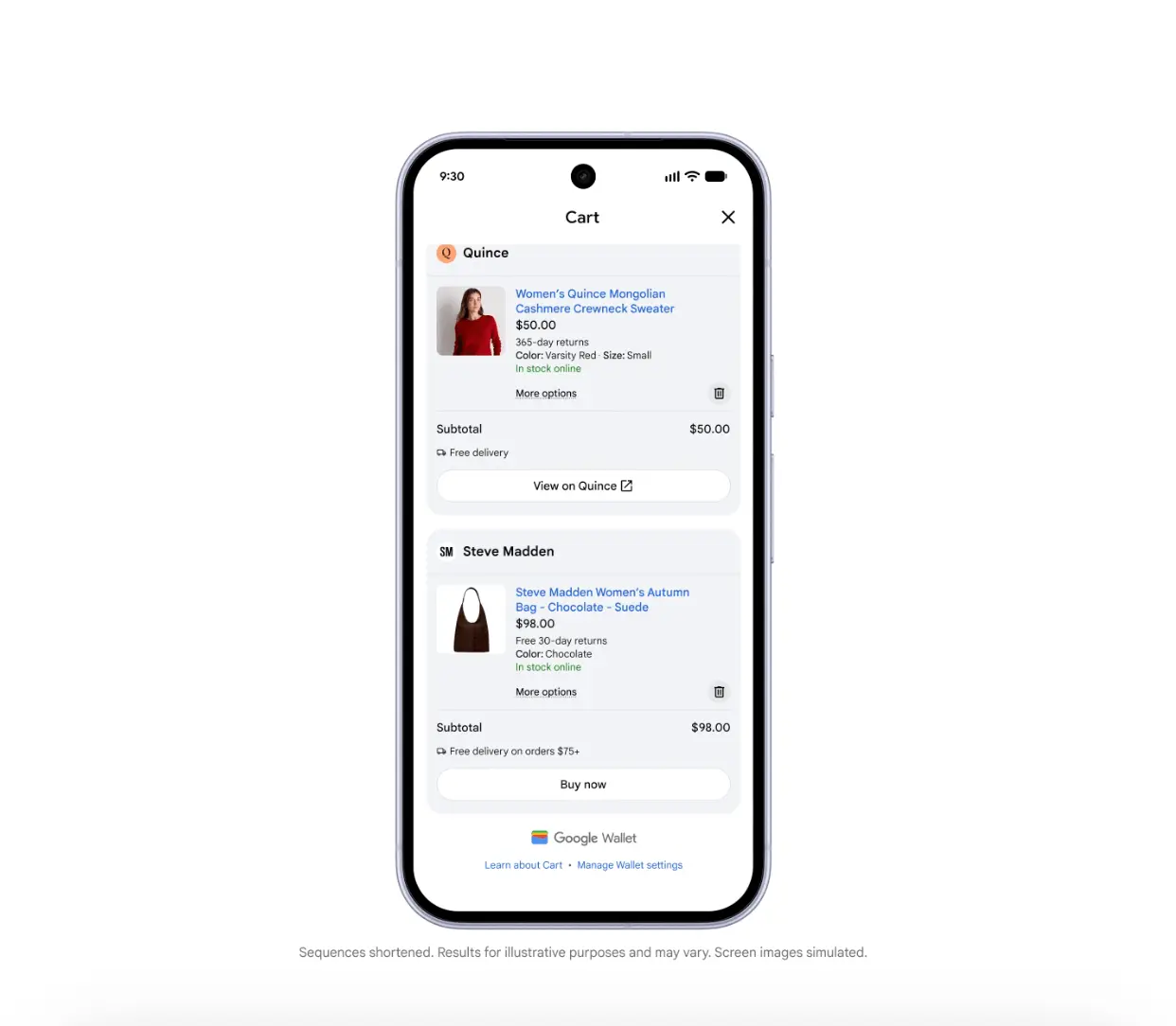
Universal Cart was announced on May 19, 2026, and began its US rollout on October 15. The November 16 update highlighted it as part of Google's holiday shopping experience. It is powered by Shopping Graph, which contains more than 60 billion continually refreshed product listings.
Google has named retailers including Nike, Sephora, Target, Ulta Beauty, Walmart, and Wayfair, alongside many Shopify merchants. Retailers remain the sellers of record and continue to handle order confirmation, fulfillment, and customer support.
Sources: Universal Cart announcement | US rollout
AI gift recommendations: Search by describing a need
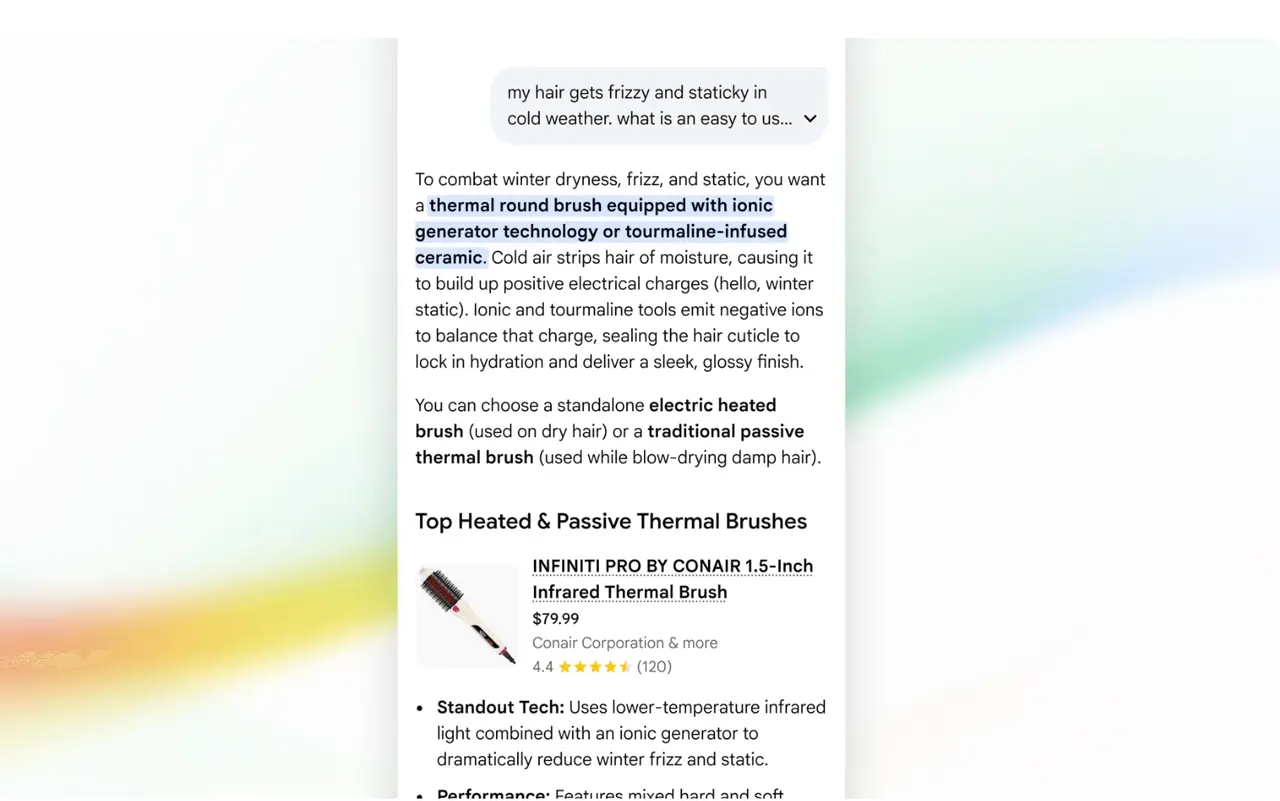
Shoppers can describe the recipient, interests, occasion, or budget instead of searching for an exact product name. Google's AI can then suggest relevant gifts and surface details such as reviews, images, and store availability.
This makes clear product information more important. Attributes such as material, size, color, function, and intended use help AI systems understand products and match them with shoppers' requests. Google has not disclosed all the signals used to select recommendations, so these attributes should not be treated as confirmed ranking factors.
Source: Google's November 16 shopping update
Price Insights: More transparency around pricing
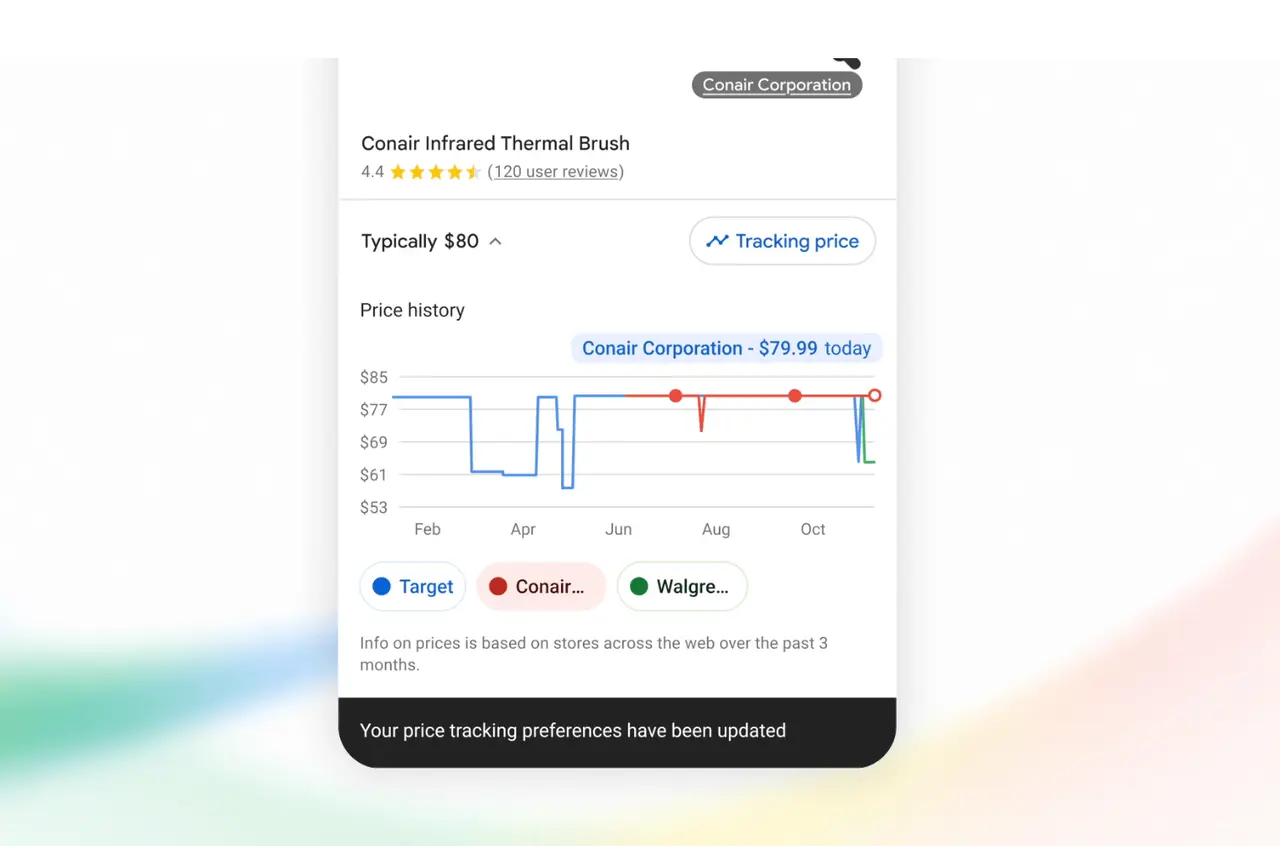
Price Insights helps shoppers compare current prices with typical price ranges and recent price history. Google's assessment can draw on seller information across the web, not just Google Shopping. Its 30-day low indicator considers total cost, including discounts and shipping.
For merchants, this raises the importance of accurate reference prices, promotions, and shipping information. Google has not disclosed every signal behind Universal Cart price-drop and restock notifications, so merchants should not assume a particular Merchant Center field controls every alert.
Source: Google Price Insights
Google Lens: From seeing a product to finding it online
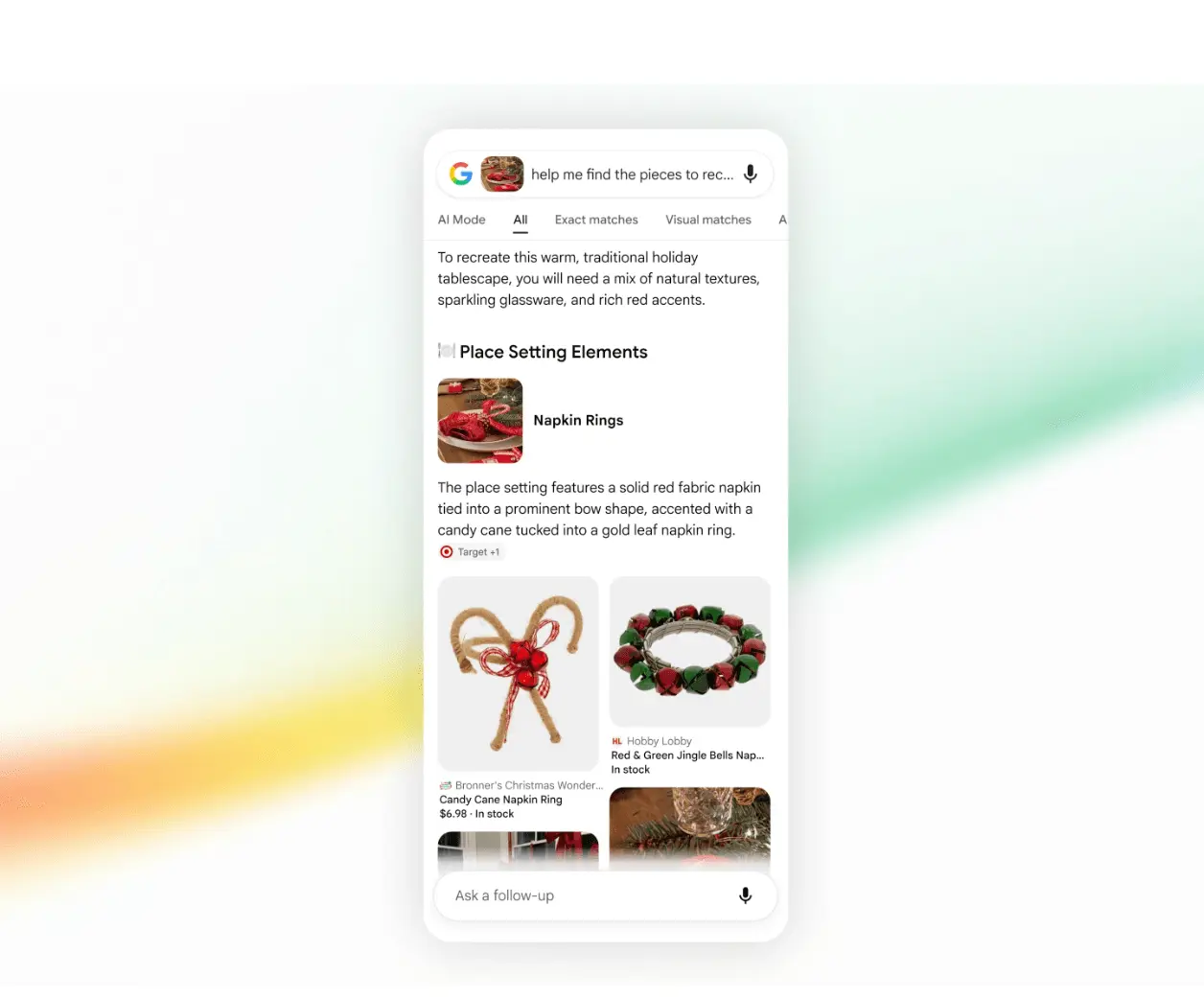
Google Lens lets shoppers search using images. They can photograph or scan an item they see in a store or elsewhere to find similar products and learn more.
For merchants, clear and accurate product images support visual discovery as well as the storefront experience. Images should represent the actual product and match the information in the product listing.
Source: Google's November 16 shopping update
What does this mean for Shopify merchants?
Product discovery is moving beyond the storefront

Google is expanding from a search and discovery channel into more parts of the shopping process. Universal Cart supports saving products, tracking prices, applying eligible offers, and moving toward checkout.
This does not replace the merchant's store or order-management system. Retailers remain responsible for the sale and post-purchase experience. The change is where discovery and purchase decisions happen: shoppers can evaluate products inside Search or Gemini without first visiting a merchant's website.
It is also important to distinguish Universal Cart from the Universal Commerce Protocol (UCP). Universal Cart is a shopping-cart experience. UCP is an open protocol designed to help AI agents and commerce systems communicate and support checkout. They are related, but not the same product.
Sources: Google's Universal Cart announcement | Google's UCP documentation
Product data is becoming essential for AI discovery
Conversational searches describe needs rather than exact product names, such as "a lightweight jacket for cold weather" or "a travel gift under $100." AI systems need usable product attributes to understand and match these requests.
Shopify supports product distribution to AI platforms through Shopify Catalog and Agentic Storefronts. According to Shopify, eligibility for Google AI Mode and Gemini depends on factors including:
- Selling to customers in the US, Canada, or Australia. The store itself can be based elsewhere.
- Products being available through Google Merchant Center and eligible for Shopify Catalog.
- Product and shipping information being synced through the Google & YouTube channel or Merchant Center.
- Complete store policies and required business information.
- Acceptance of the applicable Shopify Agentic Storefronts terms.
Product discovery and direct checkout are separate capabilities. A product may appear in Google AI Mode or Gemini without being eligible for checkout there. If direct checkout is unavailable or unsupported, shoppers are directed to the merchant's website.
Sources: Shopify: Google AI Mode and Gemini | Shopify Agentic Storefronts
Direct checkout requires a compatibility check
Eligible shoppers may see a Buy button in Google AI Mode or Gemini and complete a purchase through Shopify-powered direct checkout. However, merchants should review several limitations:
- Products: Bundles, customizable products, B2B-only products, and subscription-only purchases are not supported. A one-time purchase may be supported even when a subscription option is not.
- Checkout customization: Some custom fields, upsells, loyalty features, informational blocks, and validation requirements may not appear. Support for Shopify Functions depends on the function and setup.
- Tracking: Google Analytics and custom client-side pixels do not fire as they do in standard storefront checkout. Checkout events use server-to-server integrations.
- Fulfillment: Local delivery, in-store pickup, and pickup points are not supported.
- Customer accounts: Shoppers cannot be required to log in.
Shopify says there is no additional fee specifically for Google AI Mode and Gemini direct checkout, although standard payment processing fees still apply.
Merchants should assess whether this checkout path fits their product types, fulfillment model, customizations, and analytics setup before relying on it.
Source: Shopify: Google AI Mode and Gemini
Price synchronization can affect product visibility
During Black Friday and Cyber Monday, prices and promotions change frequently. Google's Shopify documentation says sale prices can take up to 24 hours to update on Google after being saved in Shopify, while storefront prices generally update within a few hours.
| Scenario | Shopify | |
|---|---|---|
| Before promotion | $100 | $100 |
| Promotion starts, before sync | $70 | $100 |
| Sync completed | $70 | $70 |
| Promotion ends, before sync | $100 | $70 |
| Sync completed | $100 | $100 |
Google compares feed prices with the landing page and structured data. Mismatches can trigger warnings or product disapproval. Automatic item updates can correct some displayed discrepancies, but they are not a substitute for accurate data synchronization.
Stores with large catalogs, frequent price changes, or JavaScript-based dynamic pricing should review feed schedules and ensure JSON-LD or Microdata matches the price shown on the landing page. Scheduled feed uploads or the Merchant API may offer more control.
Sources: Shopify sale price synchronization | Google price mismatch policy | Automatic item updates
What merchants should check before Black Friday and Cyber Monday
Product catalog
- Are titles, descriptions, images, attributes, and variants complete and accurate?
- Are products synced to Merchant Center and eligible for Shopify Catalog?
Pricing and promotions
- Do prices match across Shopify, product feeds, landing pages, and structured data?
- Are sale prices, compare-at prices, promotion dates, and time zones correct?
- Is there enough time for price changes to sync before a campaign begins?
Merchant Center
- Review Products and Needs attention for warnings and disapprovals.
- Check price mismatches, product data errors, and feed schedules.
Checkout and operations
- Are products compatible with Google AI Mode and Gemini direct checkout?
- Could unsupported product types or checkout customizations disrupt the purchase flow?
- Are tracking, shipping, returns, and store policies ready?
Conclusion
Google's November 16 updates show its holiday shopping experience expanding from product discovery into price comparison, cross-retailer shopping, and checkout.
For Shopify merchants, the opportunity is not simply to appear in another AI interface. It is to make product data, pricing, availability, shipping, and checkout information accurate enough to work across platforms.
As shopping moves beyond the merchant's own storefront, reliable product data and synchronization are becoming part of the ability to sell, not just technical housekeeping.
Ask AI next
- Can I check in Merchant Center whether my products show up in Universal Cart or AI gift results?
- How do I set up scheduled feeds or the Merchant API to speed up Shopify-to-Google price sync?
- What technical setup does Shopify need for the Buy button to appear in Google AI Mode or Gemini?
- When might Universal Cart and Google AI Mode shopping expand beyond their current eligible countries?
- What tools can automatically flag Shopify-to-Google price feed mismatches before disapproval?