All stories · Hot News
Klarna launches personal AI assistant for shopping, bookings and everyday tasks
Klarna is expanding its role in online commerce. Instead of appearing only when consumers reach checkout, the company wants to become part of the entire shopping journey, from discovering products and deciding where to buy to choosing how to pay.
Share: WhatsApp · Telegram · X · Facebook · LinkedIn · Email

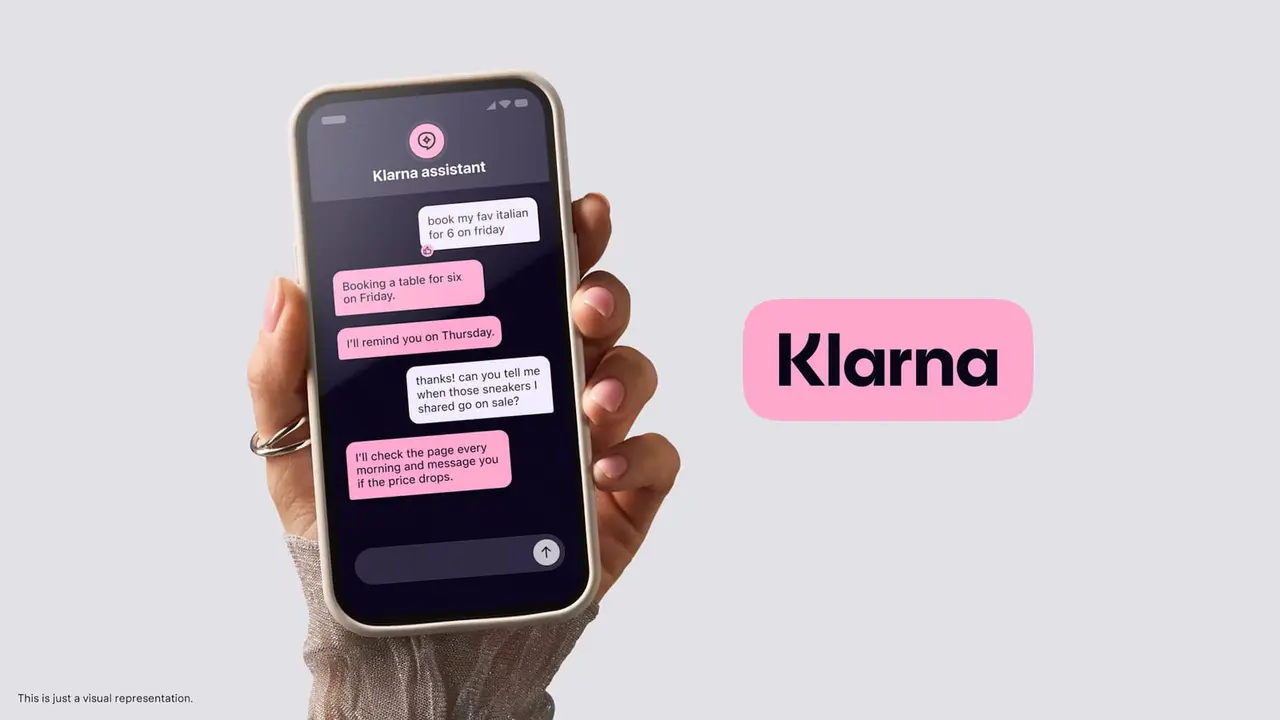
On November 17, 2026, Klarna announced a new personal AI assistant that helps users shop, handle returns, make bookings and manage everyday tasks. The assistant is accessible through WhatsApp, iMessage, text messages and the Klarna app. It is currently available to a small group of early users, with a waitlist opening for wider access.
The launch builds on Klarna's existing shopping assistant and in-app browser. Since 2020, consumers have spent more than $34 billion through that browser, which allows them to shop across websites, including stores that do not offer Klarna at checkout.
Klarna's ambition is to connect three parts of the consumer journey: product discovery, payment and financing.
Source: Klarna's AI assistant announcement, November 17, 2026
From shopping assistance to a personal AI concierge
The new assistant goes beyond conventional shopping search. Klarna describes it as a personal concierge that can handle several tasks on a user's behalf.
Users can ask it to:
- Find products and compare prices.
- Book restaurant tables or arrange services such as babysitting.
- Track returns and follow up on pending matters.
- Draft email replies for approval and organize receipts.
- Remember upcoming birthdays and suggest gifts.
The assistant finds options and helps users make decisions, while keeping them in control of important actions.
It does not independently authorize purchases. According to a Klarna spokesperson cited by Payments Dive, users must approve payments themselves. Transactions are processed through a Klarna payment method or a debit card.
The product is still in its early rollout, with access limited to a small group of users.
Source: Payments Dive: Klarna launches AI concierge
Building on an existing shopping network
Klarna's new assistant is not starting from scratch. The company already operates a shopping experience that connects consumers with products across multiple websites.
Its in-app browser allows users to search for products, compare prices, track deals and shop beyond Klarna's directly affiliated merchant network. Consumers have spent more than $34 billion through this browser since 2020, according to Klarna.
The company has also extended product discovery into AI-powered conversations.
In May 2026, Klarna launched its Shopping Search app inside ChatGPT. The app connects ChatGPT to Klarna's live commerce data, covering more than 100 million products and 400 million merchant listings across 13 markets.
Users can describe what they want and see product results with current prices, availability and offers. When they select a product, they are redirected to the merchant's website to complete the purchase.
Shopping Search and the new personal assistant are separate products. However, they reflect the same broader direction: Klarna is bringing its shopping network into more points of the consumer journey.
Sources: Klarna's in-app browser and AI assistant | Klarna Shopping Search in ChatGPT
Connecting product discovery with payments
Traditionally, Klarna enters the shopping journey when consumers reach checkout and choose a payment method.
Its shopping browser and AI assistant create an opportunity to move further upstream.
Instead of waiting for consumers to select a product and arrive at checkout, Klarna can help them discover products, compare prices and decide where to shop. Its existing payment network then gives the company a way to participate when those decisions turn into transactions.
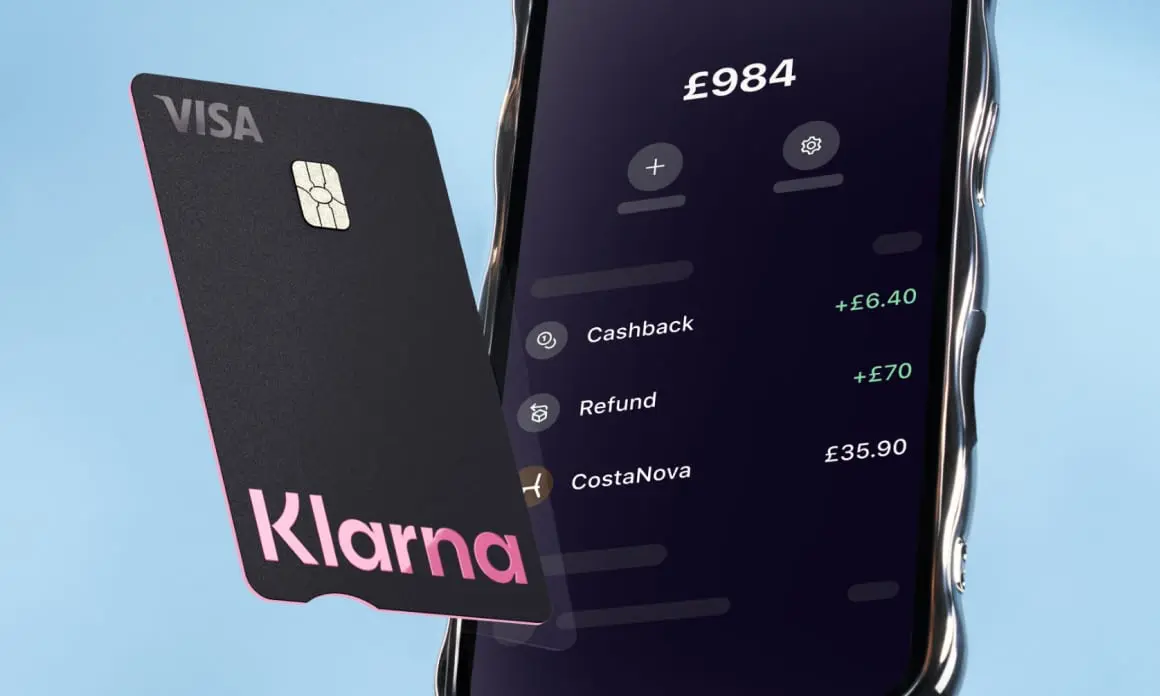
Klarna supports payments through products such as Pay Later and Klarna Card. Consumers can also use Klarna online, in stores and through Apple Pay and Google Pay.
An important distinction is that product discovery does not necessarily require a merchant to integrate Klarna at checkout. The company's browser already allows consumers to shop across websites, including stores that do not offer Klarna directly.
For purchases initiated through the new assistant, users must still authorize payment. According to Klarna, transactions are processed through a Klarna payment method or debit card. The company has not yet detailed every payment flow for purchases at non-integrated stores.
The opportunity is to connect the moment consumers decide what to buy with the moment they decide how to pay.
Source: Klarna Q3 2026 results
Adding consumer financing to the equation
Payments are only one part of Klarna's business. The company is also expanding its longer-term installment lending products, bringing consumer financing closer to everyday shopping.
One of its key offerings is Fair Financing, which provides longer-term financing for larger purchases.
In its Q3 2026 results, Klarna identified Fair Financing as its highest-earning product per dollar of volume. The company said availability had expanded to 283,000 merchants, representing 21% of its merchant network, compared with approximately 150,000 a year earlier.
Klarna is targeting a transaction margin of 3% to 4% over the life of a Fair Financing loan, more than three times the margin generated per dollar of volume by its traditional Pay Later product, according to Payments Dive.
The company has identified expanding Fair Financing in the U.S. and Europe as a priority for 2027.
Sources: Klarna Q3 2026 results | Payments Dive
This adds another dimension to Klarna's shopping strategy.
The company already has access to consumers while they browse and compare products. It has payment services to process their purchases and financing products to support larger transactions.
The new AI assistant brings these capabilities closer together in a single consumer experience.
However, Klarna has not confirmed that the assistant will actively recommend Fair Financing or prioritize products based on financing availability. That remains an open question rather than an announced feature.
From payment provider to everyday finance network
Klarna's Q3 2026 results illustrate the scale of the network behind this strategy.
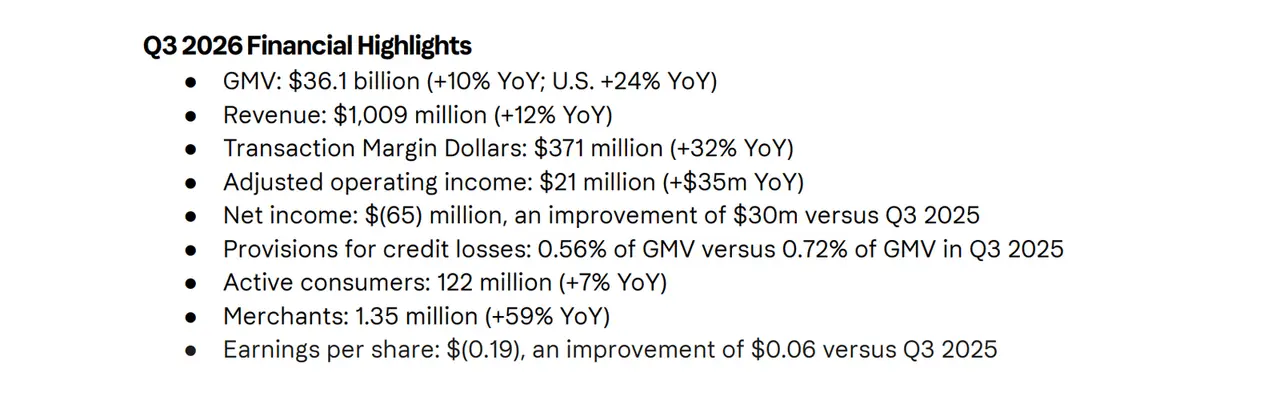
The company reported 122 million active consumers and 1.35 million merchants. GMV reached $36.1 billion, up 10% year over year, while quarterly revenue reached $1.009 billion.
Its business is also extending beyond traditional retail. Events and services accounted for 14% of GMV in Q3, compared with 9% a year earlier. Home and electronics accounted for 22%.
Klarna is therefore building a broader network that connects shopping, everyday services, payments and consumer financing.
The new AI assistant is another layer in that network. It gives Klarna an opportunity to participate earlier in consumer decisions, while its payment and financing products allow it to remain involved when those decisions become transactions.
Klarna no longer wants to be just the company consumers use to pay for what they buy. It wants to become part of how they decide what to buy, where to buy it and how to finance it.
Ask AI next
- Do merchants need an API integration or product feed to show up in Klarna's AI assistant results?
- What data signals does Klarna's AI assistant use to decide which merchants or products to recommend?
- Which countries currently have access to Klarna's new personal AI assistant beyond the early-access group?
- What signs would show Klarna's assistant is steering shoppers toward Fair Financing or favored merchants?
- How can a merchant check today whether their store already appears in Klarna's shopping browser or AI assistant?