All stories · Article
Longevity supplements: Premium pricing meets regulatory scrutiny
Longevity positioning can turn an ordinary supplement into a premium product. According to industry consultant Nick Morgan, the same product can sell for three to four times more when repositioned under the longevity label.
Share: WhatsApp · Telegram · X · Facebook · LinkedIn · Email

But a higher price comes with a tougher question: what evidence can the brand actually show?
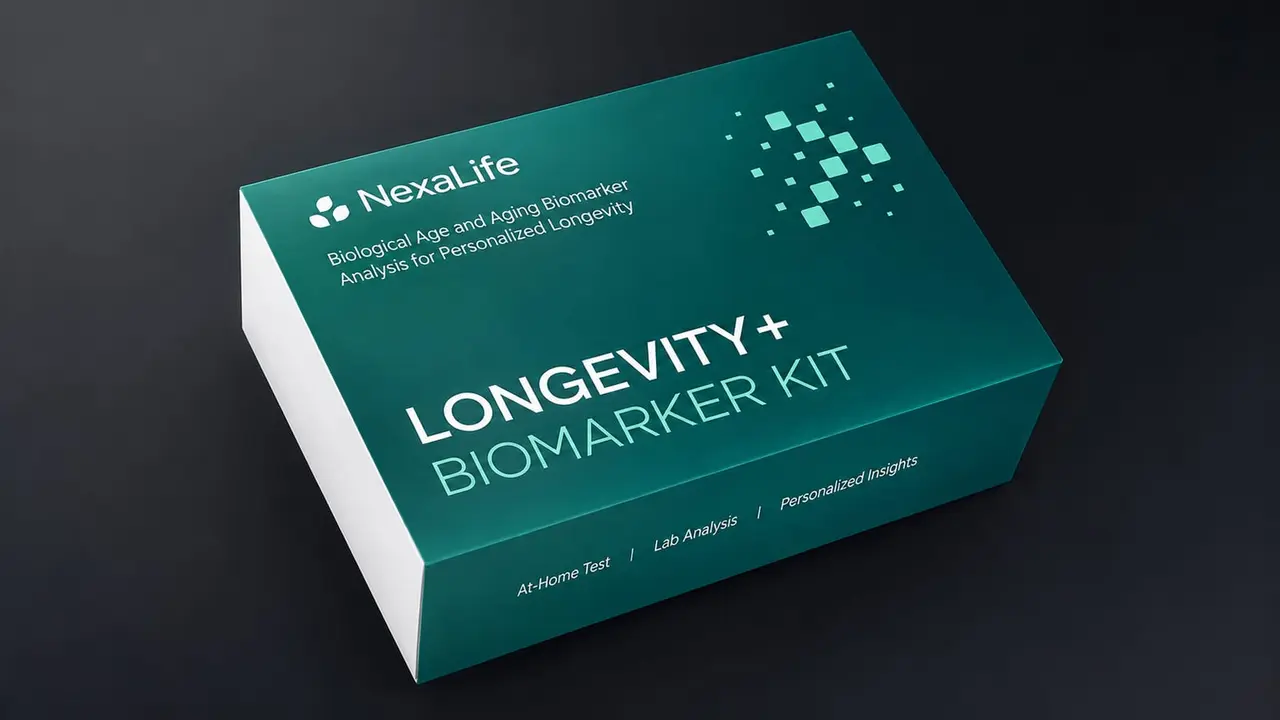
For supplement brands selling direct to consumers, the opportunity is growing. The biggest obstacle is trust. The latest industry research identifies a lack of proof as the leading reason shoppers hesitate to buy longevity supplements. At the same time, longevity and lifespan-extension claims are among the hardest to justify under existing regulatory frameworks.
Why "longevity" can lift a supplement's price
Longevity is becoming one of the most premium positions in the supplement market.
Speaking at the Remedy Nutrafood CDMO Conference in Poland, Nick Morgan, founder of Nutrition Integrated, described three ways brands are entering the market: altering the aging process, optimizing the aging experience, and personalizing products around healthspan goals.
His commercial observation was striking: products repackaged under the longevity label can command three or four times the price of the same product in another category.
That does not mean every longevity supplement achieves a three-to-fourfold price premium. It is an industry consultant's observation, not a market-wide pricing study. But it shows how strongly positioning can influence perceived value.
The opportunity is also visible in how brands package their products. Take Cellaro Core, which markets three supplements as a coordinated "2-2-2 Longevity Routine." Rather than selling individual ingredients, the brand presents a system covering morning energy, nighttime recovery, and a monthly cellular-health routine.
The commercial logic is clear: longevity gives brands a way to move beyond selling a bottle of ingredients and toward selling a longer-term health proposition.
But a premium label only creates an opportunity. It does not guarantee that shoppers will believe the product deserves the price.
What do shoppers need to see before they pay the premium?
The strongest warning comes from consumer research.
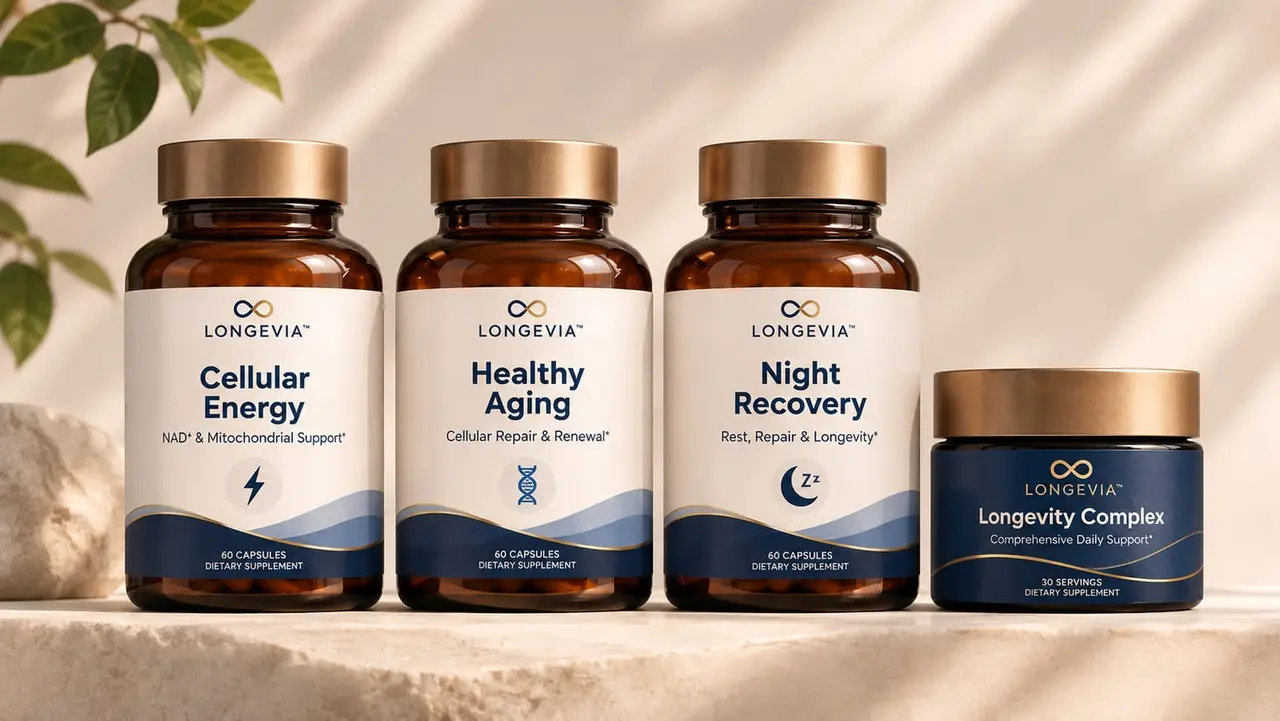
At the Nutra Healthspan Summit in London on November 10–11, Lumina Intelligence presented findings from a survey of 10,500 consumers across nine global markets. Around 36% of respondents already used supplements to counteract natural aging. Yet when asked what made them hesitate about longevity supplements, their leading concern was simple: not enough proof.
The same research also points to a younger audience entering the category. Some 20% of consumers aged 25–34 believed supplements had a role to play in healthy aging, compared with 12% of those aged 65 and above.
This matters because the longevity opportunity is no longer limited to older consumers. Younger shoppers are increasingly approaching aging as something to manage before visible decline begins.
Evidence also has a measurable effect on purchase intent.
In its September 2026 report on New York City's healthy-longevity economy, McKinsey found that among high-spending consumers interested in longevity products, the share saying they would definitely purchase was 11 percentage points higher when the offering included evidence of effectiveness.
There is an important distinction here: McKinsey did not find that evidence automatically allowed brands to charge higher prices. Its findings suggest that evidence helps convert existing interest into purchase intent.
In other words, the premium may attract attention, but proof helps close the sale.
The word that lifts the price is the hardest claim to make
For brands, the challenge goes beyond finding scientific studies. They must also make sure their marketing claims are permitted in the markets where they sell.
At the Nutra Healthspan Summit, regulatory experts highlighted the gap between scientific research and what companies are legally allowed to say.
According to the panel reported by NutraIngredients, claims such as "longevity" and "extend lifespan" are unlikely to be accepted by regulators. The problem is partly scientific: proving that a supplement actually extends human lifespan would require a level of evidence that is extremely difficult to establish through clinical trials.
The panel suggested that brands consider more specific alternatives, including "supports healthy aging" and "improves cellular energy."

However, these are not universally approved phrases. Whether a claim can be used depends on the market, the product, the evidence and the applicable rules.
In the United States, certain structure/function claims can be used on dietary supplement labels without FDA pre-approval. But manufacturers must have evidence that the claims are truthful and not misleading, include the required disclaimer, and notify the FDA within 30 days after first marketing the product with the claim.
The Federal Trade Commission also requires health-related advertising claims to be supported by competent and reliable scientific evidence. This applies to implied claims as well as explicit statements. A brand cannot avoid responsibility simply by communicating a benefit through its product name, imagery or marketing context.
Sources:
- NutraIngredients, Longevity-related claim: What's allowed and not allowed?, November 16, 2026
- FDA, Notifications for Structure/Function and Related Claims
- FTC, Health Products Compliance Guidance
Australia illustrates why brands cannot assume that evidence alone makes a claim acceptable.
At the same industry summit, regulatory experts discussed an application to claim that an ingredient raises NAD levels in the body. Despite supporting human clinical research, the proposed indication was rejected by Australia's Therapeutic Goods Administration (TGA).
The issue was not simply whether research existed. Companies marketing listed medicines must also comply with the TGA's permitted indications framework.
The TGA's assessment can extend beyond product labels to websites, social media, blogs and other marketing materials connected to the product.
Source: NutraIngredients, The regulatory realities of the longevity boom, November 23, 2026.
For international DTC brands, this creates a practical problem: one product page may need different claim strategies for different markets.
The label sets the price. Proof decides whether shoppers pay it
The brands best positioned to capture the longevity opportunity are not necessarily those using the most ambitious language. They are the ones making their evidence visible.
There are several ways to do this.
Branded ingredients. Ingredients with identifiable commercial names and supporting research give shoppers something more concrete to evaluate. But research on an ingredient should not automatically be presented as proof that the finished product delivers the same results.
Clinically studied doses. Showing the amount of an ingredient per serving, alongside relevant clinical research, is more informative than simply describing a formula as clinically backed. The study's ingredient form, dose, population and outcomes should be relevant to the product being sold.
Testing and personalized programs. Brands are increasingly moving beyond individual supplements toward diagnostic services, biomarker tracking and physician-led programs.
Longevity platforms show where this is heading: Hone Health, a physician-led longevity care company, launched Hone Black in November 2026. In November 2026, the company announced $228 million in financing, including $28 million in equity and $200 million in growth financing. It also launched Hone Black, a concierge longevity membership combining testing across more than 1,600 health markers with ongoing physician-led care.
Meanwhile, Tonum Health partnered with physician-led Euvita Health to integrate supplements into personalized medicine and longevity programs.
These developments illustrate a wider industry shift: credibility is increasingly being built around a service ecosystem, not just a product formulation.
Sources:
- Athletech News, Hone Health Gets $228M to Expand Longevity Platform, November 18, 2026
- NutraIngredients, Supplement brands look to physician-led clinics as personalized medicine expands, November 24, 2026.
But physician involvement is not a shortcut to substantiation. A doctor's endorsement, a personalized test or a clinical partnership does not automatically prove that a supplement produces a particular health outcome.

The distinction is important: a label can support premium positioning, but the evidence must support the actual product claim.
For many brands, that may mean focusing on more tangible benefits such as energy, muscle strength, mobility, sleep or cognitive function, provided the formulation and evidence support the specific claim and the wording is permitted in the target market.
These benefits are also closer to what consumers say they want. Lumina's research found that energy, stamina and physical strength rank among the leading priorities across age groups.
What should supplement sellers check on their product pages?
Before repositioning a product as a longevity supplement, review the claims already appearing across the storefront.
- Match every claim to visible evidence. If a product page says "supports cellular health," show the relevant ingredient, dosage and research behind that statement. Make sure the evidence actually supports the finished product's claim.
- Replace unsupported longevity language. If the evidence cannot substantiate a claim about extending lifespan, consider a narrower, measurable functional benefit. Do not assume that changing the wording automatically makes it compliant.
- Review each target market separately. A claim that may be acceptable in the United States is not necessarily permitted in the UK, EU or Australia. Check the rules governing both product labeling and online advertising.
The regulatory panel also warned that international brands cannot rely on a single global claims strategy. Nataliia Polishchuk, global regulatory affairs manager at Nestlé, emphasized the need to understand the different regulatory requirements across markets.
Source: NutraIngredients, The regulatory realities of the longevity boom.
Longevity is giving supplement brands a new way to position products at a premium. But the category's long-term winners will need more than an attractive label.
Before you add "longevity" to a product page, check that each claim is backed by visible evidence and allowed in every market you sell to.
Ask AI next
- What specific claim language is permitted for longevity-type supplements under EU and UK rules?
- What concrete steps does a brand need to complete the FDA's 30-day structure/function claim notification?
- Why did Australia's TGA reject an NAD-boosting claim backed by human clinical trials?
- What tools or databases can brands use to check if a health claim is approved in each target market?
- Have any DTC supplement brands faced FTC or TGA enforcement over longevity claims so far?