All stories · Article
When AI UGC Pretends to Be a Real Customer, Brands Take the Risk
Share: WhatsApp · Telegram · X · Facebook · LinkedIn · Email

The top boast about AI UGC in late October 2026, that viewers can't tell the person is AI, is what two US rules target: the FTC ban on fake testimonials and Pennsylvania's new AI ad label law, reported by The Verge on October 24, 2026.
"Nobody can tell" has become the sales pitch
Two versions of the pitch come from people promoting the tools behind it. Cody Schneider (@codyschneider) says he makes 30-second UGC ads for about $2.50 each "that boomers can't tell are AI". His October 27, 2026 post starts from a frame of a real creator in your category, remixed so the face doesn't look plastic, and ends with a free sign-up link.
Stijn Feijen (@spwfeijen), whose October 26, 2026 post points readers to the MakeUGC tool, says you honestly can't tell his Kling 4 ads are AI anymore. He says he made nine of them for under $5.
At those prices the appeal is easy to see. Rachel Karten (@milkkarten), reacting to the UGC case studies shared on X, gave a less flattering reason they work: they are "undisclosed ads featuring fake stories", told by what is essentially an actor.
What these posts sell is the viewer's mistake.
Cody Schneider@codyschneideri don't think you understand what is happening with reddit + seed dance + facebook ads right now
you can make 30 second ugc ads for about $2.50 each that boomers can't tell are AI
here's the whole pipeline
scrape reddit for the pain points and desired outcomes behind your product
write 15 scripts. hook + pain + outcome, simple words
clone a voice and generate the mp3
grab a frame of a real creator in your…Oct 27, 2026 · View on X

The FTC rule looks at who is speaking, not which tool made the video
The Federal Trade Commission announced its rule on August 14, 2024. It covers testimonials that claim to come from someone who does not exist, and it names AI-generated fake reviews as an example. It also covers people with no real experience of the product. Businesses may not create or spread such testimonials when they knew or should have known they were fake, and the FTC can seek civil penalties against knowing violators.
So an AI person saying a line like "I've used this for a month" sits inside that zone, whatever model rendered the clip. An AI presenter who only shows what the product does is a different case. Nobody in that video claims an experience.
This is not legal advice, only where the rule's own wording draws the line.
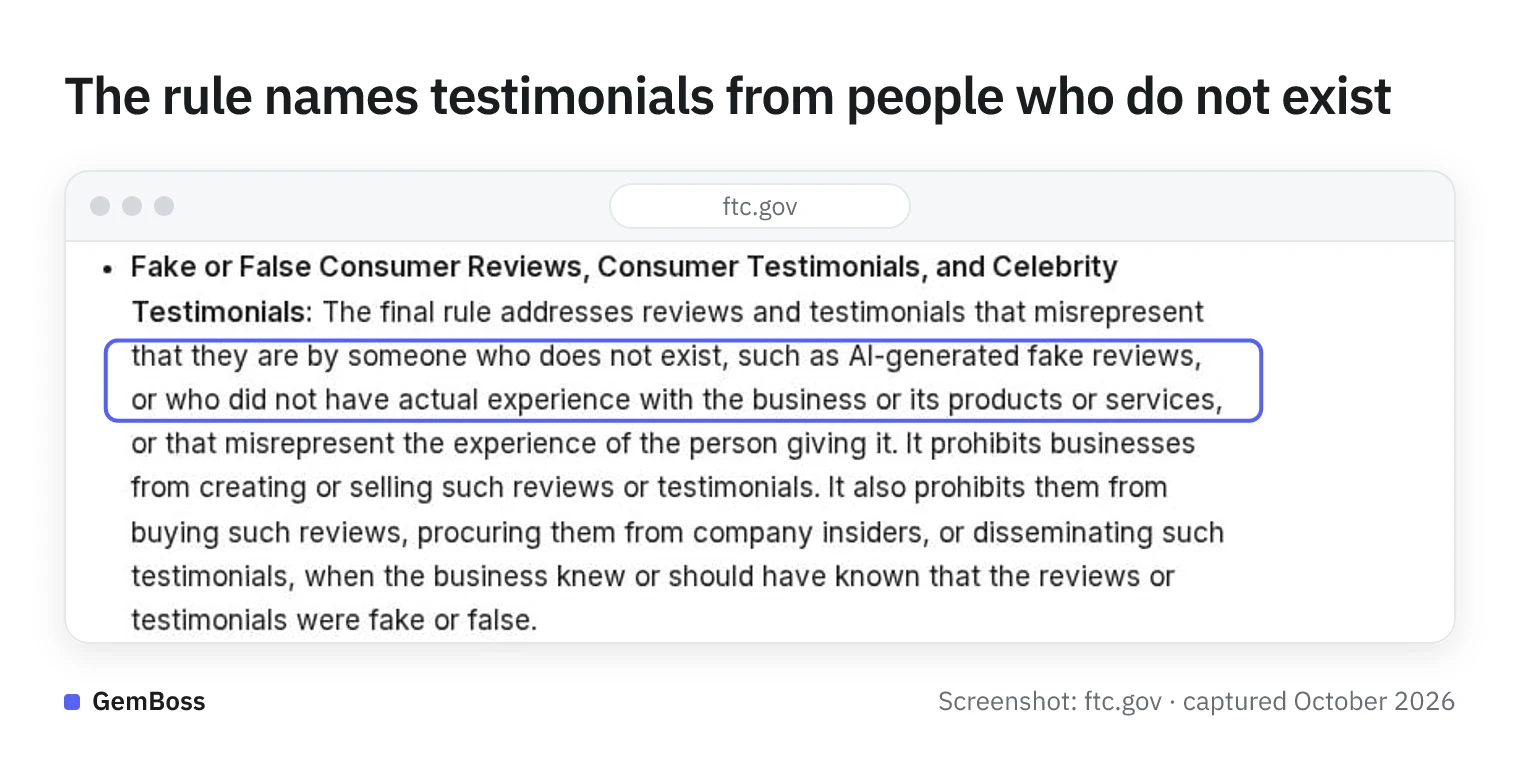
The rule covers both made-up people and people with no real experience of the product. Screenshot of Federal Trade Commission, captured October 2026.
Does Pennsylvania's new label law reach your ads?
It can, if your ads are shown in Pennsylvania. The Verge's weekend editor Terrence O'Brien reports that Pennsylvania Governor Josh Shapiro signed the Artificial Intelligence Deceptive Advertising Act. Ads that are significantly modified or generated by AI must carry a label in the same format as the ad. The rule applies no matter where the ad was made, and Pennsylvania is one of the first states to require it.
The Verge reads the wording as covering only synthetic content that creates a "false consumer perception" about a product. Parody, satire and anything "evidently fictional" are carved out, though The Verge notes it is unclear what that phrase means. A talking cartoon sits closer to that side than a realistic "customer" in a kitchen.
A label answers Pennsylvania's question, but it does not give a made-up customer a real experience.
What to check in your live ads
Here is the order I would check them in, riskiest first. If you don't use AI people in your ads, skip it.
- Pull every ad where an AI person speaks in the first person as someone who used the product. These sit closest to what the FTC rule describes.
- For each one, pick a route: a real customer saying it, a script that shows the product without pretending to be a customer, or a world that is obviously fiction.
- If you sell into the US and want to keep any of them, ask a lawyer first.
Step one takes a single pass through your ad library. It shows how much of your AI UGC depends on viewers mistaking a generated person for a real customer.
Sources
- The Verge · theverge.com
- @codyschneider · x.com
- @spwfeijen · x.com
- @milkkarten · x.com
- Federal Trade Commission · ftc.gov