All stories · Hot News
OpenAI launches ChatGPT for Accounting to automate invoices, reconciliation and financial reporting
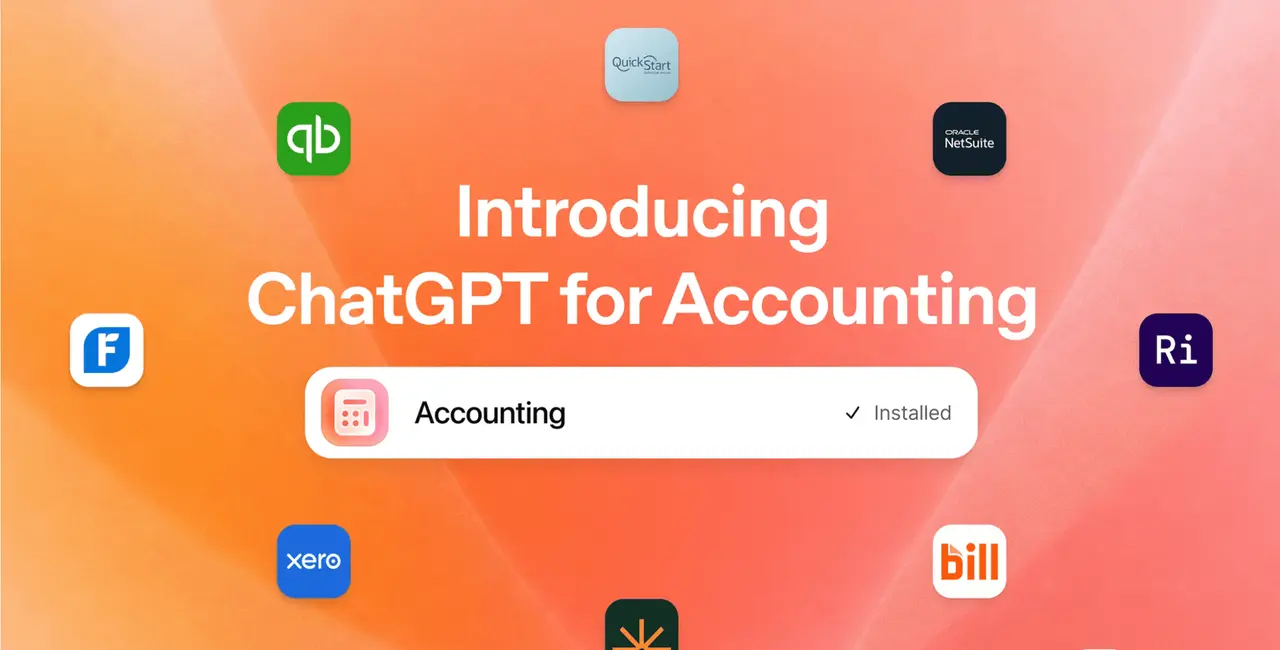
OpenAI is bringing ChatGPT deeper into business finance with ChatGPT for Accounting, a new workflow designed to reduce the manual work involved in invoice processing, bank reconciliation and financial reporting.
Share: WhatsApp · Telegram · X · Facebook · LinkedIn · Email

Instead of asking users to upload a spreadsheet and interpret the numbers themselves, ChatGPT can now work across connected accounting applications, email, files and existing financial records to prepare accounting work for review.
The launch targets one of the most time-consuming parts of running a business: keeping financial records accurate and up to date.
Source: OpenAI, ChatGPT for Accounting
From financial analysis to actual accounting workflows
ChatGPT for Accounting goes beyond summarizing financial data. OpenAI highlights four main capabilities:
Invoice and receipt processing
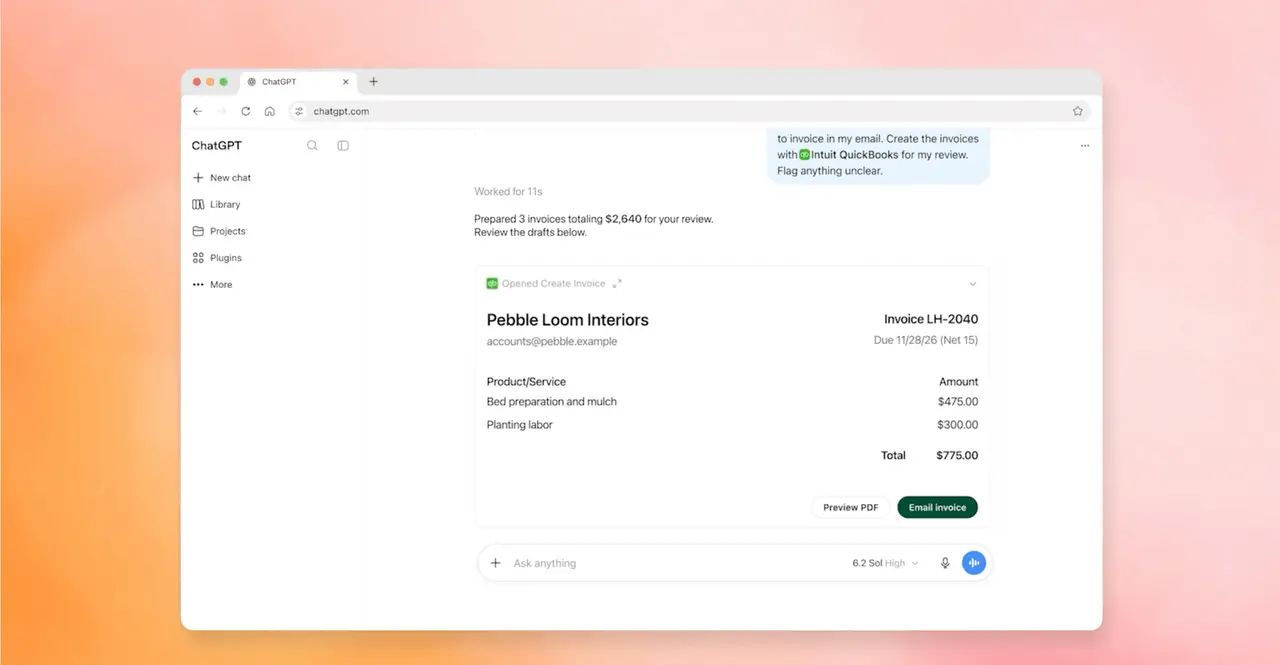
ChatGPT can extract information from invoices and receipts, prepare draft accounting entries, suggest account codes and flag missing or unclear details.
It can also search connected email for completed jobs and use that information to prepare customer invoices in an accounting application such as QuickBooks.
Bank reconciliation
Users can provide bank statements, payment exports and corresponding ledger records. ChatGPT proposes transaction matches and identifies possible duplicates, missing transactions, fee differences and unexplained discrepancies.
Each proposed match can include references to the original records, allowing users to investigate the numbers rather than relying on an unexplained summary.
Month-end reporting
ChatGPT can combine information from accounting applications, spreadsheets and supporting documents to prepare financial reports.
Users can provide an existing Excel template and ask ChatGPT to retain its format, compare reporting periods, explain significant changes and reference the supporting workpapers.
Repeatable accounting workflows
Businesses can save templates, instructions and review checks as reusable Skills. These can then be applied to new records each month, reducing the need to rebuild the same process repeatedly.
Source: OpenAI Help Center, Using ChatGPT for accounting work
Connect the accounting tools you already use
ChatGPT for Accounting works through an Accounting plugin and partner application integrations. OpenAI lists support for:
- Intuit QuickBooks
- Xero
- BILL
- FreshBooks
- Oracle NetSuite
- Oracle QuickStart
- Rillet
- Campfire
The workflow can also use computer interaction to help with applications that do not have a dedicated plugin.
This matters because businesses do not need to rebuild their entire accounting infrastructure to start using AI. ChatGPT can work with existing records and connected tools, subject to each application's permissions and supported actions.
Source: OpenAI, Accounting integrations
Humans still approve the financial decisions
OpenAI positions ChatGPT as an assistant that prepares accounting work, not an unrestricted replacement for financial oversight.
For example, it can draft invoice entries, suggest account classifications and identify reconciliation discrepancies. Users must review supporting documents, calculations and suggested coding before approving entries or reports.
Workspace administrators control which applications are enabled, while users connect their own accounts. ChatGPT follows the existing permissions granted to those applications.
For ChatGPT Business and Enterprise, OpenAI also states that business data is not used to train its models by default.
The distinction is important: AI can prepare the work, but the business remains responsible for approving financial records and decisions.
Source: OpenAI, Data and decision controls
What the results look like so far
OpenAI has published several customer examples to demonstrate how accounting workflows can reduce manual work.
- A franchisee reconciled cash in 94% less time using ChatGPT.
- A business owner saved 5–6 hours per week processing subcontractor invoices.
- A tax advisor reduced the time needed for investment analysis from nine hours to two.
- Shield Technology Partners reported preparing upload files and journal entries in 20 minutes or less per company.
These are customer-reported results featured by OpenAI, not independently verified benchmarks. Actual savings will depend on transaction volume, data quality, accounting complexity and the workflows each business connects.
Source: OpenAI, Customer stories
What this means for Shopify sellers
For Shopify businesses, the most practical opportunity is reducing the manual work between collecting payments and keeping accounting records accurate.
A typical store handles several financial data sources:
- Shopify order and payment exports.
- Shopify Payments payout records.
- Bank deposits and processing fees.
- Refunds, chargebacks and payment adjustments.
- Accounting records in QuickBooks or Xero.
- Supplier invoices and operating expenses.
ChatGPT can help bring these records together, match transactions, flag differences and prepare reports.
For example, a seller could provide a Shopify payout export, the corresponding bank statement and the accounting ledger for the same period. ChatGPT could then propose matches, identify fees and refunds, and list transactions that need further investigation.
One important distinction: Shopify is not among the accounting integrations listed on OpenAI's current Accounting page. Sellers should therefore treat Shopify exports and authorized records as source data unless a supported integration becomes available.
A practical starting point: Test the workflow using one completed Shopify payout and copies of the corresponding accounting records. Require every proposed match to reference its source transaction before considering any write-enabled actions.
ChatGPT for Accounting does not eliminate the need for accounting judgment. Its value is in reducing repetitive data collection, matching and report preparation, giving business owners and accountants more time to focus on discrepancies and financial decisions.
Ask AI next
- Does OpenAI plan to add a native Shopify integration to ChatGPT for Accounting, and when?
- Which ChatGPT plan (Plus, Team, Business, Enterprise) is actually required to use the Accounting plugin?
- Is there a tool or workflow that auto-feeds Shopify payout exports into ChatGPT without manual uploads?
- Does ChatGPT for Accounting keep an audit trail of every proposed match and human approval for compliance?
- How accurate is ChatGPT's reconciliation matching for stores with heavy refunds or multi-currency payouts?