All stories · Article
Rhode's $1B deal: $800M upfront, $200M on growth
“Delusion.”
Share: WhatsApp · Telegram · X · Facebook · LinkedIn · Email

That was Hailey Bieber's answer when Andrew Ross Sorkin asked what made her believe Rhode could reach a $1 billion valuation.

Speaking at The New York Times DealBook Summit on November 18, 2026, Bieber revealed that $1 billion had been the minimum price she was willing to accept for the brand.
She was referring to the acquisition of Rhode by e.l.f. Beauty, a major beauty company that owns e.l.f. Cosmetics and e.l.f. SKIN. Announced in May 2025 and completed in August that year, the deal was a major brand acquisition, not a fundraising round or an IPO.
But the headline number needs a closer look.
e.l.f. Beauty did not pay $1 billion upfront. The deal consisted of $800 million at closing, plus up to $200 million in performance-based earnout.
What did e.l.f. actually pay for?
According to e.l.f. Beauty's official acquisition announcement, published on May 28, 2025, the transaction included:
- $600 million in cash at closing.
- $200 million in e.l.f. stock at closing.
- Up to $200 million in additional earnout, tied to Rhode's performance over the following three years.
The $800 million closing consideration represented approximately 3.8 times Rhode's $212 million in trailing 12-month net sales as of March 31, 2025.
In simple terms, an earnout is additional money a seller can receive after an acquisition if the business meets agreed performance targets.
The subsequent SEC filing clarified that Rhode's earnout has two components:
- Up to $100 million for meeting revenue projections over the three-year period.
- Another $100 million for exceeding those projections by a specified amount.
That means four-fifths of the headline price was payable at closing. The remaining fifth depended on future performance.
At the time, Rhode was a digital-native brand selling through its own website, with 10 products priced at $38 or less, according to Beauty Independent's analysis.
The real debate was about the growth that had yet to happen
When the acquisition was announced in May 2025, the valuation sparked different opinions.
Some industry observers saw the deal as a strong bet on Rhode's brand power and potential. Others questioned whether its celebrity-driven momentum could sustain that price.
The distinction matters: e.l.f. was not simply paying for the business Rhode had already built. The deal also priced in what the brand could become with e.l.f.'s distribution network and retail reach.
e.l.f. positioned the acquisition as a way to expand into prestige beauty and new retail partners such as Sephora.
A year later, the growth bet is being tested
Rhode's expansion has moved beyond its original direct-to-consumer model.
In fiscal 2026, the brand generated approximately $390 million in pro forma net sales, up more than 80% year over year, according to Digital Commerce 360.
Its annualized global retail sales surpassed $500 million, and Rhode became the No. 1 beauty brand at Sephora North America.
Its retail expansion continued in September 2026, when it launched at Sephora in 19 European countries. As of November, Rhode was still present in only about 40% of Sephora locations worldwide, according to Digital Commerce 360.
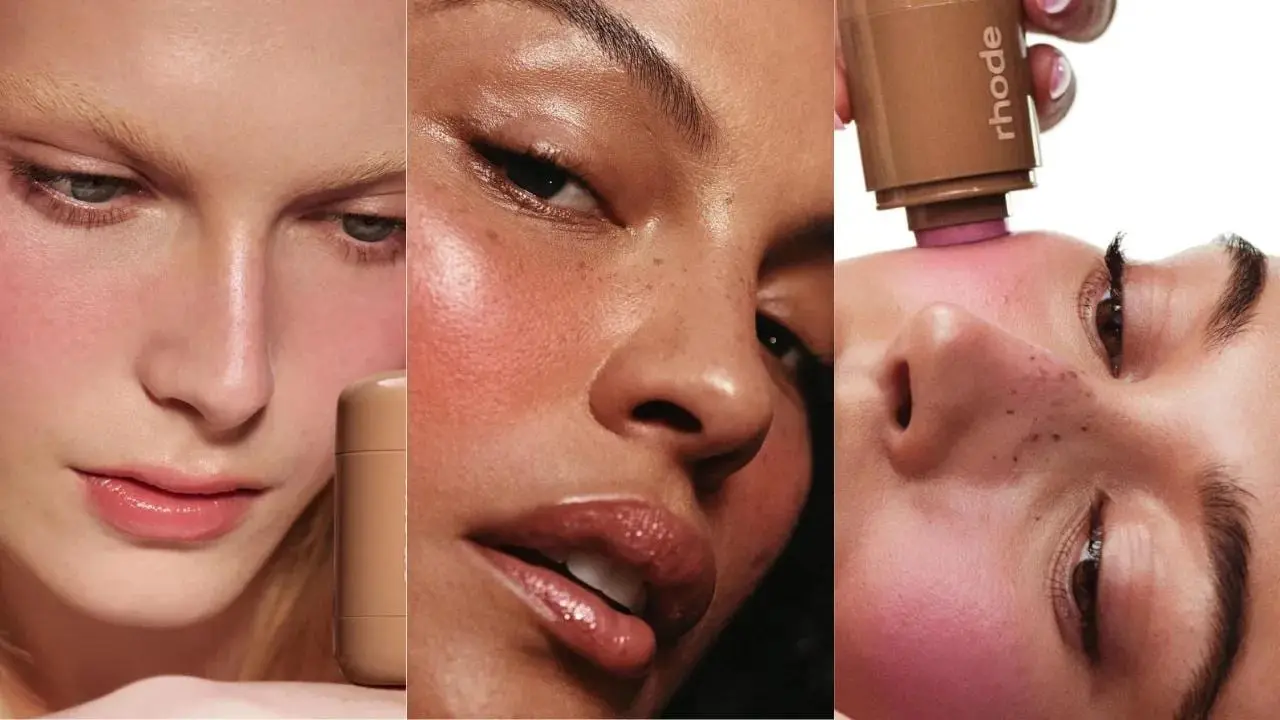
There is another important signal.
In its November 4, 2026 earnings report, e.l.f. recorded a $17.7 million increase in the fair value of Rhode's contingent consideration, citing revenue performance above the earnout thresholds.
This was an accounting adjustment, not confirmation that the full earnout had been paid. But it showed that Rhode's performance was exceeding the contractual thresholds used to calculate the additional consideration.
So, was Rhode really worth $1 billion?
The better question is what the buyer was paying for.
The $800 million upfront bought a business that had already generated $212 million in annual net sales. The additional $200 million was a bet on how much bigger that business could become.
For founders building DTC brands, that distinction is more useful than the headline valuation.
Your current revenue helps establish what your business has already proven. Your distribution potential, customer retention, brand strength and ability to scale help make the case for what it could be worth next.
A billion-dollar ambition may sound like delusion. But a buyer still needs evidence before paying for the next stage of growth.
If someone offered to acquire your brand today, what part of your asking price could you justify with current results, and what part would depend on what you believe you can build next?
Sources · 4 · sec.gov, beautyindependent.com, digitalcommerce360.com
- e.l.f. Beauty's official acquisition announcement · sec.gov
- Beauty Independent's analysis · beautyindependent.com
- Digital Commerce 360 · digitalcommerce360.com
- Digital Commerce 360 · digitalcommerce360.com
Ask AI next
- How are earnout revenue targets usually set and verified after a brand acquisition closes?
- How does Rhode's revenue multiple compare with other recent DTC beauty brand acquisitions?
- How do acquirers measure customer retention and margin quality when valuing a DTC beauty brand?
- What should a founder prepare before negotiating an earnout structure with a potential buyer?