All stories · Hot News
Shopify enables agentic checkout for ChatGPT
Shopify is taking another step toward agentic commerce. On November 23, 2026, the company made ChatGPT available as a channel within its Agentic Storefronts system, allowing AI agents to complete eligible purchases using Shopify checkout.
Share: WhatsApp · Telegram · X · Facebook · LinkedIn · Email

Shopify brings ChatGPT into its agentic checkout system
The update gives merchants another way to sell through AI, while keeping order management within the Shopify ecosystem.
What changed on November 23?
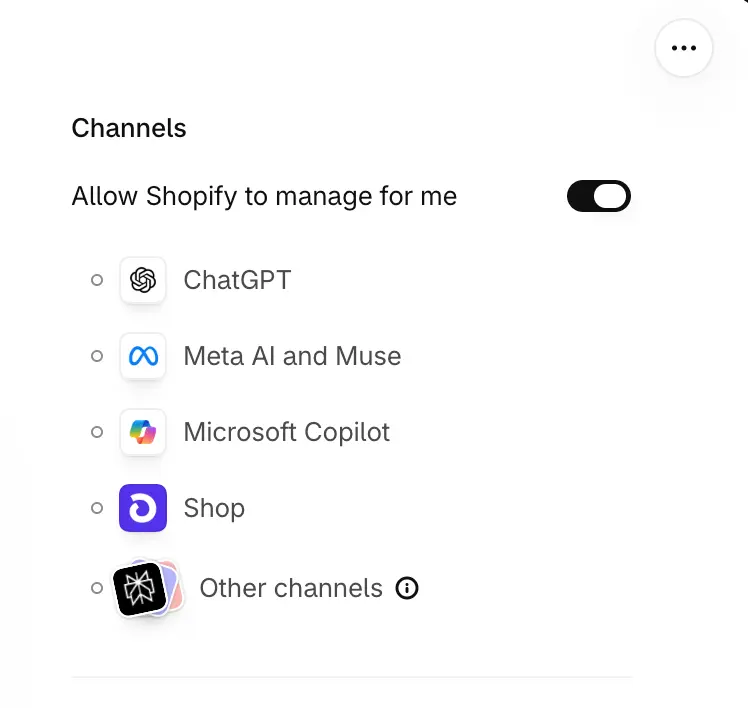
Shopify has renamed “Direct checkout” to “Agentic checkout” across its AI channels and extended the feature to ChatGPT.
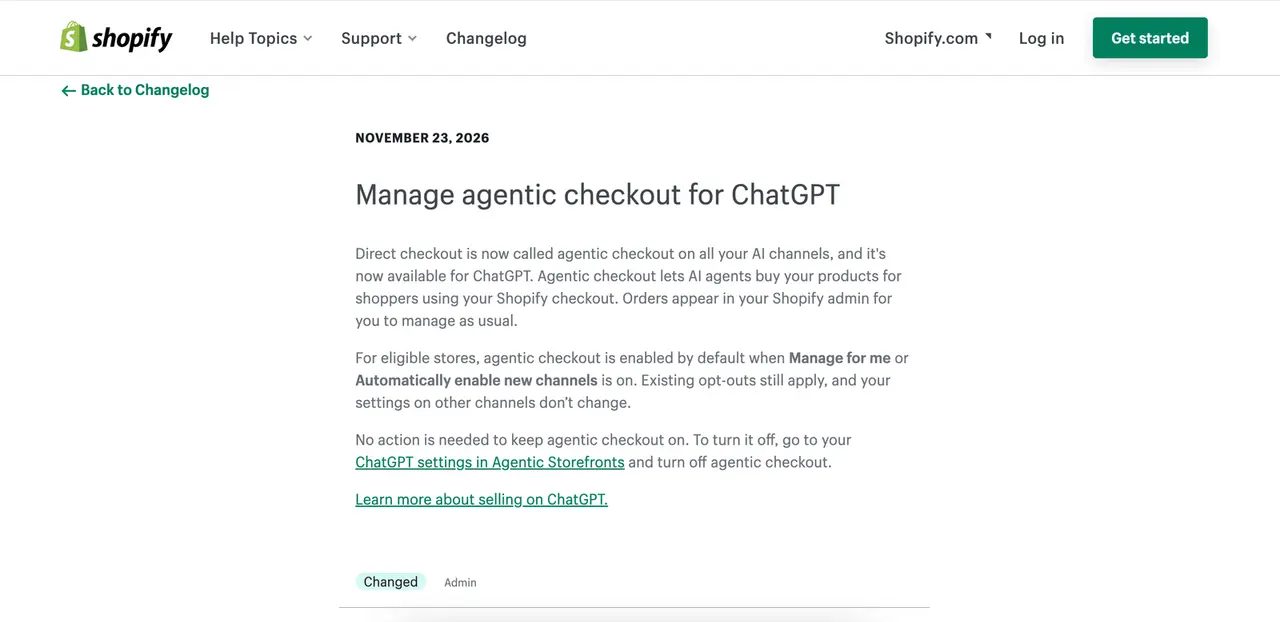
With Agentic checkout enabled, ChatGPT’s AI agent can complete eligible purchases on behalf of shoppers using the merchant’s Shopify checkout. Orders appear in Shopify Admin, where merchants can manage them as usual.
For eligible stores, Agentic checkout is enabled by default when Manage for me or Automatically enable new channels is active. Existing opt-outs remain in place, so merchants who previously disabled the feature will not be automatically opted back in.
Source: Shopify Changelog, November 23, 2026
What this means for Shopify merchants
The update connects two parts of the shopping journey that merchants previously had to think about separately: product discovery in ChatGPT and checkout through Shopify.
Merchants can now:
- Let shoppers discover products through ChatGPT using Shopify Catalog.
- Allow AI agents to complete eligible purchases through Shopify-powered checkout.
- Manage orders through their existing Shopify Admin.
- Control product discovery and agentic checkout separately.
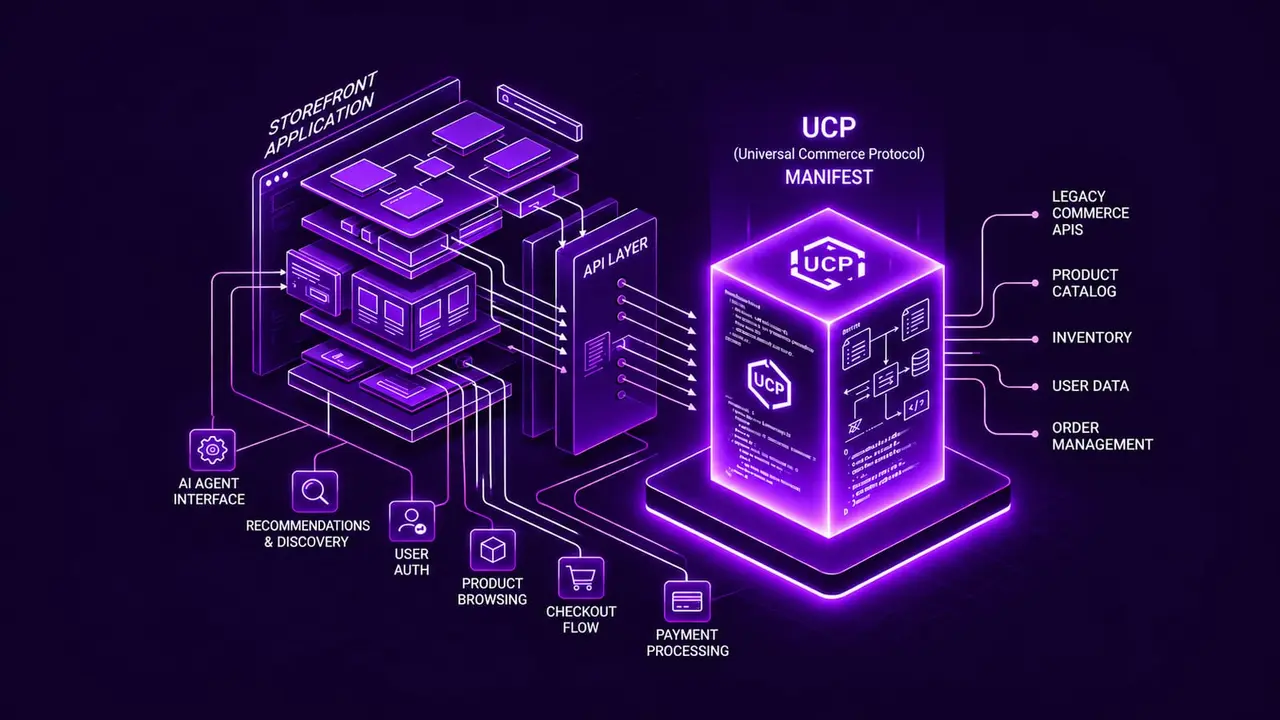
There is an important distinction between the two settings. Shopify Catalog access determines whether ChatGPT can access product information through the Catalog. Agentic checkout determines whether AI agents can complete purchases using agentic tools such as Universal Commerce Protocol (UCP) and WebMCP.
Turning off Agentic checkout does not necessarily remove products from ChatGPT search results. Products can still be discovered through Shopify Catalog. Customers may also complete purchases through the Shop skill or Shop App for ChatGPT, or through the merchant’s online store checkout.
Source: Shopify Help Center, Selling on ChatGPT
How to check your settings
Merchants can review their configuration in Shopify Admin:
- Go to Sales channels > Agentic.
- Open the channel settings.
- If the setting shows Manage for me, switch to Manual to manage individual channels.
- Select ChatGPT.
- Review both Shopify Catalog access and Agentic checkout.
- Save any changes.
To use Agentic checkout, Shopify Catalog access must also be active.
Eligibility depends on the store and its products. For ChatGPT, merchants must sell to customers in the US, have products eligible for Shopify Catalog, accept Shopify's Agentic Storefronts Supplemental Terms, and complete their Terms of Service, Privacy Policy, and Return and Refund Policy. The store itself does not necessarily have to be based in the US.
How we got here: three steps before this update
The November announcement makes more sense when viewed against the changes Shopify and OpenAI have made over the past year.
September 29, 2025: OpenAI launches Instant Checkout
OpenAI introduced Instant Checkout in ChatGPT, initially allowing eligible US users to purchase products directly from US Etsy sellers.
The experience was powered by the Agentic Commerce Protocol (ACP), an open standard co-developed with Stripe. OpenAI also announced that more than one million Shopify merchants, including brands such as Glossier, SKIMS, Spanx, and Vuori, were coming soon.
That announcement marked an early move toward buying products without leaving the AI conversation. However, the Shopify merchants were announced as coming soon, not as a completed rollout to every Shopify store.
Source: OpenAI, September 29, 2025
March 24, 2026: OpenAI shifts its checkout strategy
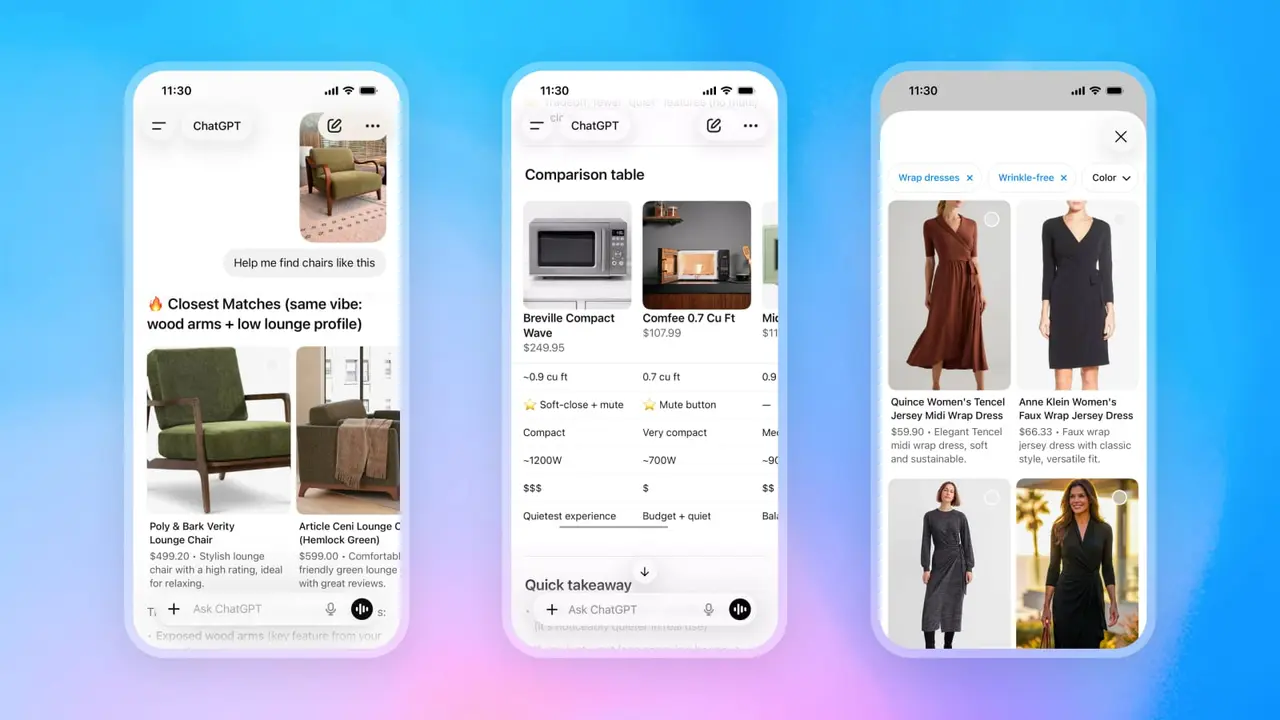
OpenAI later changed its approach. Instead of continuing to expand the original Instant Checkout experience, it prioritized product discovery and gave merchants more control over the checkout experience.
The company said the initial version of Instant Checkout did not offer the flexibility it wanted for merchants. It continued expanding ACP to support product discovery through merchant product feeds and promotions.
For Shopify merchants, product information was already available in ChatGPT through Shopify Catalog. Shoppers could discover products in ChatGPT and complete purchases on the merchant's online store through ChatGPT's in-app browser.
This was a shift in the checkout model, not an abandonment of ACP or AI-powered shopping.
Source: OpenAI, March 24, 2026
September 28, 2026: Shopify opens checkout to browser-based AI agents
Shopify added WebMCP support for checkout, allowing browser-based AI agents to read checkout information, update supported fields, and submit orders after buyer confirmation.
The tools include get_checkout, update_checkout, and complete_checkout. They operate within the buyer's active checkout session and use the same state as the checkout interface.
This was an important infrastructure step: AI agents could move beyond product discovery and cart management to interact with Shopify checkout itself.
However, this browser-based capability was not the same as adding ChatGPT as a managed channel within Shopify Agentic Storefronts.
Source: Shopify Developer Changelog, September 28, 2026
Additional coverage: TechCrunch
What merchants should prepare for
As AI agents become more involved in shopping, product information needs to be structured well enough for both people and machines to understand.
Before relying on AI-driven discovery and checkout, merchants should review:
- Product data: Accurate titles, descriptions, specifications, and identifiers.
- Variants: Clear size, color, material, and compatibility information.
- Pricing and availability: Consistent prices, inventory, and product status.
- Policies: Complete shipping, return, refund, and privacy information.
- Checkout experience: Make sure the existing Shopify checkout reflects the information customers need to make a purchase.
The bigger shift is not simply that ChatGPT has become another sales channel. Shopify is making its checkout infrastructure accessible to AI agents, allowing them to participate more directly in the transaction while merchants continue managing orders through Shopify.
Ask AI next
- Is there a way to tag or filter orders placed through ChatGPT's Agentic checkout separately from regular Shopify orders?
- Should merchants disable Agentic checkout until their product data is audited, or is the default safe?
- Does Shopify or OpenAI take a transaction fee or commission on purchases completed through ChatGPT's Agentic checkout?
- Are other AI assistants like Gemini or Perplexity getting similar agentic checkout access to Shopify stores?
- Are there Shopify apps that help merchants optimize product data for AI agent discovery?