All stories · Hot News
Shopify Q3 2026 Revenue Hits $3.74B as AI-Referred Orders Triple
Shopify’s Q3 results tell two different stories: AI-driven shopping is growing rapidly, but its scale remains small, while the cost of building AI tools is putting pressure on margins.
Share: WhatsApp · Telegram · X · Facebook · LinkedIn · Email
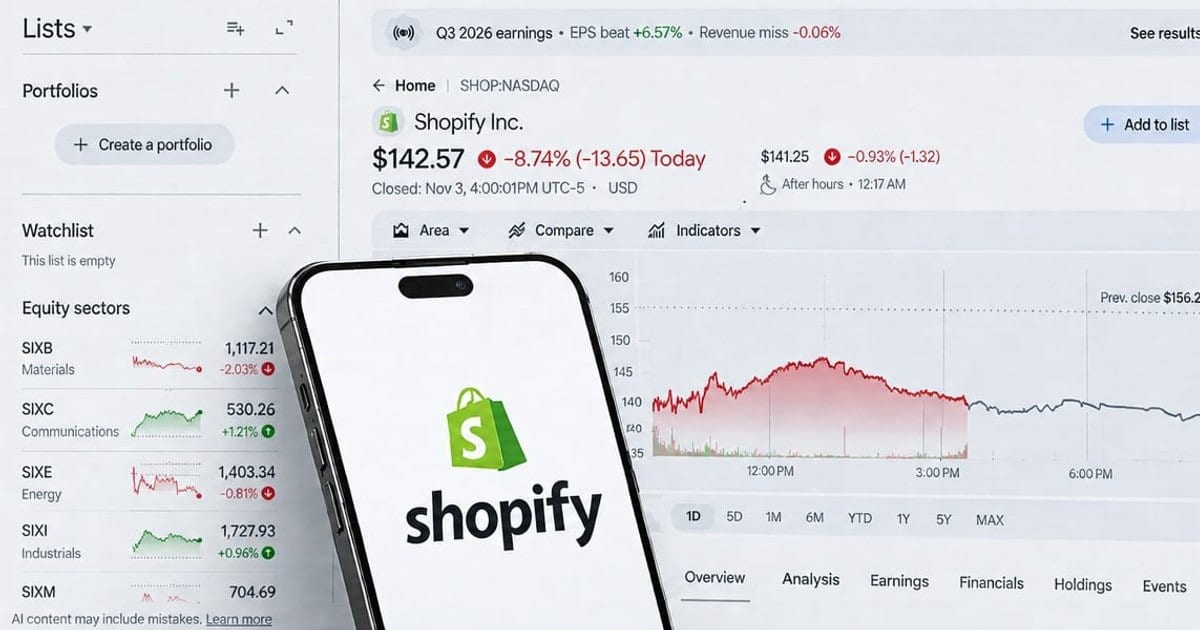
Shopify’s AI-referred orders grew 3.3x, but merchants still need better product data
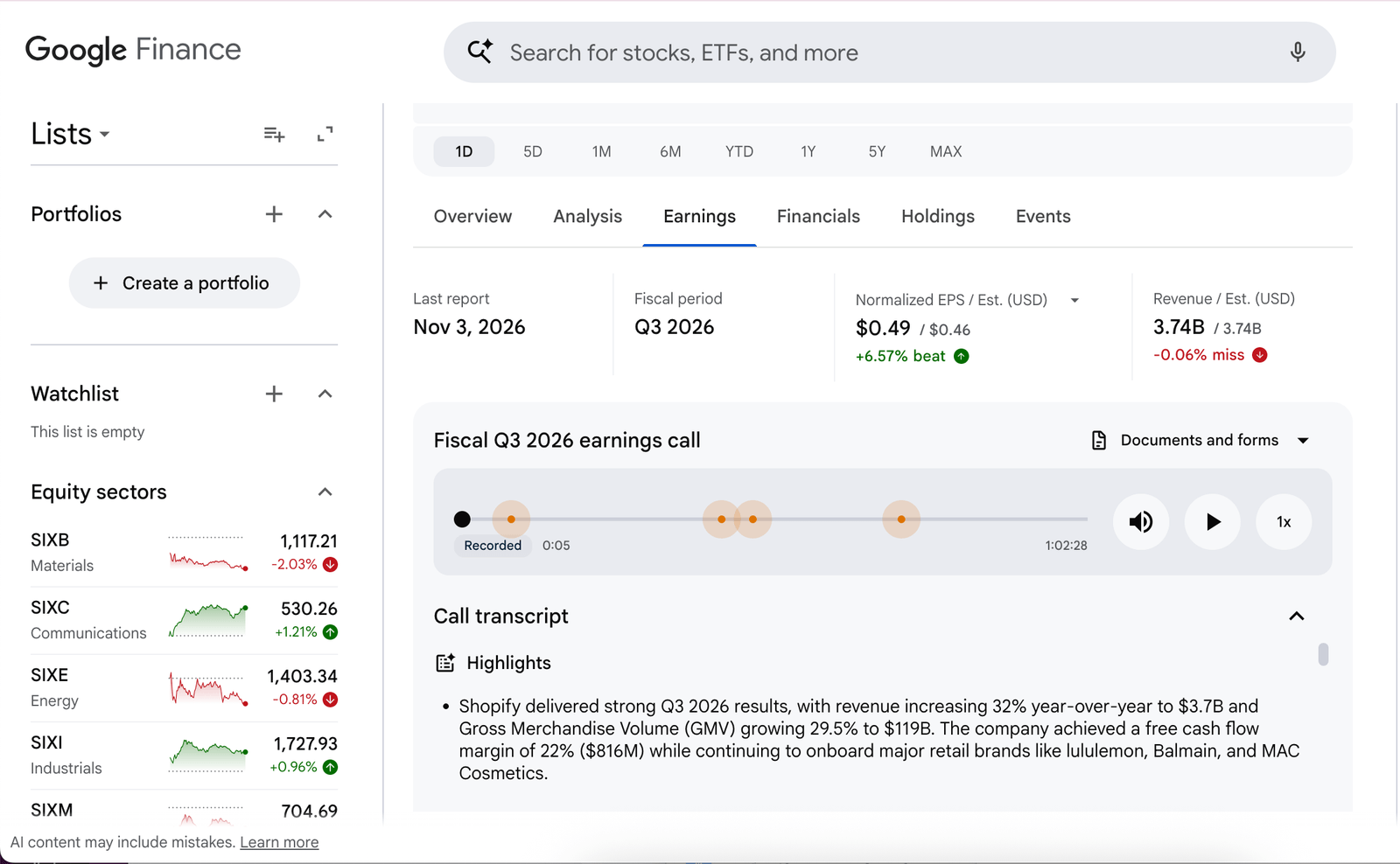
*Source: **https://www.google.com/finance/quote/SHOP:NASDAQ*
AI orders grew 3.3x, but the channel is still small
On November 3, Shopify reported its third-quarter 2026 results for the quarter ended September 30.
- Revenue: $3.74 billion, up 32% year over year.
- GMV: $119.1 billion, up 29%.
- Net income: $462 million.
- Subscription Solutions revenue: $836 million.
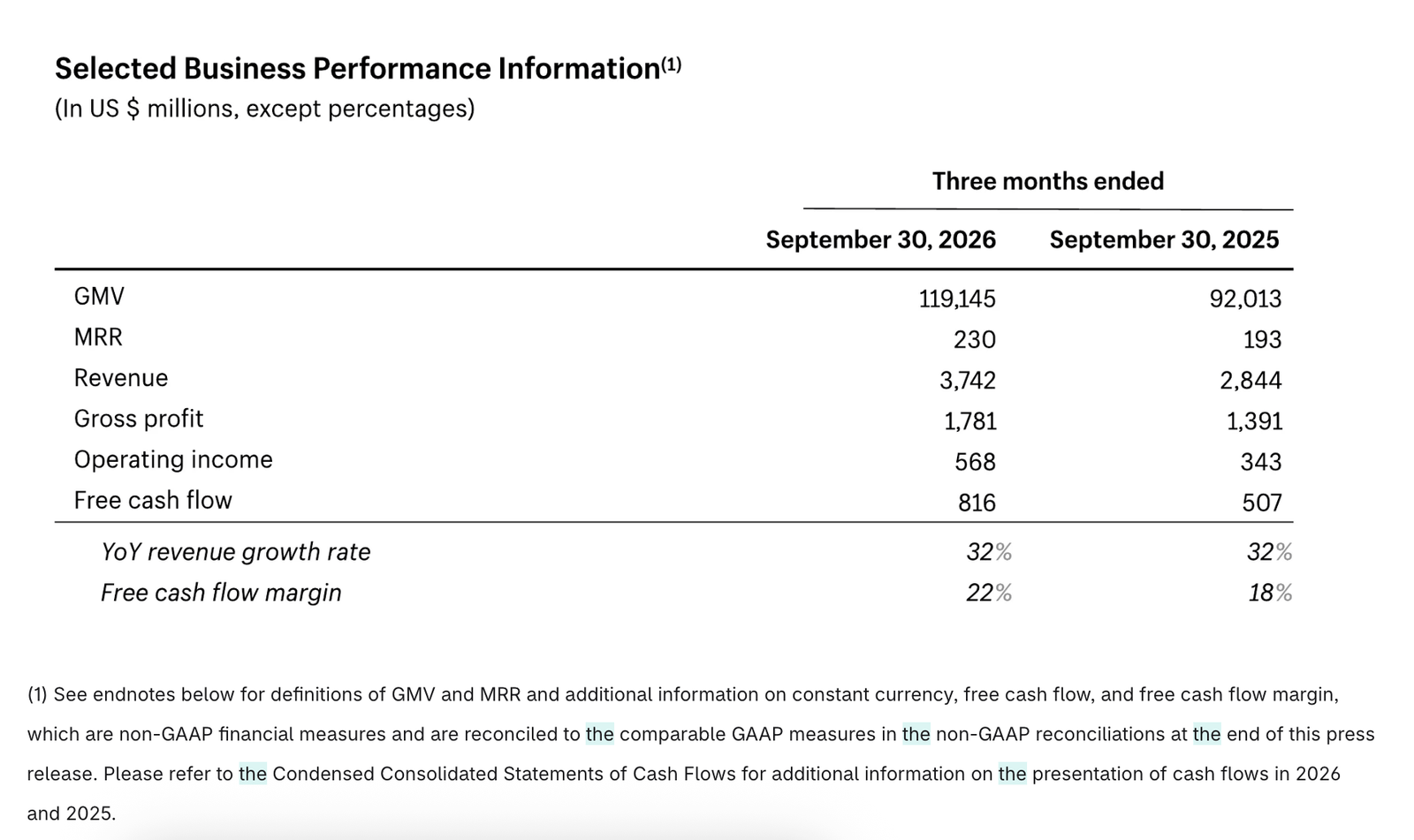
Despite strong growth, GMV and subscription revenue fell short of analyst expectations of approximately $120.1 billion and $850.2 million, respectively. Shopify’s Q3 financial results.
There is an important caveat. Finkelstein acknowledged that the overall volume remains small. Shopify has not disclosed the absolute number of AI-referred orders or their share of total GMV.
The growth rate signals momentum, not yet a meaningful revenue contribution for every store. PPC Land’s coverage of Shopify’s earnings call.
Why product data matters more as AI agents enter shopping
The shift is not simply about more shoppers discovering products through AI. It is also about where those shoppers land.
According to Finkelstein, AI-referred traffic is three times more likely than organic search traffic to land directly on a product page.
That changes what merchants need to pay attention to.
When an AI agent searches, compares, and recommends products, it needs structured information to understand what a product is, which variants are available, and whether it matches a shopper's requirements.
Shopify Catalog helps make product information, including size, color, and material, accessible to AI agents. Shopify says its catalog contains more than one billion products.
The Fall '26 Edition expands this infrastructure further, opening Shopify Catalog, cart, and checkout to AI agents and apps. Through Shop.md, agents can discover products and complete purchases using Shop Pay.
Sources: Shopify Fall '26 Edition | Shopify for developers.
Sidekick costs are rising, but the trend is not simply getting worse
AI investment is also creating a cost challenge for Shopify.
However, sequential figures tell a different story:
- Merchant conversations with Sidekick increased 14% from Q2 to Q3.
- Cost per conversation fell 28%.
- Total Sidekick costs declined 18%.
Shopify has been improving model selection, distillation, and caching to serve more conversations at a lower cost.
The company also expects Q4 revenue growth in the low-thirties percentage range.
For merchants, there is currently no evidence that these AI costs will automatically translate into higher subscription prices. Shopify Q3 earnings call transcript.
What Shopify merchants should check before BFCM
The immediate opportunity is not to chase AI traffic with a bigger marketing budget. It is to make sure AI channels can correctly understand and represent the products already in the store.
On October 28, Shopify introduced Map product data by sales channel, a new Channel Mapping page that lets merchants manage product data sent to individual channels.
Each field displays a coverage percentage, helping merchants identify missing information. They can also change data sources, combine fields, and bulk-edit product and variant information.
Before BFCM, merchants should:
- Open the Channel Mapping page for Shopify Catalog.
- Review coverage percentages for product titles, brand, color, and other relevant attributes.
- Check that size, material, and variant information is complete and accurate.
- Fix missing values across their best-selling products first.
- Preview the data being sent to each channel.
Sources: Shopify Changelog – October 28, 2026 | Channel Mapping Help Center.