All stories · Case study
Smith Optics' +41% conversion rate: what to copy, what to discount
Smith Optics lifted its Q2 conversion rate 41% year over year after a front-end rebuild of its Shopify Plus store, agency ehouse says on LinkedIn.
Share: WhatsApp · Telegram · X · Facebook · LinkedIn · Email
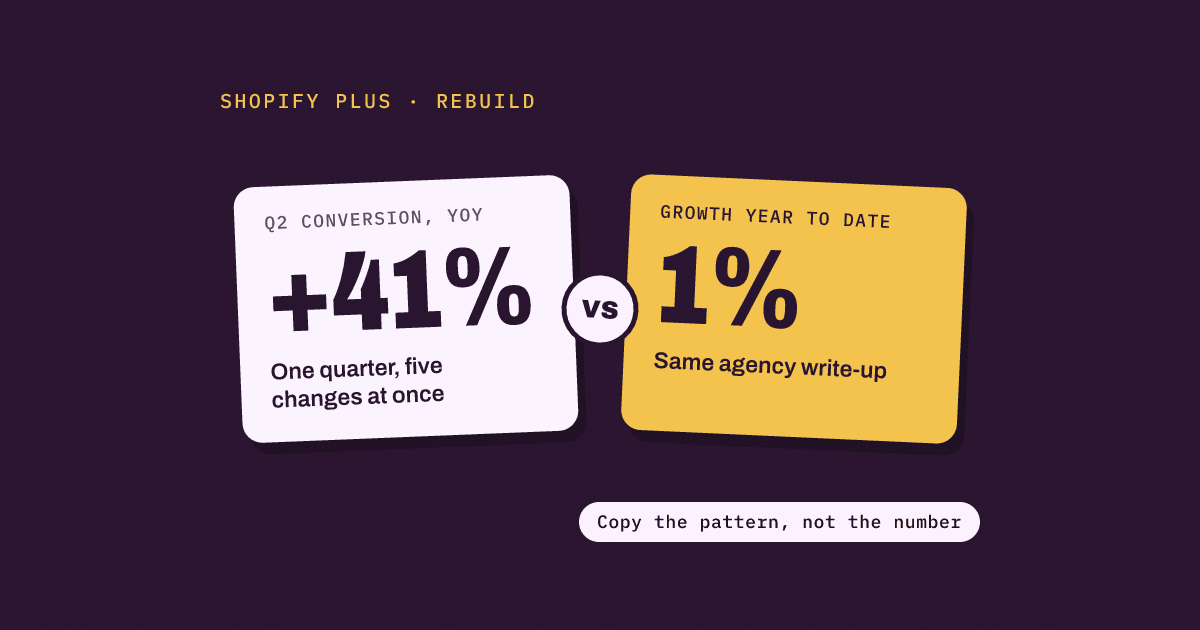
The same case study puts Smith at 1% growth year to date, so the part worth copying is how it narrowed variant choices.
Picking the right lens on Smith's site was the hard part
Smith Optics and Suncloud had already moved to Shopify Plus when Smith's digital team brought in ehouse, according to the ehouse case study published September 17, 2026.
The brief had four parts: modernize the front end, make the two brands look distinct, make choices like lens tint and prescriptions easier to work through, and use reviews and cross-selling better to raise engagement and AOV. The work ran in phased sprints, ranked against Smith's own roadmap.
Here is what one of those choices looks like on the live Smith Optics Squad goggle page:
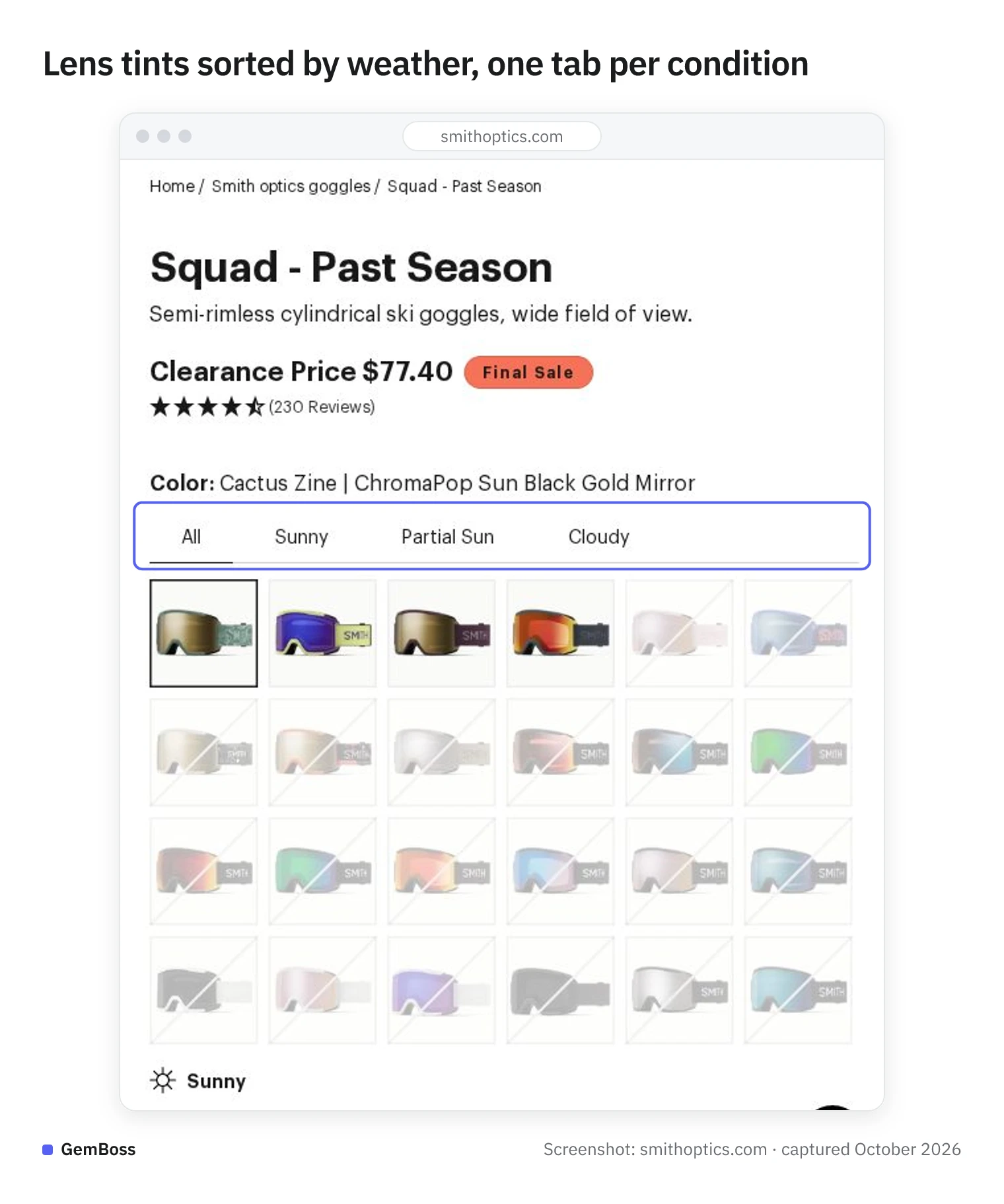
Live page, captured October 2026; it may differ from the version that launched.
If you sell anything configurable, you know this knot: the shopper is buying one item, but has to make several decisions before the add-to-cart button means anything.
Five changes shipped as one release
The case study lists five pieces of work. Each one maps to a problem from the brief:
- A separate look for each brand. ehouse developed digital style guides for Smith Optics and Suncloud, then redesigned both sites with different colors, fonts and styling. Aimed at: two brands that needed to stand apart online.
- Filters at the variant level. Smith and ehouse redesigned the navigation, and the product discovery app Boost was customized so collection pages filter by variant: activity, technology, collection, fit, price and popularity. Aimed at: finding the right frame and lens faster.
- A simpler buy box. On eyewear and goggles, tabs let shoppers explore lens tints by weather conditions. New components show the media gallery, prescription lens options, fit details and Smith's proprietary technology. A "Complete your setup" carousel cross-sells compatible products to lift AOV.
- Saved prescriptions. Customers can store their prescription in their account for future orders. Smith's team defined the experience and ehouse built it. Aimed at: repeat buyers typing the same details again.
- A translation upgrade. Shopify's native translation tool was replaced with Weglot, an AI-powered translation service, for international shoppers.
None of the five comes with its own number.
+41% is a Q2 number; +23% is a September number
The three headline figures come from two different windows. The conversion lift is for Q2. The order and revenue lifts are for September. All three compare against the same period a year earlier. The case study sums up the result in one line: "Within four months, revenue grew 23% and orders grew 28% year over year, bringing Smith to 1% growth year to date."
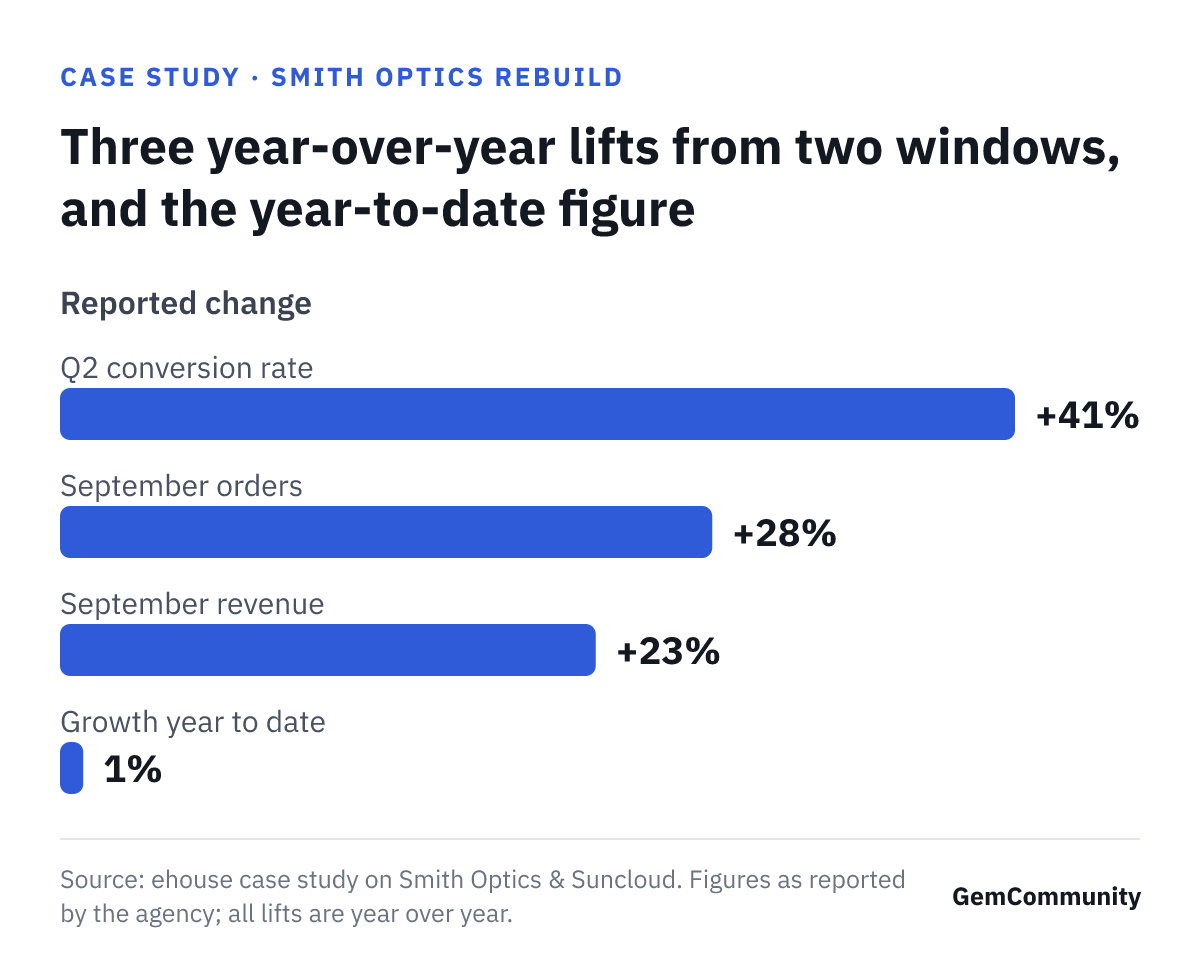
A year-over-year figure tells you a period beat the same period last year. It does not tell you what caused the gap.
And with five changes in one release, the page cannot split the lift among them. It also does not say which measure the 1% refers to.
Several things are missing from both the post and the page: a launch date, conversion rate or revenue in absolute terms, traffic, any A/B test, and how much each change contributed.
The +41% belongs to Smith's quarter, not to your forecast.
You sell products with many options: which change should you copy first?
The order below ranks Smith's five changes by how much you can do without an agency.
The source does not rank them by impact, so neither does this list.
- Save what repeat buyers re-enter. Smith stores prescriptions in the customer account. The same idea works for sizes, measurements or any detail a returning customer types every time. Skip it if your product has nothing personal to re-enter.
- Filter by variant on collection pages. Smith's collection pages filter by activity, fit and technology. Skip it if your whole catalog fits on one screen.
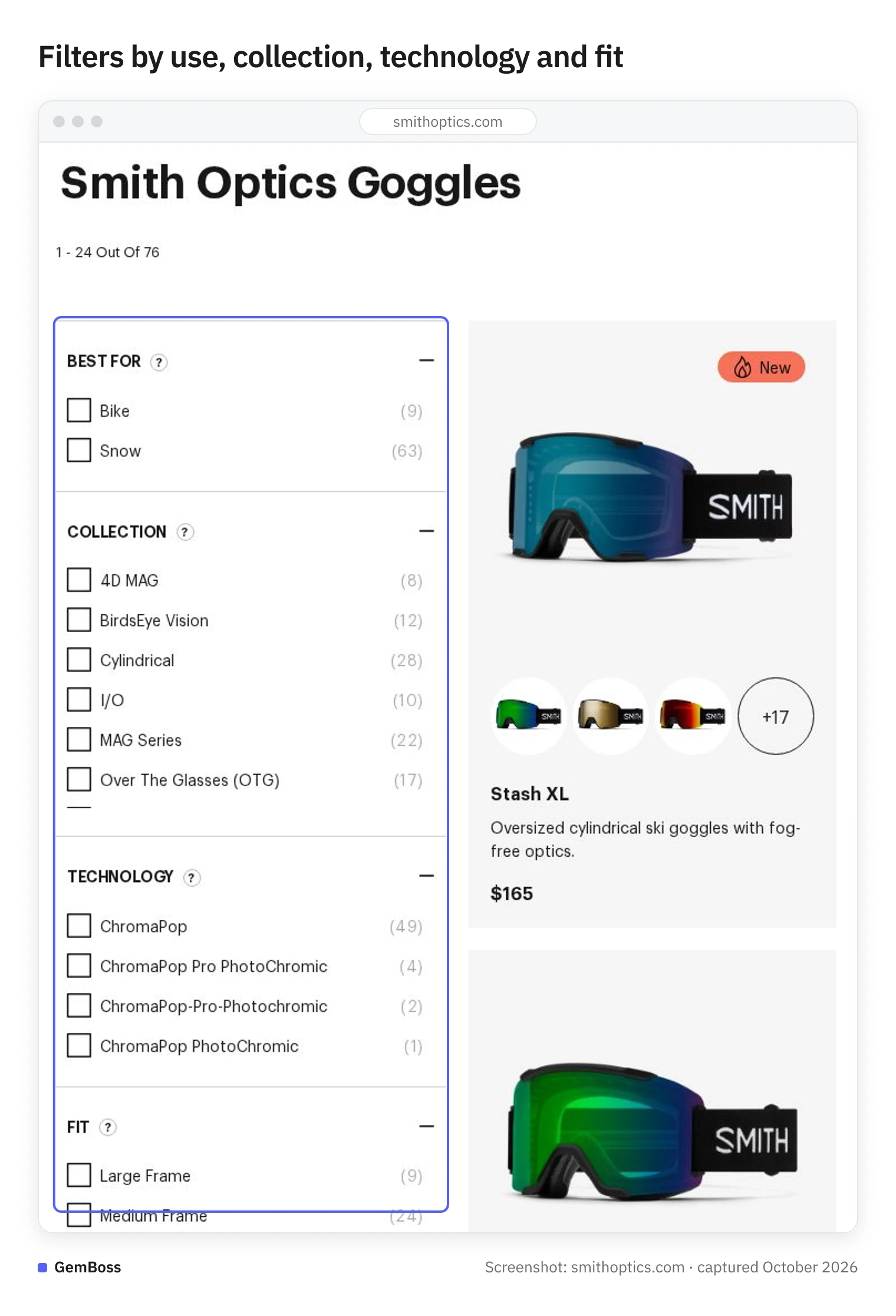
*Smith Optics goggles collection page*, live page captured October 2026.
- Group buy box options the way shoppers use them, then cross-sell what fits. Smith sorts lens tints by weather and suggests compatible products. Skip it if most of your products come in one version.
- Change your translation setup only if you sell abroad. Smith moved to Weglot for international shoppers. Skip it if you sell in one language.
- Build separate style guides only if you run more than one brand. It is the change most tied to Smith's two-brand setup. Skip it if you sell under one name.
The first two both cut down what a shopper has to decide, or retype, before buying.
Start there.
To know which change paid, ship it alone and measure it
Smith has taken that route before.
A case study on Convert.com, published July 25, 2019, describes an A/B test the agency Surefoot ran on Smith's mobile cart. Traffic was split 50/50, with 6,647 visitors per variant over 20 days, at 95% confidence. The variant moved the login option to the top, made cart editing easier with larger tap targets, and added a primary checkout button.
Result: an 8% lift in visits to checkout, a 3.4% lift in transactions and $1.39 more revenue per visitor.
Those numbers are smaller, but they belong to one cart redesign tested against the original, and they date from 2019, years before the Shopify Plus rebuild, so they are no yardstick for ehouse's work.
If your store has enough traffic to split, ship the buy box or the filter change on its own and test it.
If it does not, ship the batch, then read your results by period, by baseline and by how many changes went live at once.