All stories · Article
People say your store looks great, so why no orders? What to check first
Eight shoppers reached checkout. Zero bought. That was one day of Meta ads for a small abaya brand in the UAE selling on Shopify, alongside 124 sessions and 12 add-to-carts.
Share: WhatsApp · Telegram · X · Facebook · LinkedIn · Email
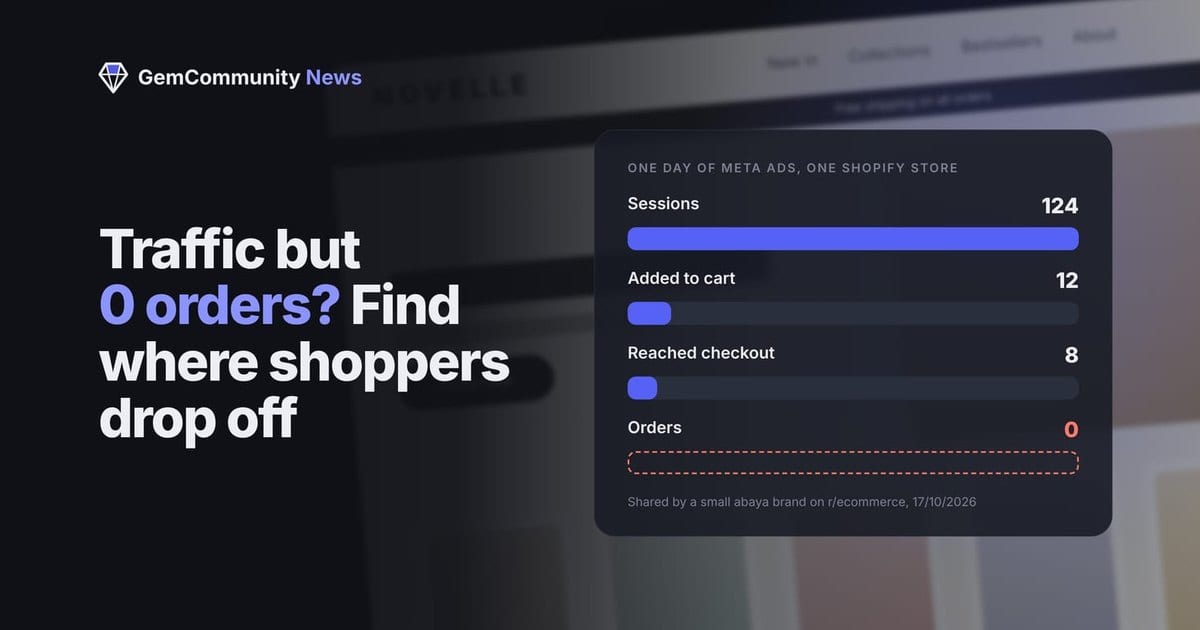
Those four numbers don't explain why people left, but they already narrow down which steps need a second look. If your store has traffic and no orders, the first job is to find the step where shoppers drop off, then fix that step and nothing else yet.
Four numbers narrow the search
The brand's owner posted on r/ecommerce on October 17 that they were running Meta ads to a single product page: a lace open abaya priced at 280 AED (about 76 USD), sold with a matching slip dress and free delivery within the UAE. The day before, they got 1 order but made no profit on it. On the day behind these numbers, they spent about 110 USD on ads.
| Step | Count | Note |
|---|---|---|
| Sessions | 124 | Meta ads, about 110 USD that day |
| Add to cart | 12 | Around 10%, which the poster considered fine |
| Reached checkout | 8 | |
| Orders | 0 | Biggest drop-off |
The poster read that add-to-cart rate as a sign the ad and the product were doing their job. Their guess was that shoppers were getting stuck at checkout, and they listed three possible reasons themselves: as a new brand with no reviews, they hadn't earned enough trust yet; the payment methods weren't the right fit; or the checkout itself had a bug.
The table points the same way: checkout is where the store loses the most people. So instead of reworking photos, copy and colors across the whole store, the owner can put their effort into what happens after a shopper hits checkout.
Note: 8 checkouts in one day is a small sample. Track a few more days before concluding the problem sits squarely at checkout.
Compliments on the design don't tell you where shoppers stop
The abaya brand could narrow things down because it had numbers for each step. Other stores lean on what people tell them, and end up praised for their looks while getting almost no orders through the website. Between October 19 and 21, a new skincare store and the skincare brand Lentis'Care both shared this story on r/ecommerce.
| Abaya brand | New skincare store | Lentis'Care | |
|---|---|---|---|
| Time running ads | 1 day | 4 days | About 10 days |
| Ad spend | About 110 USD | Total not given (about 50 cents per click) | 460 euros |
| Traffic | 124 sessions | 500 sessions | About 70 visitors a day |
| Website orders | 0 | 0 (5 orders via Shop app) | 2 (1 not from Meta) |
| What the diagnosis rests on | Step-by-step numbers | Compliments on the design | Compliments on the design |
The first skincare store had been open for about 2 weeks, selling products from brands it is an authorized retailer for. The average session lasted 90 seconds, and one product was viewed for as long as 8 minutes. The poster said everyone they asked, even people they barely knew, had only positive things to say about the site's visuals and layout.
Lentis'Care is a natural skincare brand built around mastic oil, and its visitors-per-day figure comes from the store's Shopify analytics. That poster also said plenty of people, other business owners among them, had praised the website's design and overall quality.
That kind of praise still has some use: it suggests the store may not have a major aesthetic problem. But the people being asked are looking at the store as reviewers, not as shoppers about to buy, so they're poorly placed to spot what is making real customers stop. The 90-second figure has the same limit. It shows shoppers stuck around to browse, not whether they added to cart or reached checkout.
The more telling detail is 5 orders through the Shop app while the website had none. If those are the same products sold on the website, the thing to look at may be the buying path on the website rather than the products themselves.
Fix the step where shoppers leave
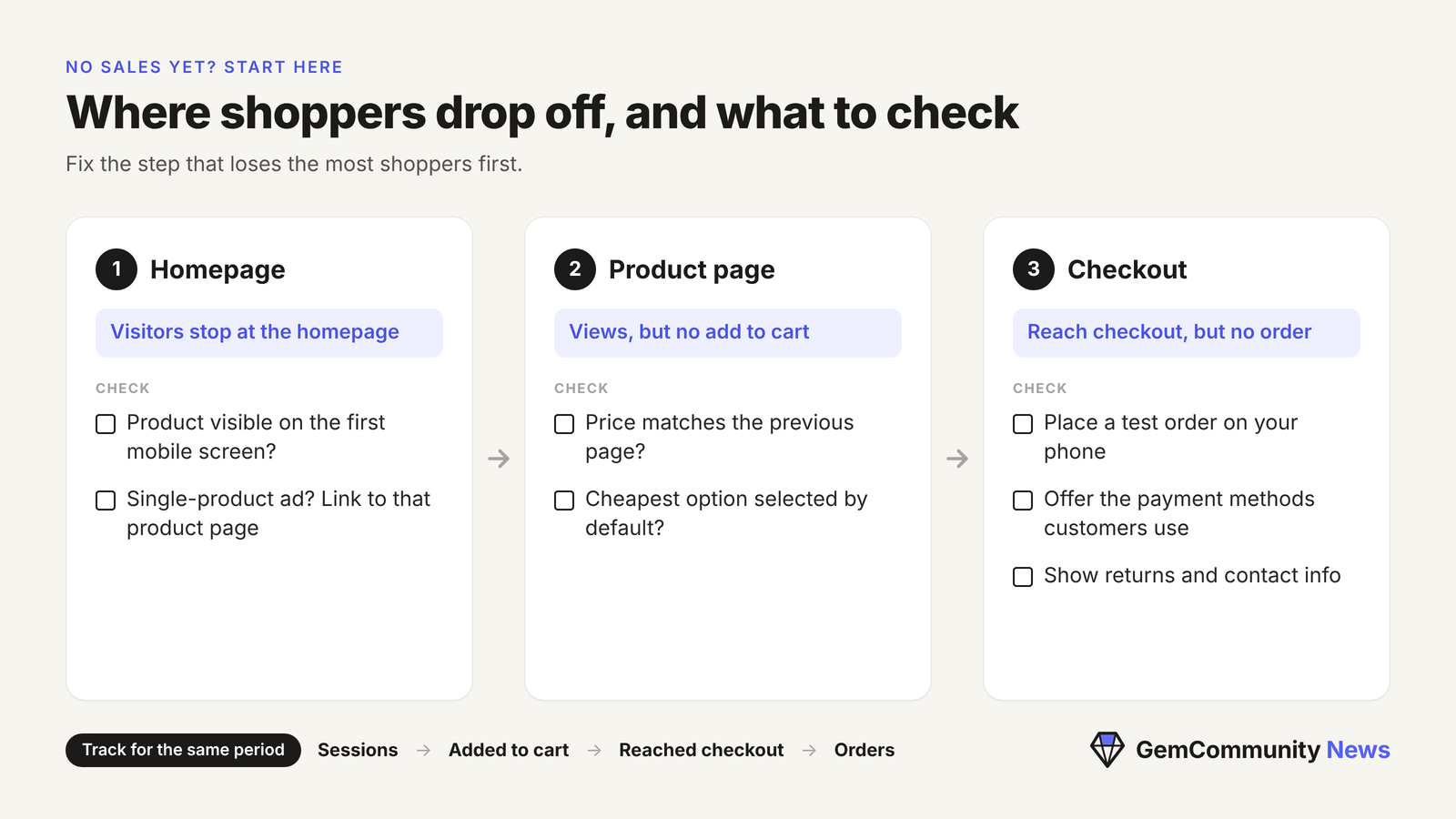
Once you have counts for each step, the step that loses the largest share of shoppers compared with the one before it (the drop-off point) tells you where to start. Each step calls for checking different things.
Shoppers don't get past the homepage
When traffic lands on the homepage, first check whether people go on to a product. A store selling official Sanrio and Hello Kitty merchandise, running campaigns on TikTok and Instagram, said on October 16 that its analytics showed most visitors never went anywhere beyond the homepage.
At this drop-off, the question is whether shoppers can see a way to the products. Open the store on your phone the way someone tapping through from an ad would, and look at the first screen: is there a product on it, and does it match what the shopper just saw in the ad? If the ad is about one specific product, sending people straight to that product page, as the abaya brand did, can cut out a step.
Shoppers view products but don't add to cart
When plenty of people reach the product page but few add to cart, check whether the price and the default options match what shoppers saw on the page before.
On October 23, the owner of Revel in Manna, a newly opened store selling contemporary Christian art, posted on Shopify Community asking for feedback on first impressions and the path from landing on the store to buying. The post had no numbers at all, yet one reply still caught a snag: the homepage showed prices from 125 USD, while the product page opened at 175 USD because the framed version was preselected. The commenter suggested defaulting to the cheapest option, or showing the framed price right on the product card. Since the store had no reviews yet, they also recommended placing an introduction to the artist or photos of the actual canvas close to the buy button.
Good feedback can still catch specific problems like this one. With step-by-step numbers, you'll know which page to put in front of people first.
Shoppers reach checkout, then leave
Back to the abaya brand: the three possibilities the poster raised can turn into three things to check. Owners can handle all three themselves, without changing the product or the price.
Start with four numbers
Eight checkouts and no orders is a painful number for the abaya brand, but it is also what told them to check checkout first. If your store has traffic and no orders, write down these four numbers for the same time period:
- Sessions
- Add-to-carts
- Checkouts reached
- Orders
If you still want to ask the community for feedback, posting those four numbers with your question can point reviewers at the page that needs fixing, instead of general comments about the design.