All stories · Article
The Click-to-Page gap: Where ad promises meet landing page reality
Clicks are coming in. Your CTR looks healthy. But shoppers aren't adding products to their carts.
Share: WhatsApp · Telegram · X · Facebook · LinkedIn · Email
Before changing bids or producing another batch of ads, look at what happens after the click.
The problem may be that your product page doesn't continue the promise that made someone click in the first place. But don't assume the page is at fault until you've checked traffic quality and whether visitors actually reach it.
With Black Friday on November 27 approaching, that distinction matters. Increasing your ad budget before finding the leak can simply make the same problem more expensive.
Is it the ad, the traffic, or the page?
A Shopify Community merchant recently described receiving more than 600 visitors from Google and Meta ads without a single add-to-cart or purchase. After spending over $200, the store owner asked what was going wrong.
The discussion produced several possible explanations: product images, unclear shipping information, weak product pages, slow mobile loading and potentially low-intent traffic. One respondent recommended checking ad placements and comparing link clicks with landing page views.
Importantly, the discussion did not establish one confirmed cause.
Shopify's Conversion rate breakdown report lets you follow sessions through cart additions, checkout and completed purchases.
The question isn't simply whether people click. It's where they stop.
Why a page that looks fine still loses the click
Your ad and product page may have been created by different people, at different times, with different priorities.
The ad focuses on the reason to buy. The product page may focus on product specifications, branding or general benefits.
Both can be accurate and still fail to connect.
Onieque Edwards describes this problem in an analysis of ad-to-listing message match.
His example: an ad promises clinically backed joint relief in seven days, while the product listing leads with a twelve-ingredient formula.
The information isn't necessarily contradictory. But the shopper clicked for one reason and landed on a page that starts somewhere else.
The same problem appears in Shopify stores. Jeronimo Canale gives two straightforward examples in his post about Meta ad performance:
- The ad promises free shipping, but checkout adds a shipping fee.
- The ad promotes a bundle, but the product page doesn't offer that bundle.
The shopper has to reconsider the purchase instead of moving naturally towards it.
You've already paid for the click. Don't make the customer work to understand why they should buy.
Fix the promise, not the wording
Message match doesn't mean copying the exact headline from your ad onto the product page.
It means carrying the same buying reason through the journey.
If your ad sells a specific benefit, make that benefit visible in the main image, title and opening description. Keep the offer consistent. Make sure every claim is accurate and supported.
For some products, a standard PDP may not be enough. If the ad targets a specific problem or audience that requires more explanation, a dedicated landing page can provide the missing context.
In one account shared by Mukesh Nayak, changing the headline, CTA and offer reportedly made little difference, while introducing a bridge page changed the outcome. This is an individual account, not proof that every store needs a separate landing page.
Before you raise your Black Friday budget
Run this 10-minute check first:
- Check CTR. If it's weak, investigate the creative and audience.
- Check traffic quality. Compare link clicks with landing page views, review placements and identify which sources bring visitors who actually reach your store.
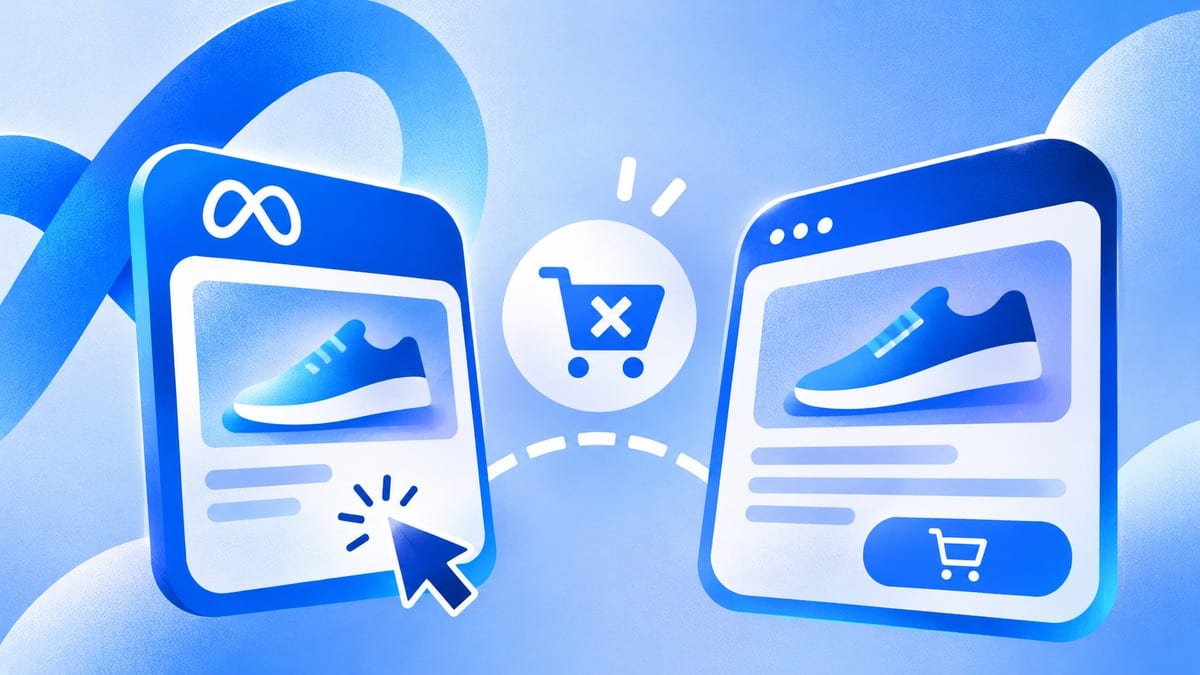
- Check the page. Open your highest-spending ad beside its destination page on mobile. Compare the image, title, opening description and offer.
If the ad earns the click but the page doesn't continue the reason behind it, more budget won't solve the gap.
It will just send more shoppers into it.
Sources
Original material
- Onieque Edwards – Fixing the Ad-to-Listing Message Match Problem
- Shopify Community – 600+ visitors but no add to cart or purchase
- Niket Shah – Clicks Up, Sales Flat?
- Jeronimo Canale – 3 Reasons Meta Ads Stopped Working
- Mukesh Nayak – The First $50K in Ad Spend Was a Disaster
Additional sources