All stories · Article
The company Anthropic never wanted to become is now public
Anthropic's founders say its IPO will not change who the company is. Its governance structure is designed to protect that promise. But the real test may come from decisions that shareholders never vote on.
Share: WhatsApp · Telegram · X · Facebook · LinkedIn · Email

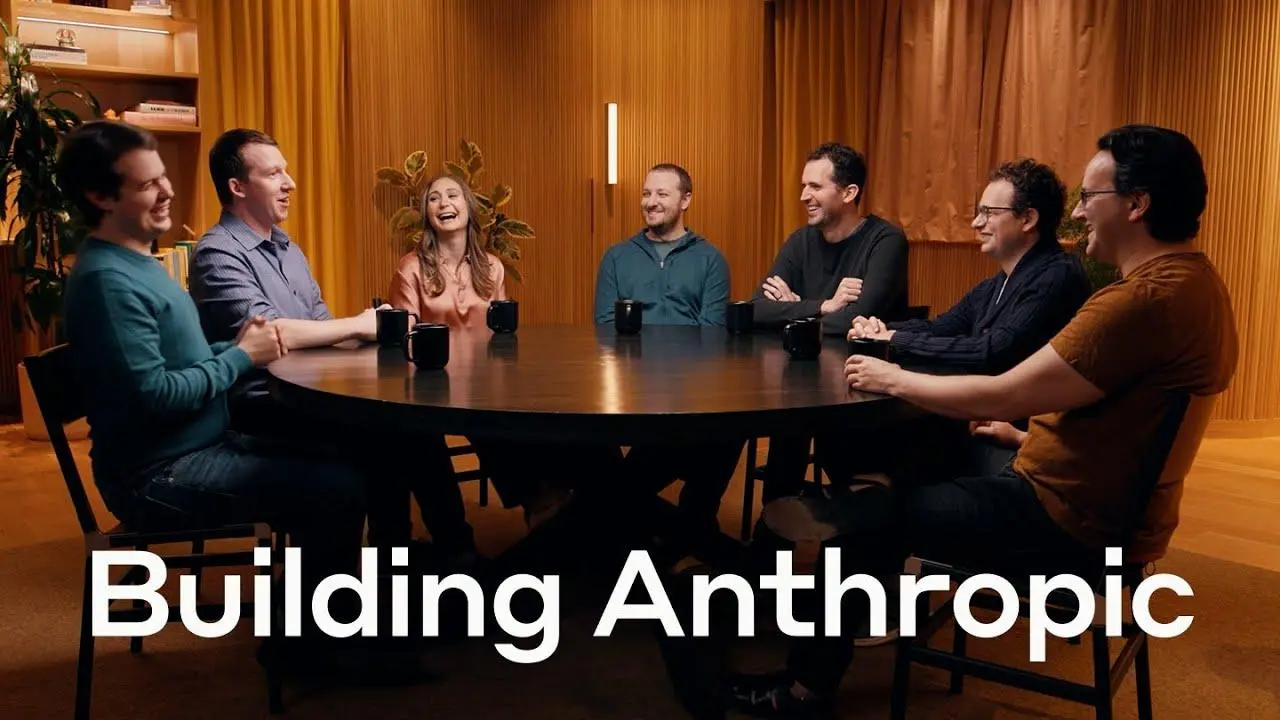
On November 19, Anthropic began trading on Nasdaq under the ticker ANT. A day later, its official account released a video featuring all seven co-founders reflecting on why they started the company.
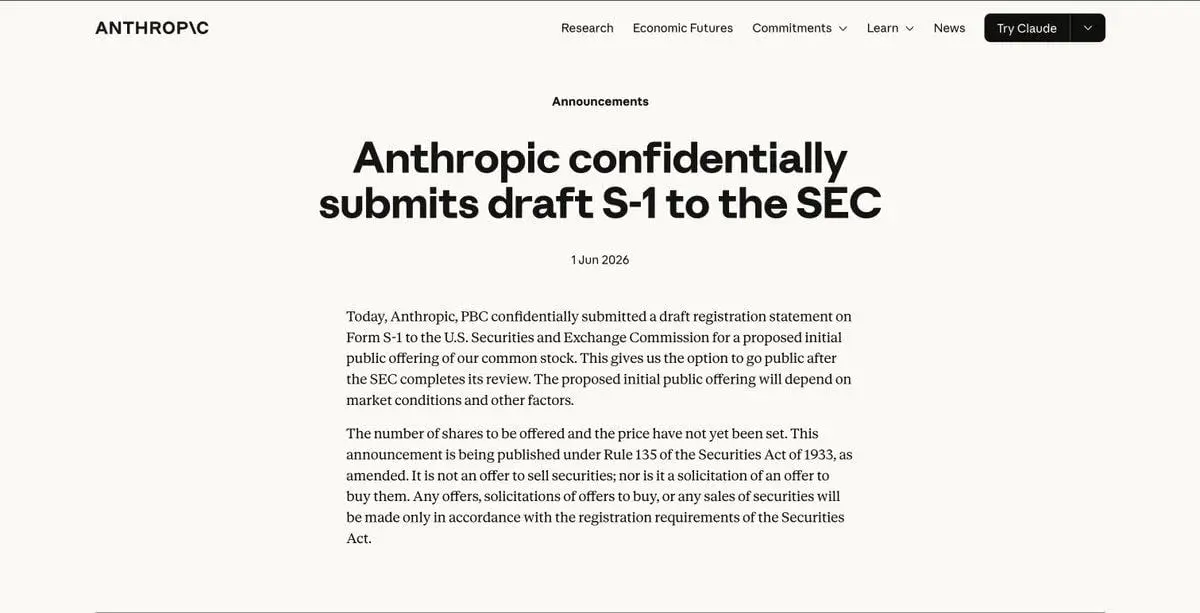
The timing was significant. In a CNBC interview following the IPO, President Daniela Amodei said the listing was just another milestone. "We're going to wake up tomorrow and we're going to be the same company."
That sounds reassuring. But Anthropic today is a very different organization from the one its founders started.
The company was never supposed to become this big
In 2023, when journalist Kevin Roose visited Anthropic, the company had around 150 employees. Its early version of Claude was available through Slack, Poe and an API. Daniela Amodei was proud that hundreds of businesses were using the API.
The business operation was remarkably small. According to Roose's recollection in NPR's Machine Gods, the business team consisted of roughly one or two people and effectively served the research team.
One employee described the arrangement this way: "We need to make the money so they can do the work to, like, save the world."
The founders had not set out to build a conventional technology business. Their original motivation was to develop powerful AI responsibly.
Even Dario Amodei acknowledged how unexpected the company's trajectory had been. In his November 19 CNBC interview, he said: "I don't think we really believed it until it actually happened," referring to the scale predicted by AI scaling laws.
The company has grown beyond what its founders initially imagined. Its original mission now has to survive inside a much larger commercial operation.
Three safeguards, with very different levels of protection
Anthropic's IPO prospectus describes a governance structure built around three distinct mechanisms.
Anthropic@AnthropicAIAnthropic’s co-founders on the story so far. Told by Dario Amodei, Daniela Amodei, Tom Brown, Jack Clark, Jared Kaplan, Sam McCandlish, and Chris Olah https://t.co/AkKNhIxLXS
Nov 20, 2026 · View on X
1. Public benefit corporation: a legal obligation
Anthropic is incorporated as a Public Benefit Corporation under Delaware law. Its board must balance shareholders' financial interests, the interests of people materially affected by the company's actions, and its stated public benefit purpose: the responsible development and maintenance of advanced AI for the long-term benefit of humanity.
This is more than a public statement of values. It is part of the company's legal structure.
2. Founder voting power: control over shareholder decisions
Anthropic's seven co-founders hold their special Class F voting rights through Founder LLC. That share carries 50.1% of the company's total voting power on matters submitted to shareholders generally.
The figure is not proportional to their economic ownership. The prospectus puts the founders' combined voting power at approximately 61.1% when their Founder LLC interests are included.
This gives the founders substantial influence over shareholder decisions. It does not mean they personally control every operational decision.
3. The 80% philanthropic pledge: a voluntary commitment
Each co-founder has pledged to dedicate 80% of their personal Anthropic equity to philanthropic causes.
But the final SEC prospectus is explicit: these commitments are voluntary, revocable and not legally binding.
That distinction matters. A legal obligation, a voting mechanism and a personal promise are three very different forms of protection.
The governance structure also includes a fourth important element: the Long-Term Benefit Trust (LTBT). Through Class T shares, it generally has the authority to elect and remove directors representing a majority of the board. The trust and the founders therefore have distinct roles in protecting the company's stated purpose.
The pressure may come from product targets, not shareholder votes
Brian Boland, a former Facebook vice president who experienced the company's 2012 IPO, offers a different perspective.
In a first-person essay published by Business Insider on November 11, Boland recalled how Facebook's priorities changed after listing. Revenue growth became increasingly central, and teams responsible for individual products were assigned revenue targets.
His concern was that product decisions gradually became driven by measurable financial performance rather than the company's original mission and user experience.
This is Boland's account of Facebook, not evidence that Anthropic has adopted the same internal targets.
But it raises an important question for Anthropic.
Dario Amodei has described balancing growth with pacing as a central tension. He has also used the image of driving at 90 miles per hour instead of 200, leaving room to understand how to move safely.
Founder voting rights can influence major shareholder decisions. They cannot, by themselves, guarantee what every product team prioritizes each quarter.
For people who depend on Claude, that is where the company's values may become visible.
Watch how Anthropic handles product releases, safety restrictions, model reliability, pricing and the trade-offs between commercial growth and responsible deployment. These are potential indicators to monitor, not evidence that a change has already happened.
What should Claude users watch next?
Anthropic has put several protections into its corporate structure. That is meaningful. But none of them can guarantee that every future business decision will reflect the company's original intentions.
The more useful question is not simply whether Anthropic remains the same company after its IPO.
It is whether the company continues to make the same kinds of decisions when growth, investor expectations and AI safety pull in different directions.
If you use Claude in your business, what would convince you that the company behind the tool is still keeping its original mission?
Ask AI next
- Given this governance uncertainty, should I build a backup AI vendor into my Claude-powered store tools now?
- Has Anthropic changed API pricing or rate limits for developers since its IPO?
- Do other major AI vendors have similar public-benefit structures guarding against profit pressure?
- What tools exist to track changes in Anthropic's API pricing, terms of service, or usage policies automatically?
- Has the Long-Term Benefit Trust ever exercised its board authority, and is that documented publicly?