All stories · Article
Top 4 new launches: pages that answer buyers before they ask
A building toy, a holiday toilet paper, a body mist and an electrolyte mix, each sold on a page that explains what is in the box, who it suits and how to back out.
Share: WhatsApp · Telegram · X · Facebook · LinkedIn · Email

This batch covers Click Blocks' magnetic building blocks, Who Gives a Crap's Gift Edition toilet paper, SeraVita's Magnetic Collagen Body Serum and LMNT's Zero-Sugar Electrolytes. All four started a fresh ad push between late October and mid-November 2026. Each page answers the obvious buyer question before the buyer has to ask it.
1. Original Build-A-World Magnets by Click Blocks
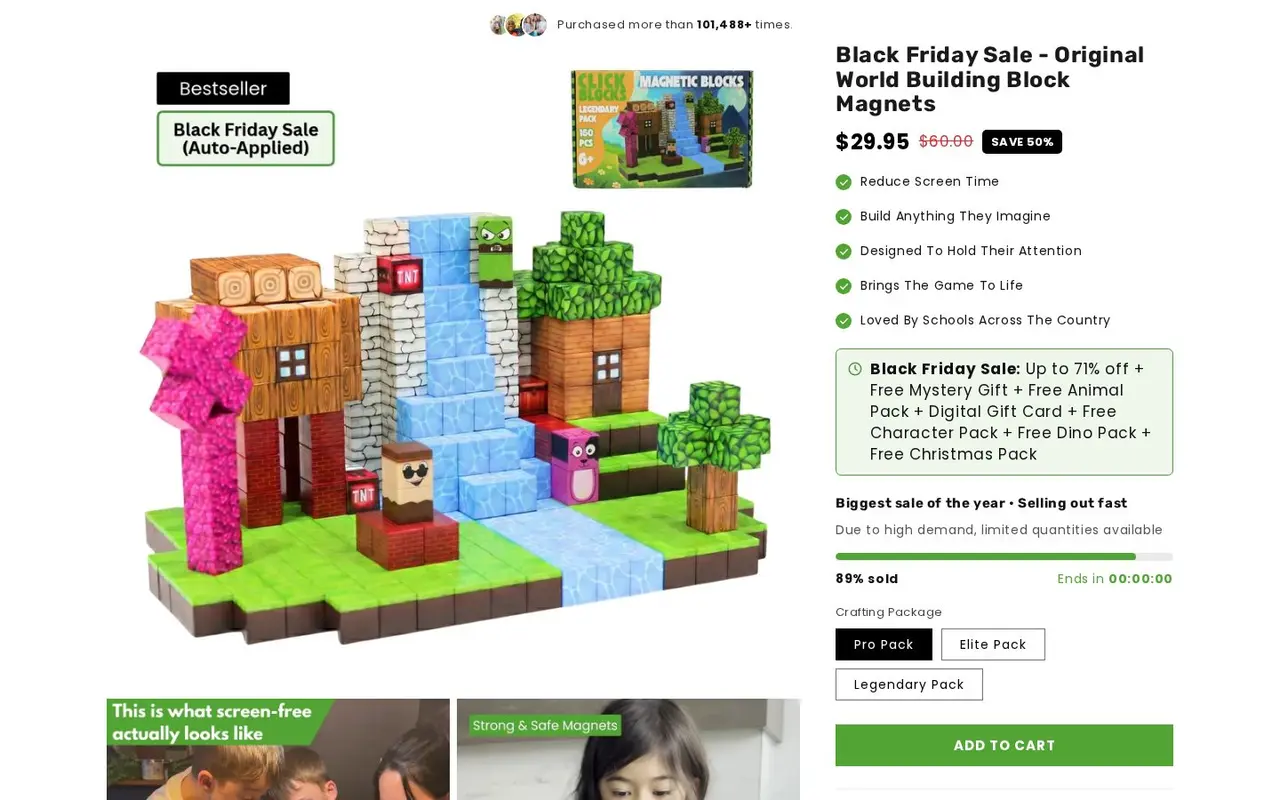
The Original Build-A-World Magnets page on click-blocks.com, captured in November 2026.
What it is. Magnetic building blocks, with base pieces like wood and brick plus small characters, that click together into houses, cars or castles. The product page lists the set at $29.95 in its holiday sale, down from $60.00, and adds free bonus packs such as animals, dinosaurs and a Christmas set. There are three sizes: 35, 70 or 150 blocks. An optional monthly box, the Click Blocks Builders Club, sends new themed blocks that fit the ones a child already has.
Who it is for. The page speaks to parents and grandparents looking for a gift that can pull a child away from a screen. It is direct about age: recommended for 6 and up, with a plain warning that the strong magnets are not suitable for younger children. The brand also says schools buy the blocks in bulk for STEM lessons.
What the brand does well. Pack sizes are sold by what a child can build, not by piece count. Thirty-five blocks means a small house or a car. A hundred and fifty means detailed builds for several kids. A gift buyer can pick a size in seconds. The magnet warning sits in plain view, and the subscription section opens by reminding shoppers that it is optional. Shipping within one business day and 30-day returns are stated on the page. The product page went up in November, and the brand has promoted it actively since mid-month, just ahead of the late-November sales and holiday gifting.
2. The gift edition by Who Gives a Crap
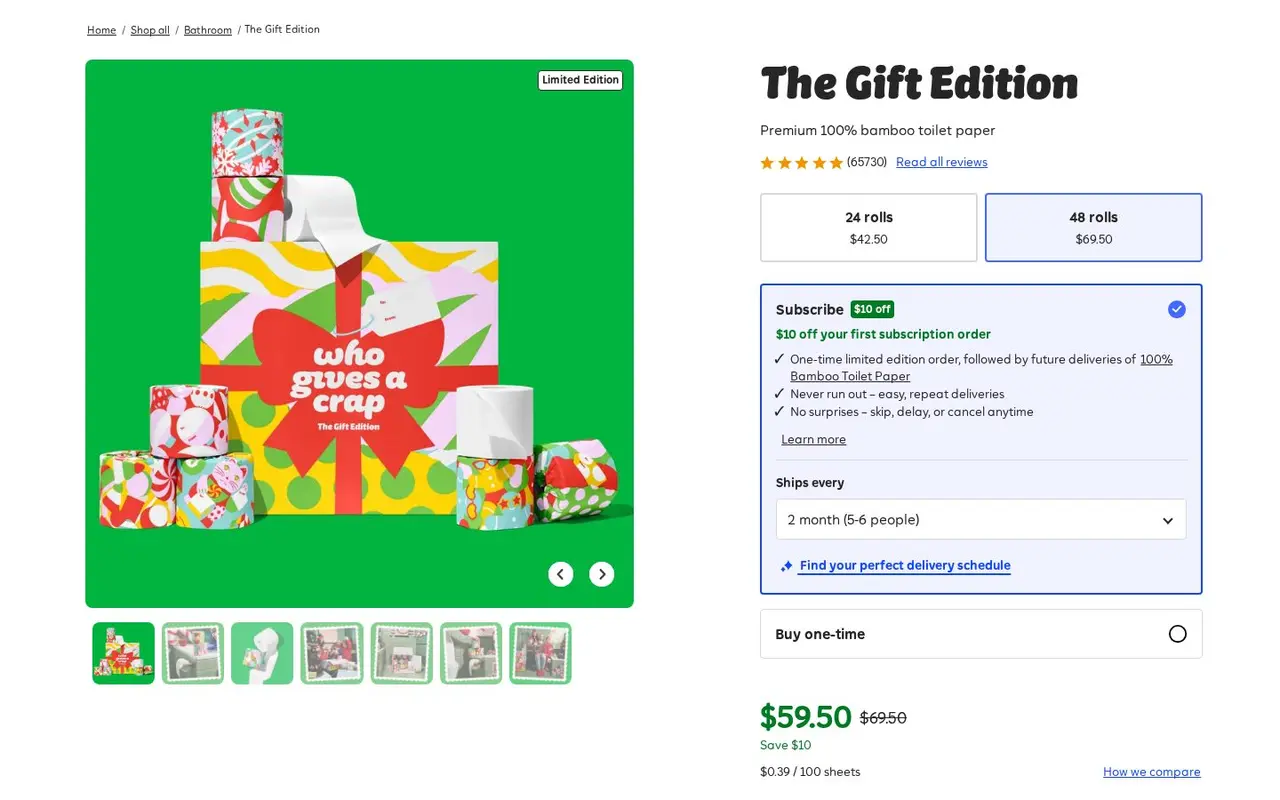
The Gift Edition page on au.whogivesacrap.org, captured in November 2026.
What it is. A limited holiday run of the brand's 100% bamboo toilet paper: 48 double-length, 3-ply rolls in festive, plastic-free wrappers that the page suggests reusing as gift wrap. The Australian product page lists it at $69.50 in Australian dollars. Choosing Subscribe & save takes $10 off the first order, after which deliveries switch to the regular bamboo rolls. The brand says it donates 50% of its profits to help people get access to clean water and toilets.
Who it is for. The page speaks to households that buy toilet paper anyway and would like the purchase to do some good, plus anyone hunting for a funny gift that still gets used. Subscribers pick a delivery rhythm by household size, from every two months for five to six people to every four months for one to two.
What the brand does well. It shows the math. A table compares cost per 100 sheets with other bamboo, recycled and tree-based brands, and footnotes its supermarket prices to Woolworths and Coles in July 2026. Some of those brands come out cheaper, and the table shows them anyway. Subscription terms are just as plain: an email reminder three days before each shipment, billing only when the order ships, and skip or cancel any time. The humor carries into the FAQ, which confirms that no batteries are required. Email marketer Chase Dimond (@ecomchasedimond) included the brand in a list of five favorite emails in October, noting that it "gives new subscribers a reason to care." A limited holiday edition, promoted actively since early November, gives existing fans a seasonal reason to order.
3. Magnetic Collagen Body Serum by SeraVita
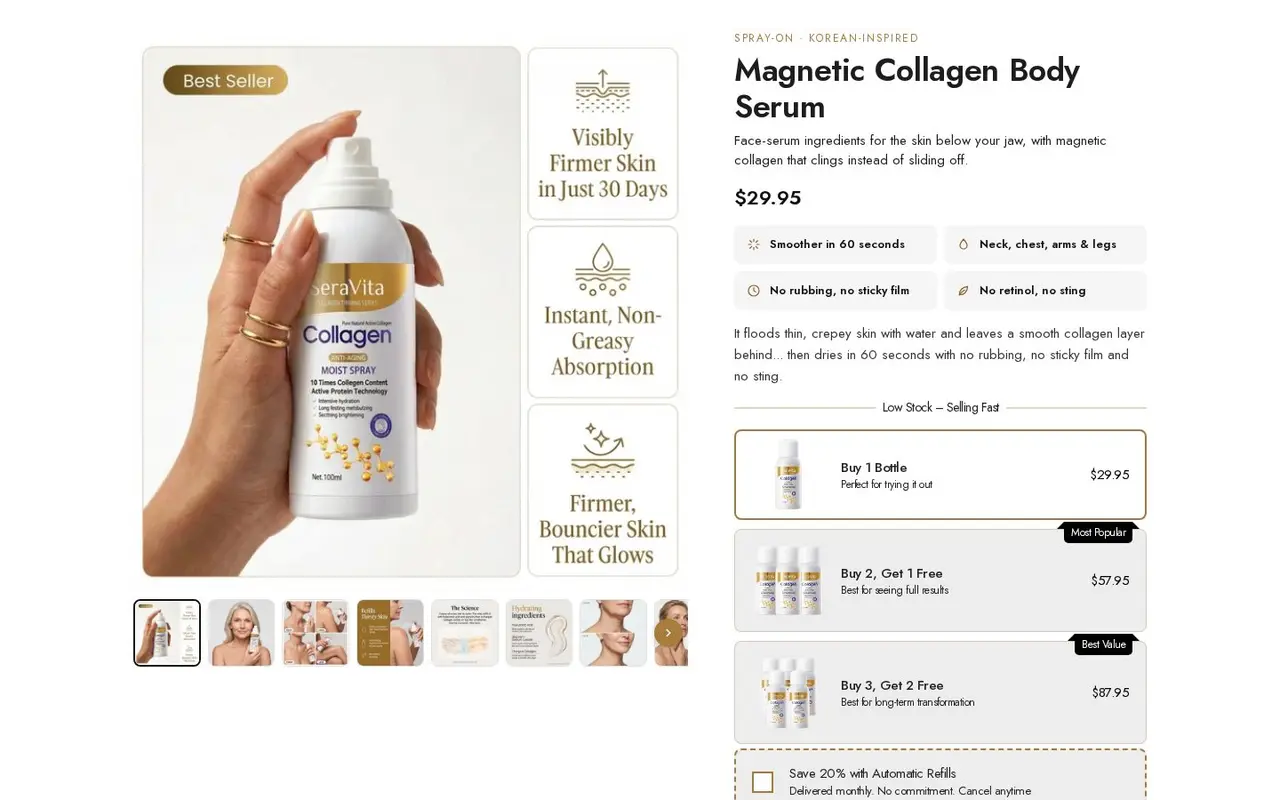
The Magnetic Collagen Body Serum page on shopseravita.com, captured in November 2026.
What it is. A spray-on body serum. The product page lists it at $34.95, down from $69.95, in an early-access holiday sale, with an optional refill every 28 days that can be skipped, paused or cancelled. SeraVita describes it as face-serum ingredients for the skin below the jaw: a water-based mist with hyaluronic acid, glycerin and sodium lactate, plus what the brand calls magnetic collagen, a positively charged collagen it says clings to the skin. The problem it solves is practical. Lotion is hard to rub into the backs of your own arms. A mist reaches there without rubbing and, the brand says, dries in about a minute.
Who it is for. The brand says the serum is designed for skin 45+. The page speaks to women who already own a body lotion and dislike the rubbing and sticky film that come with it. Sensitive skin gets direct attention: no retinol, no acids, and a suggestion to patch-test on the inner arm first.
What the brand does well. The FAQ meets the doubter head-on. One question admits the mist feels like water, then asks outright: "Is it actually doing anything?" The answer explains why the formula is water-based. Another answer says a body lotion can still go on top for very dry skin, rather than claiming the mist replaces everything. The full ingredient list is on the page, and the 120-day guarantee spells out its terms: use the whole bottle, then email for a full refund. Built like a landing page, the product page carries the whole story in one place. It went live in late October and has been promoted actively since, heading into the November sales.
4. LMNT Zero-Sugar Electrolytes by LMNT
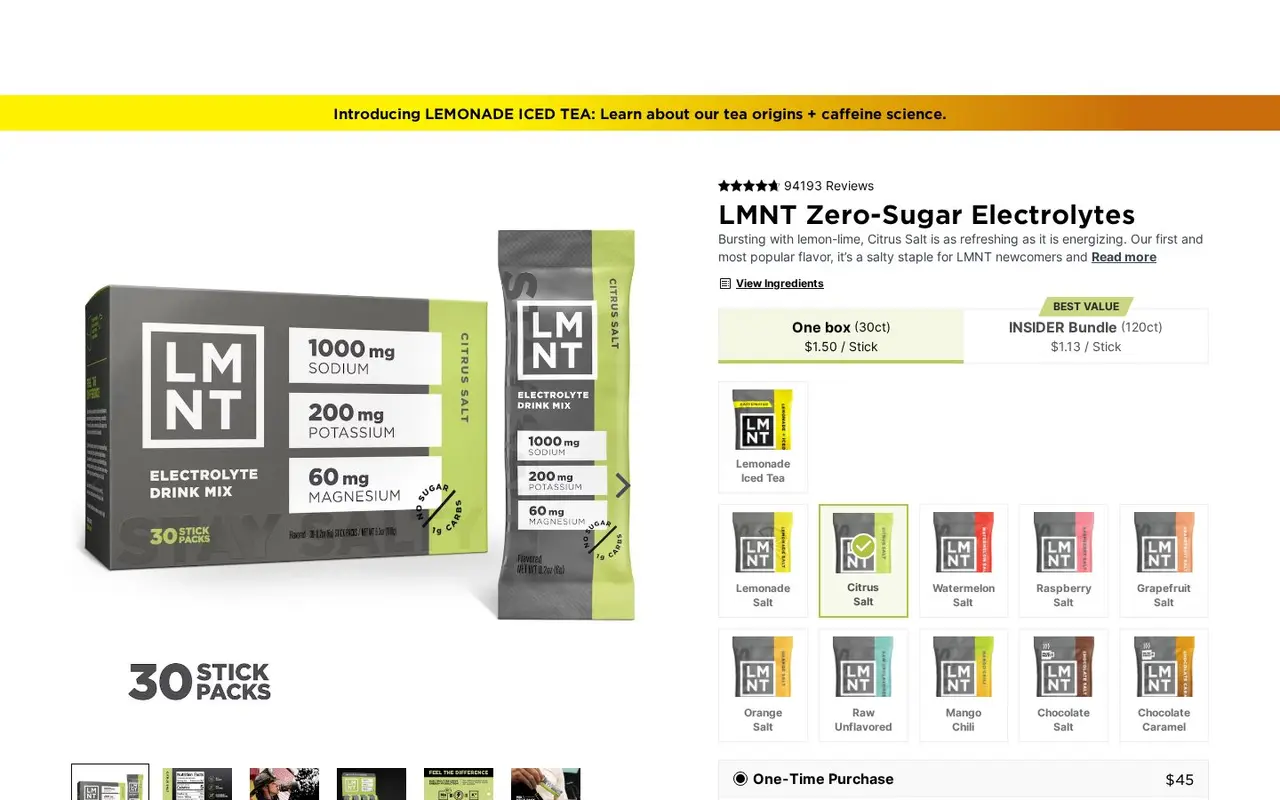
The LMNT Zero-Sugar Electrolytes page on drinklmnt.com, captured in November 2026.
What it is. An electrolyte drink mix in single-serve stick packs. The page leads with Citrus Salt, which LMNT calls its first and most popular flavor. The product page lists a 30-stick box at $45, or $1.50 a stick, while the 120-stick INSIDER Bundle (four boxes for the price of three) works out at $1.13 a stick. Each stick lists 1,000 mg of sodium, 200 mg of potassium and 60 mg of magnesium, with no sugar. US shipping is free, and refunds are no questions asked. The mix itself is not new. LMNT has sold it for years and began a fresh push for it in early November.
Who it is for. The page speaks to people who want electrolytes without sugar. Keto and paleo eaters are named outright, but the FAQ makes a point of saying the mix is not only for low-carb diets. The brand calls the stick packs grab-and-go.
What the brand does well. It leads with exact numbers, so a shopper comparing mixes sees the dose per stick before any adjectives. The FAQ goes further and shares the ratio for making the same mix at home with a kitchen scale. The formula is not treated as a secret. The loyalty pitch is just as direct: "While many brands emphasize promotions and discounts for new customers, we choose to provide value to our most loyal ones." INSIDER members get the lowest per-stick price, early access to new flavors and some exclusive ones. Putting a proven flavor and the bulk bundle up front keeps the message simple during the busiest sales weeks of the year.
What these launches have in common
Each page answers the skeptical question in the buyer's words. SeraVita asks whether a mist that feels like water does anything. Who Gives a Crap explains how its rolls behave in a septic tank. LMNT answers whether its mix is only for keto diets. A question phrased the way a buyer would ask it shows the brand has been listening.
They show the math instead of describing value. Cost per 100 sheets with dated sources, price per stick next to milligrams per stick, block counts tied to what a child can build. Numbers let buyers make the call themselves.
The commitment is easy to undo, and the page says how. All four subscriptions spell out how to skip or cancel. Returns and guarantees are stated in plain terms, from 30 days at Click Blocks to 120 days at SeraVita. That removes one reason to hesitate.
The offer fits the buyer's situation. Click Blocks sizes its packs by how many kids will build. Who Gives a Crap sets delivery by how many people share the bathroom. Any product with more than one option can be framed around who it is for, not just what is inside.
A note on reading lists like this
A brand is much more than what shows up in an ad library. Behind each of these pages sit product development, sourcing and quality control, customer service, a community, a story, a team and a lot of timing that no outside data can see. This list exists to credit products that are being made and presented well, and to pull out principles any brand can use on its own products. It is not a list of things to copy. Spotting a product on the rise and remaking it rarely works, and it makes life harder for the people who built it in the first place.
Frequently asked questions
How were these products chosen?
Each product began a new round of promotion in the last 30 days, based on public ad libraries, and is sold by only a handful of stores. The order follows the batch as it came in. It is not a ranking.
Where can I buy these products?
On each brand's own store, linked in each section and in the sources below. The Gift Edition link goes to the Australian Who Gives a Crap store, so its price is in Australian dollars. None of the links carry affiliate codes.
Why is a product that has been on sale for years in a list of new launches?
The list tracks when a product starts a new round of promotion, not when it first went on sale. LMNT's mix has been around for years, and its current push began in early November 2026. The other three products went up on their stores in October or November 2026.
What do these signals tell you, and what don't they?
An active push shows that a brand is putting attention behind a product right now. It does not show sales, margins or how customers feel after they buy. Those numbers live inside each business, which is why this list sticks to what anyone can see on the product page.
Sources · 9 · click-blocks.com, au.whogivesacrap.org, shopseravita.com +2
Ask AI next
- How can I tell if my own product page fails to answer buyers' top objection before they bounce?
- How do I write FAQ answers that mirror the exact skeptical question my buyers ask, like SeraVita's example?
- What evidence backs claims like SeraVita's 'magnetic collagen' clinging to skin, beyond marketing copy?
- Is this objection-answering page structure becoming standard across DTC brands globally, or still uncommon?
- What ad library tools can track when competitor brands start a fresh ad push, like the ones in this list?