All stories · Case study
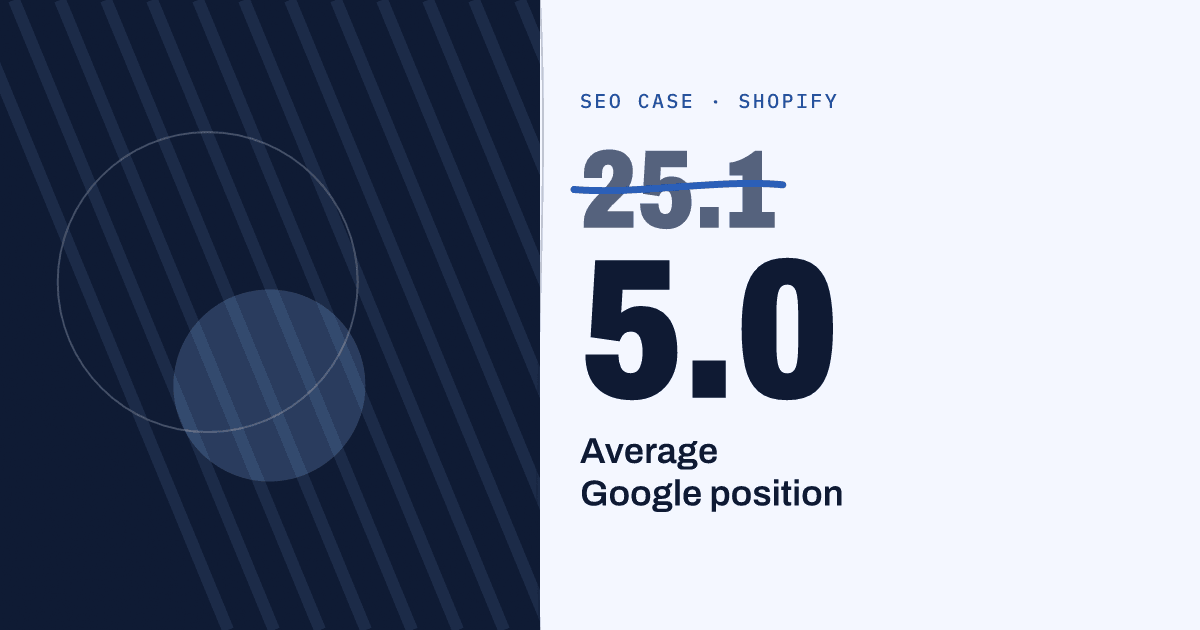
Tropical Fish Co: from Google position 25.1 to 5.0 in about six months
Share: WhatsApp · Telegram · X · Facebook · LinkedIn · Email
The agency, @hand-on-web-ltd, published the numbers on LinkedIn together with a second, client shop. Nobody outside the agency has checked them, but the post is specific about what was done, which makes it a useful case to read closely.
Two shops, two starting points
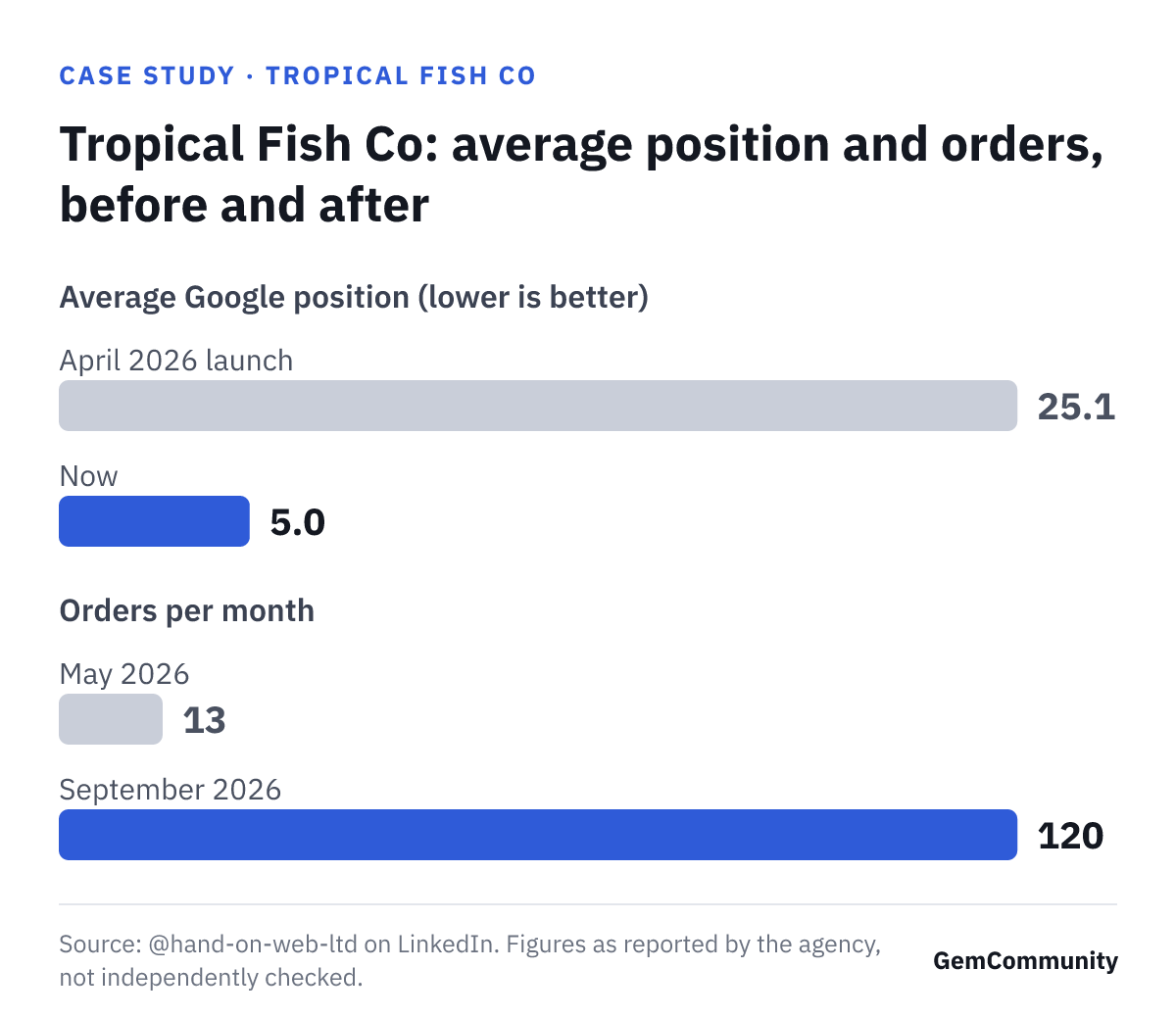
Tropical Fish Co is a custom Shopify store that belongs to the agency's founder. The agency says so itself and asks readers to treat it as its own work, not a client review. It launched in April 2026 at position 25.1, with no history, links or reviews.
Today the store's home page leads with a search box and a "Smart fish helper" panel for questions about a tank.
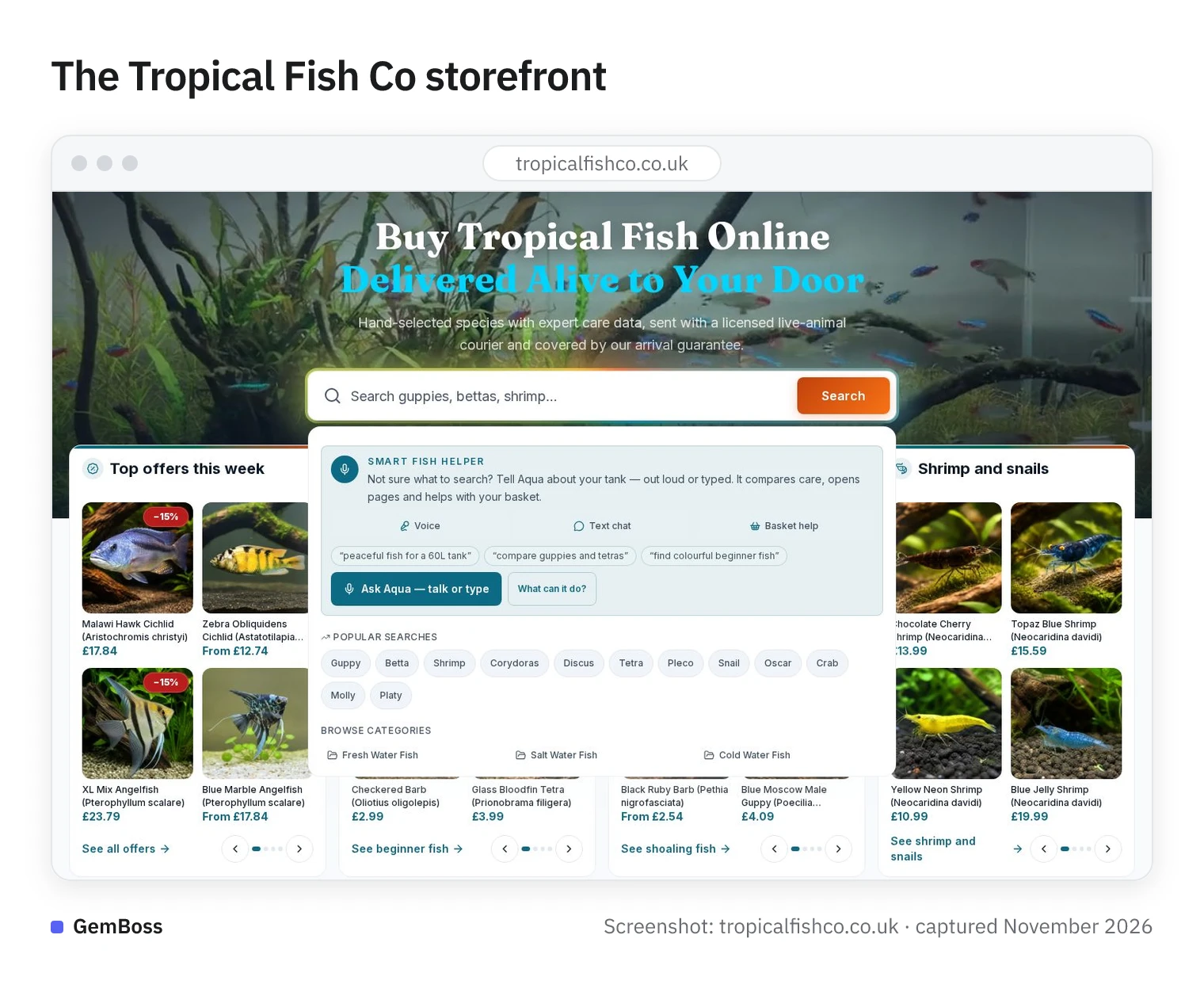
Screenshot of Tropical Fish Co, captured November 2026.
Aquatropics is the client example. It is a family-run aquatics shop in London and has been a client since 2025. After eBay changed its live-animal policy, the agency built the family a WooCommerce shop of its own. In July 2025 that shop averaged position 14.5 on Google.
The agency's Aquatropics case study shows the Search Console history behind that figure, month by month, from July 2025.
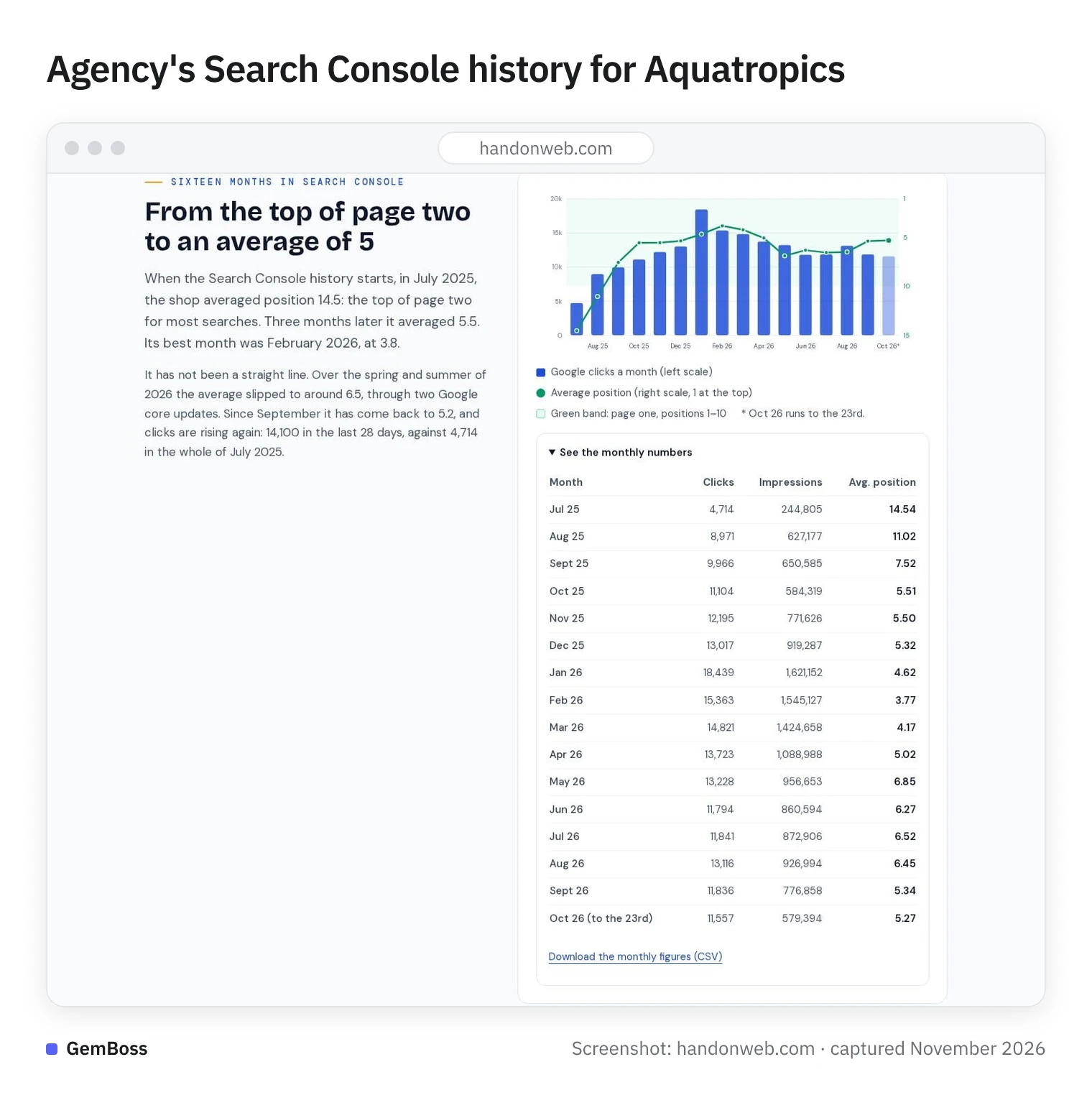
Screenshot of Hand On Web, captured November 2026.
What the agency says it did
According to the post, both shops got the same work. Three parts of it are the ones most likely to move rankings:
- Speed. Pages load in 1.3 seconds and 1.5 seconds on a phone, and every Core Web Vital passes.
- Product pages written for search. Over 6,000 product pages were written the way people actually search.
- Daily measurement. Search Console, Analytics and Google Ads data are read every day through the APIs. Every change is dated and measured against clicks, positions and orders. This is what lets the agency say which change moved which page, although the change log itself is not published.
Around that core sit extras that sell more than they rank. Both shops are watched 24/7, because with live animals a slipped page or a missed question costs more than a click. AI assistants answer customers on the website, WhatsApp and the phone. The post counts 3,273 conversations so far and says 62% of Aquatropics chats happen outside office hours. Google Ads are run by a Google Partner, and Aquatropics pays about 7p a click.
The post adds one more claim about AI visibility. It says Google's AI Overviews cite the two shops 1,317 times in the UK. On 26 October, the agency asked ChatGPT where to buy tropical fish online in the UK, and it listed Aquatropics first and Tropical Fish Co third. The agency notes that AI answers change from run to run, so it tracks them over time.
What the numbers show
The agency's Tropical Fish Co case study lists the monthly Search Console figures behind the headline numbers, from 150 clicks at position 25.1 in April 2026.
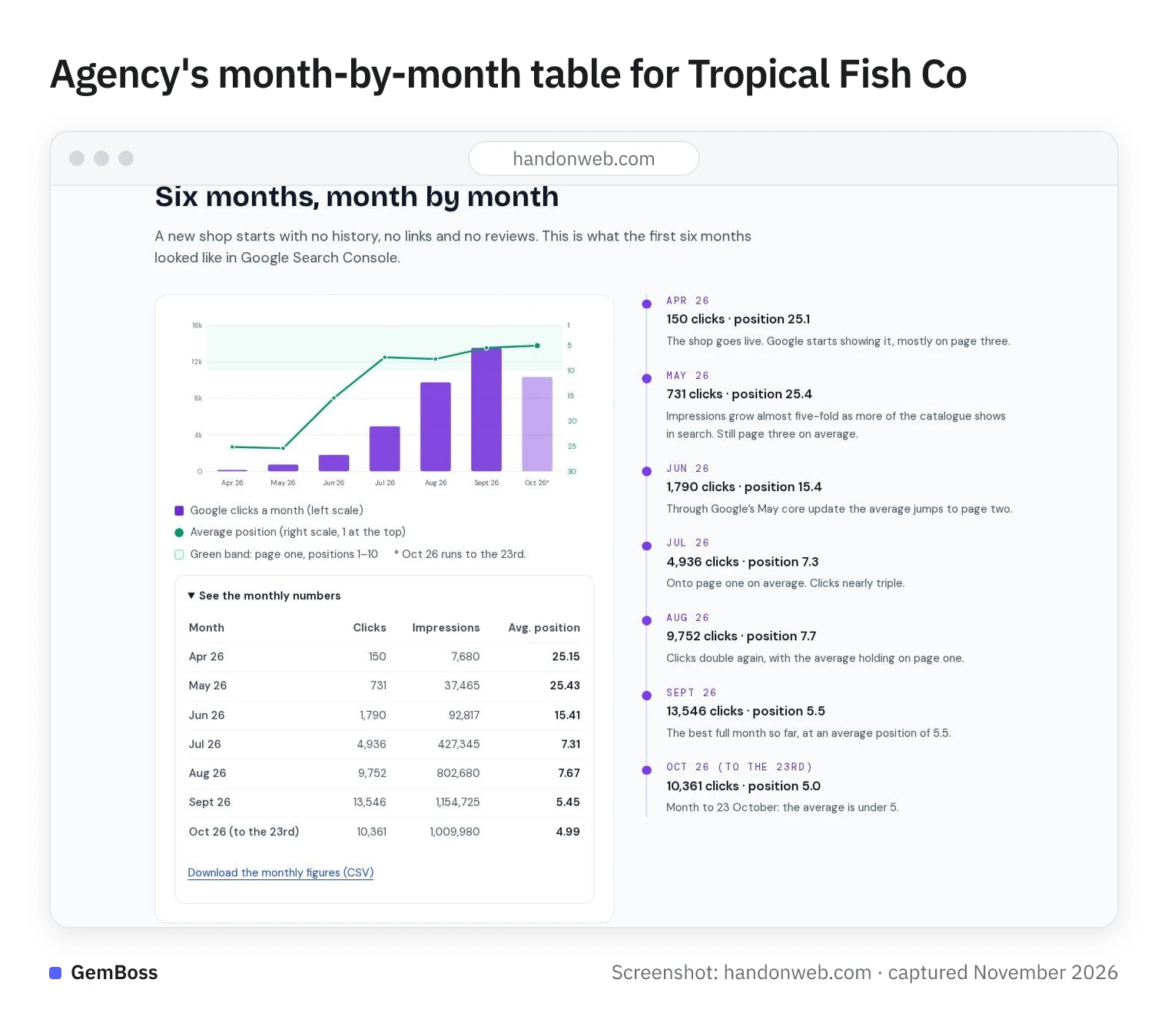
Screenshot of Hand On Web, captured November 2026.
| Before | After | |
|---|---|---|
| Tropical Fish Co, average position | 25.1 (April 2026 launch) | 5.0 now, page one by July 2026 |
| Tropical Fish Co, orders | 13 in May 2026 | 120 in September 2026 |
| Aquatropics, average position | 14.5 (July 2025) | 5.2 (28 days to 23 October 2026) |
| Aquatropics, clicks | not given | 14,100, up 32% on the previous 28 days |
Calculated from the two order counts, Tropical Fish Co's growth is about +823%. The post also says 67% of its purchases come from organic search. That means 120 is the total number of orders, and the organic share is a separate figure, so the jump cannot be read as organic orders alone. The position and click figures are attributed to Google Search Console. The order counts have no stated source.
The timelines differ too. Aquatropics went from 14.5 to 5.2 over about 15 months, while Tropical Fish Co reached 5.0 between its April 2026 launch and the agency's post.
What this case can and can't tell you
Four things limit what you can take from this case:
- The agency reports its own results, and Tropical Fish Co is its founder's shop.
- Speed, 6,000+ pages, daily measurement, monitoring, AI assistants and Google Ads all ran together, so no single change can be credited.
- A new store that starts at 13 orders a month will show a large percentage rise from a small base. This is an inference, not a claim in the post.
- The agency sells these services, and the post ends with its prices, from £299 a month for local SEO and £249 a month for Google Ads.
What survives those limits is the method: a measured baseline, dated changes and a daily check against clicks, positions and orders.
How to test this on your store
- Set a baseline. From Search Console, record average position and clicks for the last 28 days. Next to them, record total orders and the share that comes from organic search.
- Change two things first, and date them. Test your product pages on a phone and fix what fails Core Web Vitals. Then rewrite a batch of product pages around the phrases buyers actually search.
- Review against the baseline after a full 28-day window: if pages near a dated change rose, repeat that change on the next batch; if nothing moved, try the next change. Each week, check Search Console and note which dated change sits next to which page that moved. Compare full 28-day windows, as the agency does, not a single good week.
Frequently asked questions
What does "average position 5" actually mean?
It is an average of where the shop's pages appeared across every search that showed them. It does not mean rank 5 for each search: some searches can sit on page three while others sit at the top. Read it next to clicks and orders, not on its own.
Do rankings climb in a straight line?
No. On the agency's Aquatropics page, the shop's best month was February 2026 at 3.8. The average then slipped to around 6.5 through two Google core updates and has come back to 5.2. Plan to judge changes over full 28-day windows, not week to week.
How long did Tropical Fish Co take to reach page one?
About three months, on the agency's monthly table: 25.1 in April 2026, 15.4 in June and 7.3 in July. That is one new store with a full agency behind it, so treat it as one data point, not a timeline you can expect.